Get Full Government Meeting Transcripts, Videos, & Alerts Forever!
Get email alerts on the Water Quality Monitoring topic
No spam. Unsubscribe anytime.
University of Iowa scientists ask Winneshiek supervisors to help fund statewide water‑quality sensor network
Summary
Dr. Larry Weber of the University of Iowa presented the Iowa Flood Center's statewide water‑quality monitoring network, described a funding shortfall after a state cut, and asked Winneshiek County to consider bridge funding while the center seeks legislative support and county partners.
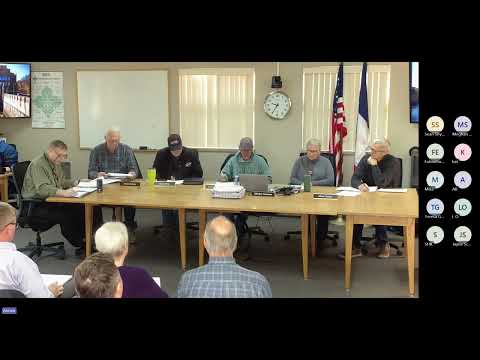
Dr. Larry Weber, director at IIHR — Hydroscience & Engineering and a leader of the Iowa Flood Center, told the Winneshiek County Board of Supervisors that the center's real‑time water‑quality network needs local bridge funding after the Iowa Nutrient Research Center reduced its support.
Weber said the network currently operates about 70 continuous monitoring stations (53 run by IIHR, eight by USDA‑ARS and about 10 by the USGS) and that full annual operations require roughly $600,000. He asked the board to consider contributing as a short‑term bridge while the center seeks restoration of state support and additional county partners. "Polk County has committed $200,000 toward our goal," Weber said, and added the center hopes other counties will follow with similar, statewide contributions.
The network deploys nitrate sensors (Nitrotech) and water‑quality sondes that record dissolved oxygen, temperature, conductivity and pH every 15 minutes. Weber said each site costs about $35,000 to deploy and that sensors are installed in March or April and removed for winter maintenance in mid‑November to early December. He described three regional groupings of sensors used to measure nitrate load leaving the state, evaluate conservation practices in key watersheds and monitor inlet/outlet effects of practices such as wetlands and bioreactors.
Why it matters: Weber argued the continuous, validated data are essential to understand trends and to guide investments in conservation practices. "The water quality is degrading in Iowa," he said, and cautioned that, without action, "by 2050 we will have very serious problems with water quality in Iowa." The presentation linked monitoring to practical outcomes: certifying conservation practices so they qualify for cost‑share and helping utilities plan for high‑nitrate events.
Board members and residents pressed details about data quality and funding. Steve Hopkins, a retired nonpoint‑source coordinator for Iowa DNR who now lives in Winneshiek County, asked whether IIHR's measurements qualify as "credible data" under Iowa law for listing or delisting impaired waters. Weber replied the program follows USGS field and validation protocols, conducts grab‑sample validation, sends sensors for recalibration, and has PhD‑level analysts performing bench work; "so they are credible data," he said. Weber distinguished that citizen‑science efforts can be useful indicators but are not a substitute for the center's validated datasets.
Local residents expressed support. One attendee who identified herself as Jody thanked Weber for the science‑based approach and said recent local polling shows water is a top priority for Winneshiek County residents, urging supervisors to consider bridge funding until the legislature acts.
Weber described a recent reduction in state appropriations to the Iowa Nutrient Research Center that removed a prior $500,000 annual transfer, and said the Walton Family Foundation provided bridge funds to sustain the water‑quality network through July 2026 while the center seeks permanent support. He also noted that Polk County's recent commitment begins on July 1, 2026, and that the center would revisit commitments if the state restores funding.
The board did not take an immediate funding vote; Weber said he would meet with county officials and other counties to discuss partnerships and next steps. The presentation closed with an offer to supply more detailed materials to supervisors to support budget deliberations.
Ending: The supervisors thanked Weber for the presentation and agreed to consider the request as they continue budget planning and discussions about county priorities.