Get Full Government Meeting Transcripts, Videos, & Alerts Forever!
Get email alerts on the School Speed Cameras topic
No spam. Unsubscribe anytime.
Sunrise commission directs full‑day school‑zone speed camera program, declines to extend paid warning period
Summary
After an extended discussion of vendor data, signage and community notice, the Sunrise City Commission directed staff to run school‑zone speed cameras for the full school day and signaled it will not extend the contractor’s optional paid warning period; commissioners emphasized public outreach and data monitoring before and after launch.
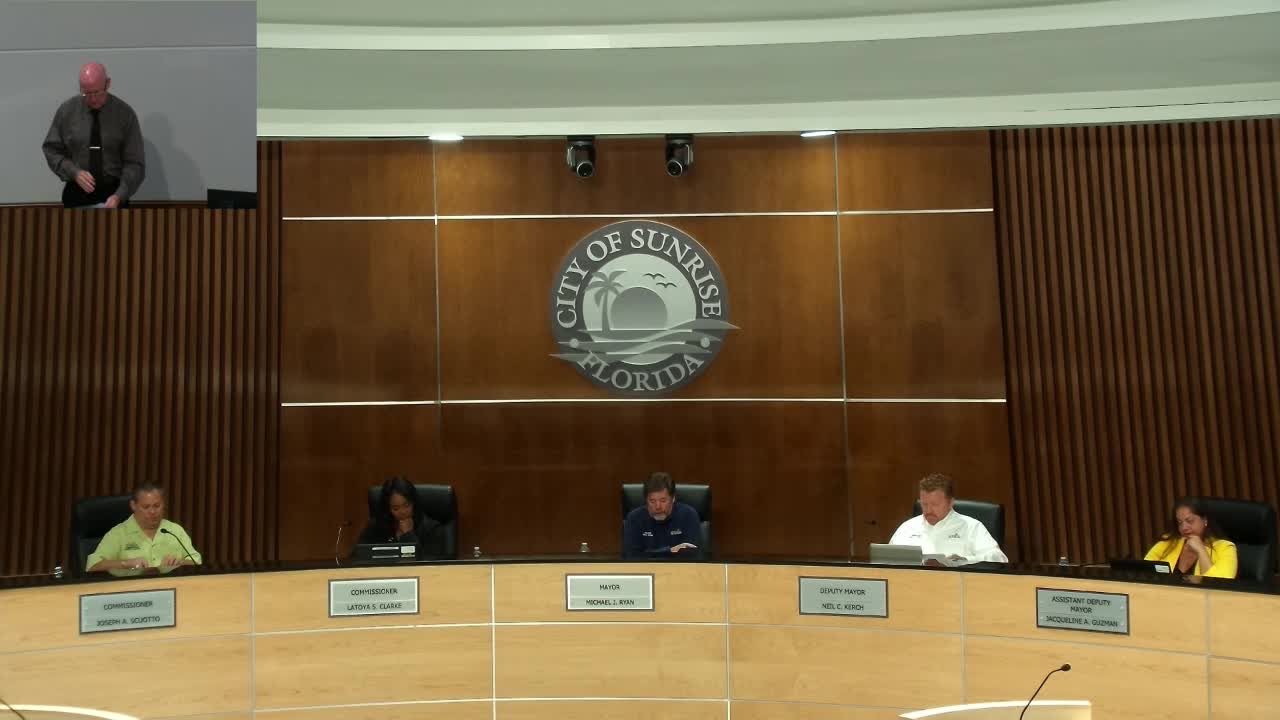
The Sunrise City Commission on Nov. 12 debated how and when to start a citywide school‑zone speed camera program and provided direction to run cameras for the full school day while declining to extend the contractor’s optional paid warning period.
Mayor Michael J. Ryan led the discussion after staff and Police Chief Daniel J. Ransone outlined two decision points: whether to lengthen the 30‑day warning window in the vendor contract (at a cost of $25 per mailed warning) and whether enforcement should be limited to the flashing‑beacon times that traditionally mark school arrival and dismissal or applied from the start to the end of a school day. Chief Ransone said the department would continue outreach and education ahead of the program’s expected Jan. 6 launch.
Commissioners questioned the underlying data showing high numbers of potential violations. City staff identified the source as equipment and a short field study conducted by Blue Line Solutions; Chief Ransone told commissioners the vendor produced the count and the department is using that data to plan enforcement. Commissioner Scudo expressed skepticism about extending the warning period because of the projected cost and urged utility‑bill or school‑based outreach instead. Commissioner Kurtz and Mayor Ryan both said intensive community notice already underway makes a paid extension unnecessary.
Vendor representatives said each monitored school zone will display a radar feedback sign that shows approaching drivers’ speeds and an adjacent sign reading “photo speed enforcement.” The vendor representative (identified in the record as a Blue Line Solutions representative) and a retired‑chief consultant described procedures and told the commission drivers have “ample” warning before camera capture. Commissioners pressed staff on how far in advance the feedback sign would appear and on whether the city could later switch from beacon‑only to all‑day enforcement if behavior did not change.
After extended questioning about signage, mailers, school outreach and how the data would be verified, the commission provided clear direction: the city will not pay to extend the contract’s paid warning period and staff should implement the program to operate throughout the school day. Commissioners asked staff to finalize a mailer schedule that avoids being lost during the holidays, to coordinate with school resource officers and PTAs for targeted messaging (especially at Piper High School), and to report back with verified baseline data and post‑launch metrics.
Chief Ransone thanked commissioners for their guidance; staff said they would work to ensure permits, signage and mailings are in place so the program can start on schedule. The commission did not take a roll‑call vote on the policy changes during the meeting; the record shows the body’s consensus on the two decision points and direction to staff to proceed.
What’s next: staff will finalize signage and community outreach materials, confirm permit timelines, and return with performance data after launch. The city manager indicated staff will report any implementation delays at the next meeting.