Get Full Government Meeting Transcripts, Videos, & Alerts Forever!
Get email alerts on the Utilities topic
No spam. Unsubscribe anytime.
Council greenlights pursuit of larger impact‑fee increases; staff to hold public workshops
Summary
Council voted to direct staff and consultants to pursue a legal record under the 'extraordinary circumstances' path to raise water and wastewater impact fees beyond the statutory phased 50% cap, and to schedule public workshops before final adoption.
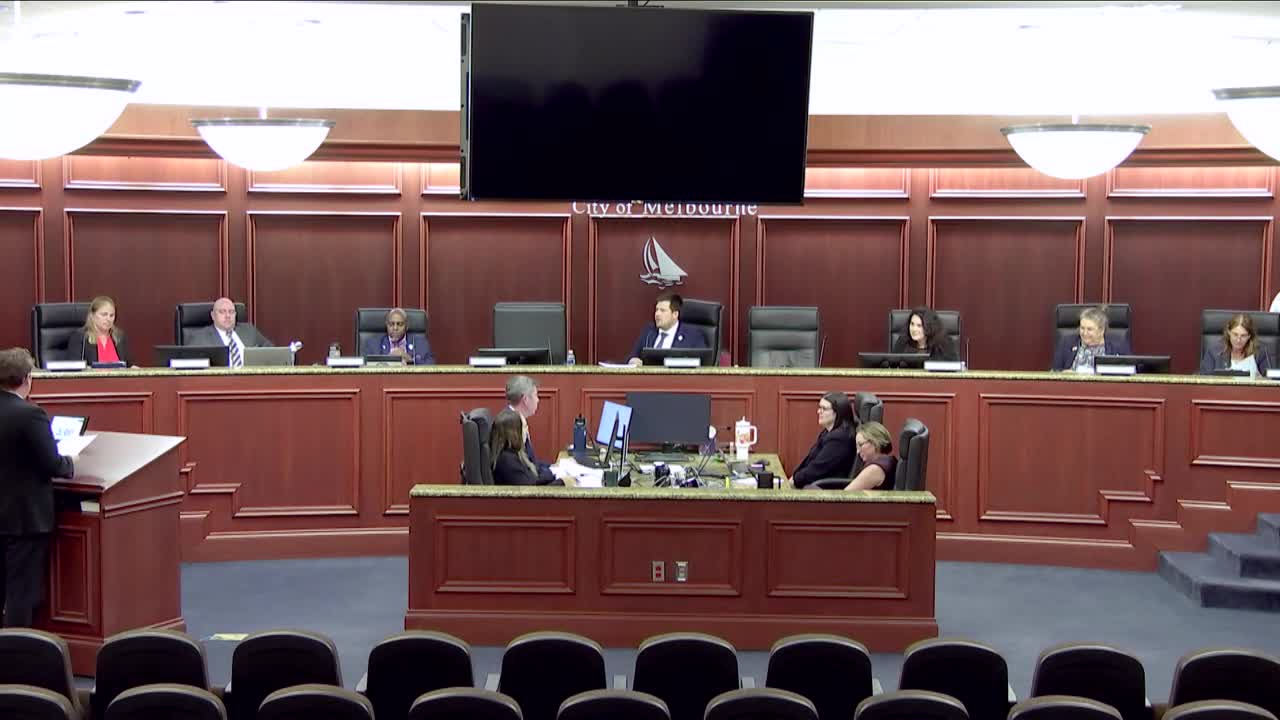
The Melbourne City Council on Oct. 28 authorized staff and consultant Raftelis to pursue an "extraordinary circumstances" justification to raise water and wastewater impact fees beyond the statutory 50% phased cap, and to schedule the public workshops and ordinance readings required by state law.
Ross (staff presenter) said preliminary figures show the city’s draft impact fees would significantly exceed existing rates: roughly $1,540 for a water ERC and about $2,002 for a wastewater ERC in the draft. Because the proposed increases are larger than a 50% statutory cap, staff outlined two options: implement a phased increase capped at 50%, or build an evidentiary record of extraordinary circumstances (which would require two workshops and creates legal risk because similar actions in other Florida cities have prompted litigation). Ross estimated that using extraordinary‑circumstances findings could capture an additional $10–12 million over five years compared with a phased 50% increase.
City Attorney and staff cautioned that pursuing extraordinary circumstances requires a robust record — including economic and capital‑cost evidence — and carries some litigation risk. Council nevertheless approved continuing the extraordinary‑circumstances process and asked staff to schedule the workshops and prepare the ordinance language.
The council’s decision starts a process that will include public workshops and a second public hearing/ordinance adoption. Staff said that, if adopted, the revenue from higher impact fees would finance system expansions and capital projects required by new development rather than being borne exclusively by existing ratepayers.
Next steps: staff and Raftelis will develop the evidentiary record, schedule the two required public workshops and bring a draft ordinance for first reading and later consideration.