Get Full Government Meeting Transcripts, Videos, & Alerts Forever!
Get email alerts on the Stormwater topic
No spam. Unsubscribe anytime.
Naples council directs staff to pursue phased stormwater fee increase to fund major drainage projects
Summary
City staff presented a multi‑year stormwater funding plan; council directed staff to prepare an ordinance to phase in a 100% aggregate rate increase over four years (25% per year) to finance critical stormwater and resiliency projects and to preserve perpetual revenue for borrowing and maintenance.
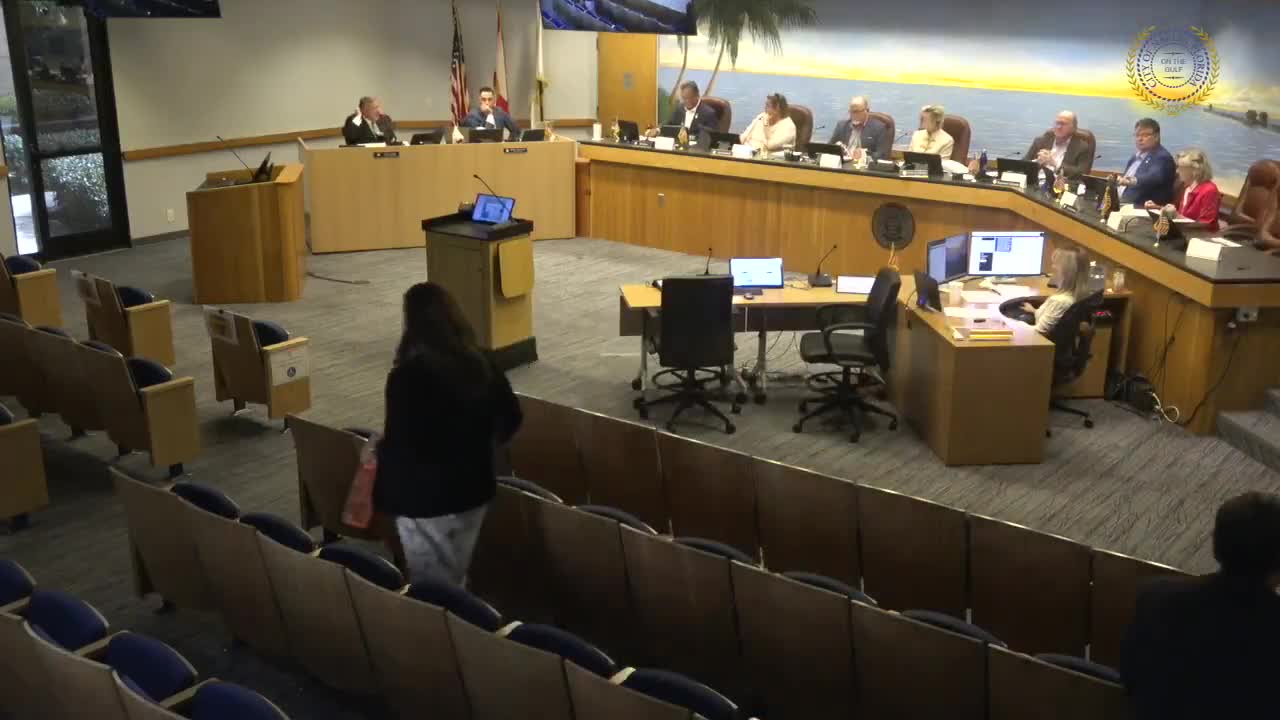
City Council on Nov. 5 reviewed a comprehensive presentation on stormwater infrastructure needs and directed staff to draft an ordinance phasing in a substantial stormwater rate increase to fund major drainage and resiliency projects.
City Manager Gary Young and finance staff outlined a 20‑year capital need estimate that ranges into the hundreds of millions of dollars, with near‑term basin assessments totaling about $282 million and longer‑horizon needs approaching $600 million. The current rate yields roughly $8.8 million annually. Staff presented options including a property‑tax referendum (20‑year) and a perpetual stormwater fee increase; staff recommended pursuing a rate approach to provide sustainable revenue and stronger borrowing capacity.
Under the council direction, staff will prepare an ordinance to phase in a 100% aggregate increase in the stormwater ARU charge over four years (roughly a 25% increase each year), with the first increase timed to take effect in 2026 if adopted. The phased approach balances revenue generation and homeowner impact; staff estimated that, for an average ARU, the final annual increase would be about $297 after the full phase‑in. Councilmembers emphasized maintenance funding, borrowing capacity and the need to align projects with grant pursuit and project readiness.
Mayor Heitman and multiple councilmembers expressed support for the 4‑year phased option to avoid an immediate large bill while meeting long‑term resiliency goals. Staff said it would prepare an ordinance for upcoming council readings and model residential and commercial impacts for public review.
If enacted, the increase would be permanent (not a 20‑year sunset) and intended to create a predictable revenue stream for capital projects, repair and replacement, and ongoing operations and maintenance of stormwater infrastructure.