
Northampton County consultants estimate $435 million a year in environmental benefits from preserved land
Get AI-powered insights, summaries, and transcripts
Subscribe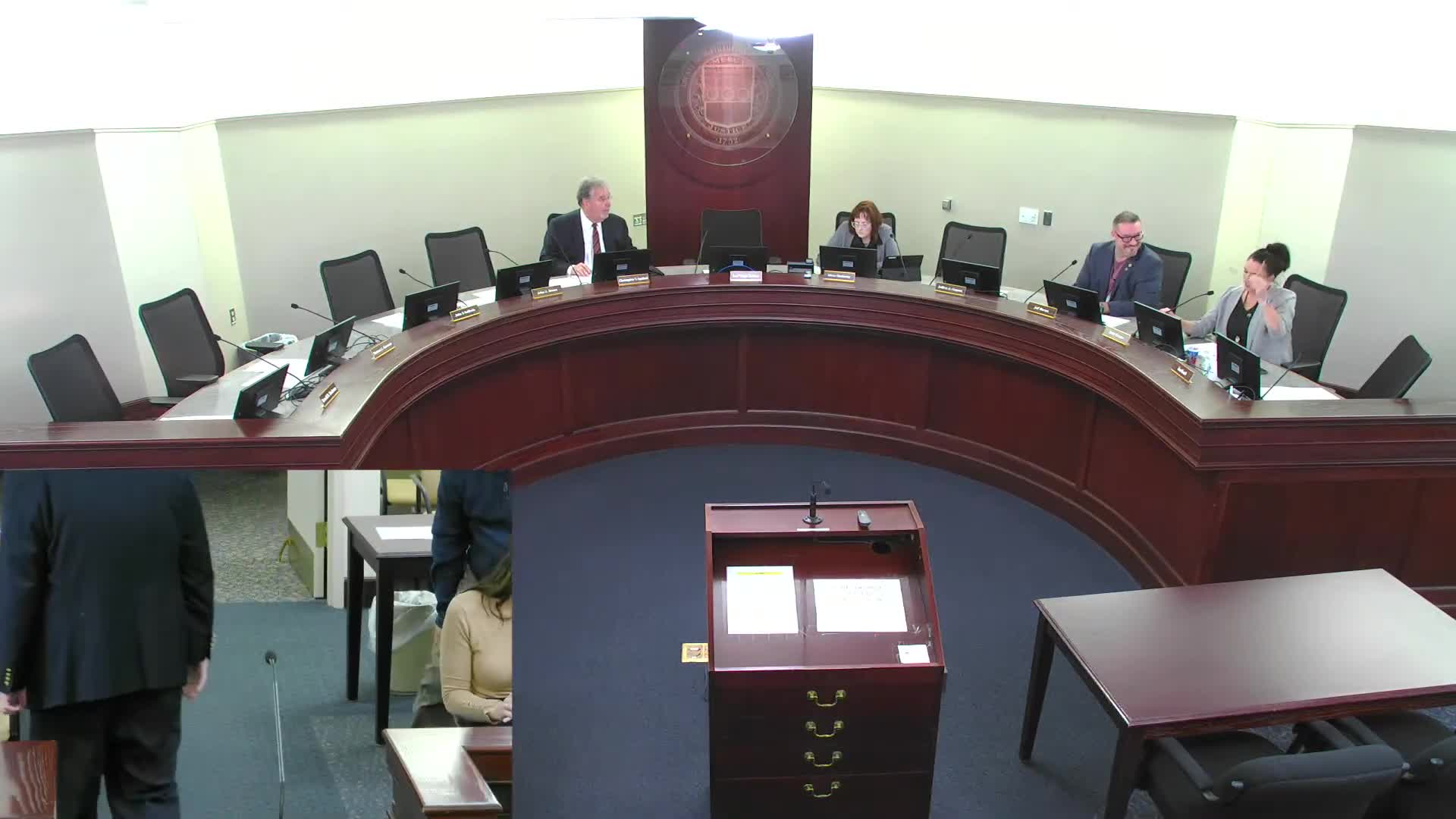
Summary
At an Nov. 20 committee meeting, consultants from Michael Baker International and eConsult Group presented a Return on Environment study estimating about $435 million in annual environmental service value, plus additional property, agricultural, public‑health and outdoor‑recreation economic benefits tied to the county’s open‑space investments.
November 20 — Consultants for Northampton County told the Energy, Environment, and Land Use Committee that conserved open space generates substantial economic and health benefits, presenting a Return on Environment analysis the county can use in upcoming planning.
"In total, we find that the environmental benefits in Northampton County is about $435,000,000 in value a year," said Rebecca Garvin DeJoseph, senior vice president and principal of eConsult Group, presenting the study’s headline estimate. The consultants described their figures as model‑based estimates and emphasized conservative assumptions and replacement‑cost framing for environmental services.
The report updates a 2014 Lehigh Valley analysis and was produced over eight months with Michael Baker International and eConsult Group. Samantha McLean, senior community planner with Michael Baker International, said the study combined baseline environmental and demographic data with public engagement—an online survey (316 responses), two pop‑up events and four study‑committee meetings—to calibrate local use and spending patterns.
Why it matters: county officials have directed roughly $25 million toward farmland preservation, open space and environmentally sensitive lands over the past eight years. The consultants said the new analysis provides numbers that the county can use when weighing future conservation and development choices and to inform a planned livable landscapes update.
Key findings reported by the study team (all described by presenters as model estimates): - Environmental services: about $435 million in annual value from natural systems (replacement‑cost framing for air quality, water supply, pollination and other services); the presenters also cited an estimated $2.5 billion lifetime climate‑mitigation value associated with tree cover. - Property‑value premium: applying a 3.6% premium to roughly 60,000 homes within a quarter‑mile of open space yielded an estimated $776 million in additional property value (approximately $12,800 per qualifying residence). - Agriculture: direct annual agricultural output in the county was reported as $38.3 million (USDA data); the consultants noted additional indirect and induced impacts through supply chains and worker spending. - Public health: using survey responses and CDC activity benchmarks, the consultants estimated roughly $14.4 million in annual physical‑health care savings among the county’s most active open‑space users and produced a conservative $1.5 million estimate for mental‑health cost reductions tied to nature exposure, while noting methodological caveats. - Outdoor recreation economy: a county‑scale approximation put outdoor‑recreation GDP at roughly $401 million to $436 million (analogous to 1.9%–2.1% of GDP), with an estimated 16 million annual open‑space trips, about 5 million spending trips (~$162 million), plus $44 million in hard‑goods spending. Modeled local direct spending was about $189.6 million and a total economic impact of approximately $263 million, supporting nearly 2,000 jobs.
Committee members asked about comparability and modeling. One questioner asked whether a statewide initiative exists to replicate the analysis across all 67 counties; DeJoseph pointed to statewide outdoor‑recreation work (including a report cited by John Sober and Associates and programs such as Elevate PA) but said the Return on Environment approach intentionally includes a broader set of valuations (health, agriculture and natural‑service replacement costs) beyond standard outdoor‑recreation accounts.
On modeling frequency and limits, DeJoseph said some elements (the natural‑services valuation) are rooted in longer‑standing literature (the Costanza framework), while input‑output models used for economic multipliers are updated annually; she and McLean repeatedly described the study’s estimates as conservative and model‑dependent.
The presenters and committee members discussed how the study might inform the county’s livable landscapes update, planned to begin next year. After brief closing remarks the committee adjourned.
Quoted in this article are statements made during the Nov. 20 Energy, Environment, and Land Use Committee meeting and attributed to Rebecca Garvin DeJoseph (senior vice president and principal, eConsult Group) and Samantha McLean (senior community planner, Michael Baker International). The figures reported above come from the presenters’ slide deck and remarks and were described by them as estimates based on the methods summarized at the meeting. The study’s methods include survey data, regional economic modeling, and environmental replacement‑cost approaches; the presenters noted limitations and conservative assumptions.
Next steps: County staff indicated the study will be used in planning work and a livable landscapes update; no formal votes or policy actions were taken at the Nov. 20 meeting.