Orinda Council OKs $15M TEFRA Bond Authorization for Vista Verde Senior Housing After Contentious Hearing
Loading...
Summary
After a lengthy public hearing about contractor choice and wage standards, the Orinda City Council voted 4–1 to approve a TEFRA resolution allowing up to $15 million in tax‑exempt bonds to finance the 53‑unit Vista Verde senior housing project.
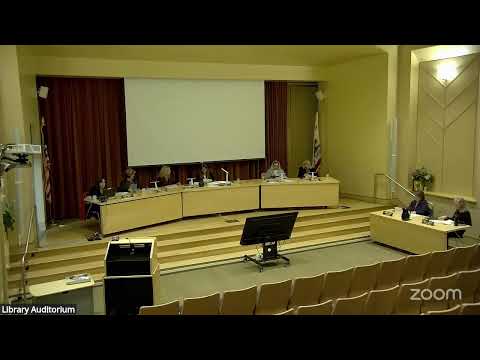
The Orinda City Council on Tuesday approved a TEFRA resolution authorizing the California Public Finance Authority to issue up to $15,000,000 in tax‑exempt multifamily housing revenue bonds to help finance the 53‑unit Vista Verde senior housing project at 15 Irvin Way.
The vote, 4–1 in favor, followed roughly three hours of public hearing and council deliberation that centered less on the financing mechanism—staff emphasized the city would have no legal or financial obligation for repayment—and more on the developer's decision to change general contractors and whether bond approval should require contractor prequalification or prevailing‑wage commitments.
Victoria Smith, president of the Orinda Senior Housing Foundation, told the council the project has been seven years in the making and said the bonds are essential to close the financing gap. "If our request for approval of the tax‑exempt bonds is not granted, this project will not be built," Smith said, adding that the foundation and its mission partner, Orinda Community Church, have assembled financing and local support.
Ken Jones of Urban Core Development, the project's development manager, explained that nonprofit financing for affordable housing commonly relies on a mix of sources and that the bonds help reduce borrowing costs so rents can remain affordable. "Once this process goes through, the bonds are then sold to a bank, which then lends that money back to the foundation to help build the project," Jones said.
Opposition at the hearing focused on labor standards and the selection of Brown Construction as the general contractor. Representatives of the NorCal Carpenters Union and Laborers Local 152 urged the council to require a prequalification process that would prioritize contractors who pay prevailing wages, provide apprenticeship opportunities and have a track record of labor compliance.
Ramona Amaral of the NorCal Carpenters Union said Brown Construction has "a documented history of problems" and urged the council to deny the revenue bonds "until responsible contractors are chosen through prequalification language." Rick Solis, a Carpenters field representative, said unions support affordable housing but pressed the council to require measures that prevent wage theft and protect workers.
Brown Construction project executive Daniel Bergman disputed the allegations during the applicant's rebuttal, saying the company has built affordable housing for decades and invited unions to meet and discuss any claims. "We are fully transparent. We have nothing to hide," Bergman said.
Council members acknowledged the strength of both arguments. Several members said they were sympathetic to labor concerns but ultimately deferred to the applicant and the foundation's board to select contractors, noting the TEFRA hearing itself does not bind the city to a contractor or make the city liable for the bonds.
Staff and councilmembers cited bid figures discussed during the hearing as part of the context for the contractor decision: the council heard that a previous local contractor bid around $43 million, a second firm bid roughly $34 million, and Brown Construction bid approximately $28 million; staff explained that the lower bid helped close a financing gap that emerged when an anticipated $10 million donation did not materialize. Council members also noted that the project does not create taxpayer liability—the bond documents will state repayment is the borrower's responsibility.
After public rebuttal from the applicants and a short exchange in which Brown Construction described its prequalification process and said it sometimes uses union subcontractors, Councilmember [name not specified in the record] moved to adopt the resolution and it passed, 4–1.
The council recorded no changes to the project approvals at this hearing. The vote allows the bond issuance to proceed with CalPFA as the proposed issuer; additional financing documents and lender agreements will follow standard conduit‑bond procedures. The council meeting record shows the resolution number as Resolution 50825 approving issuance of the multifamily housing revenue bonds in an amount not to exceed $15,000,000.
Next steps for the project include finalizing lender commitments and the construction contract. The applicant told the council it reserved time for rebuttal and will continue working with local stakeholders and service providers to operate the facility if financing closes.