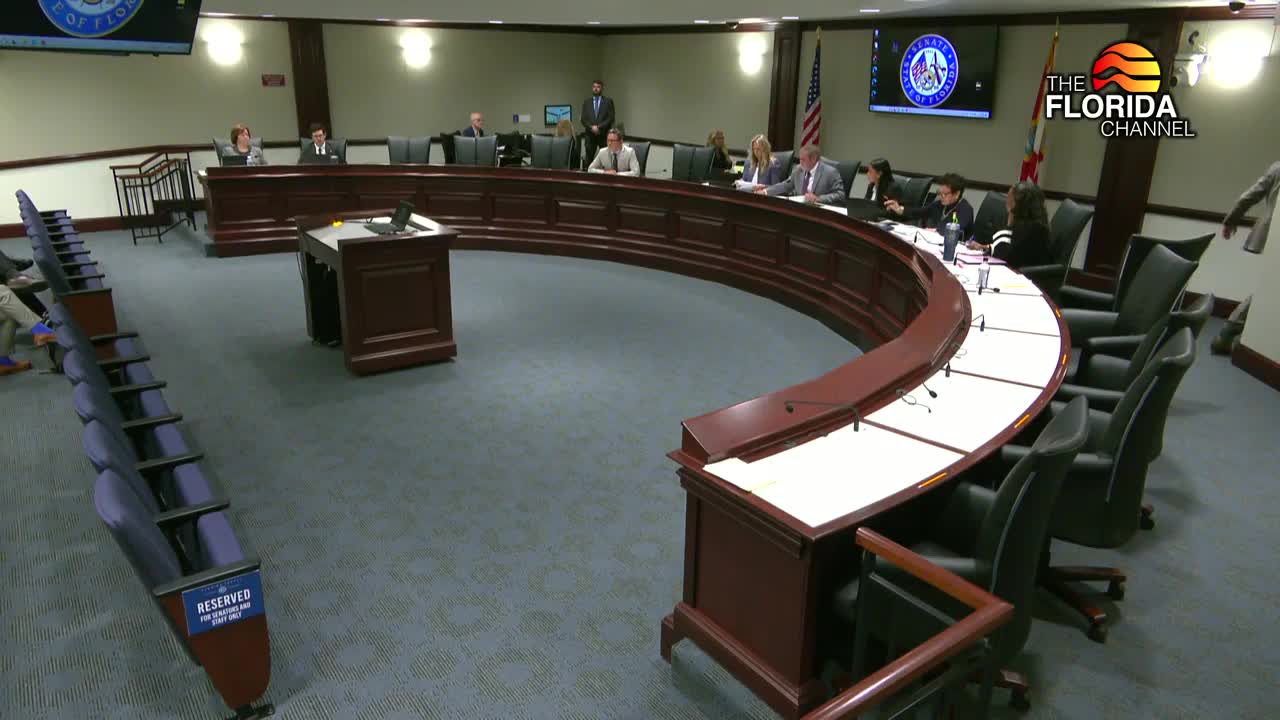
Senate panel advances land‑use overhaul after hours of stakeholder debate over 'compatibility' and infill rules
Loading...
Summary
SB 208, which revises the definition of compatibility, defines 'infill residential development' and allows limited administrative approvals, drew opposition from conservation and local‑government groups over potential sprawl and loss of public review; the committee reported the bill favorably after sponsor assurances to continue negotiations.
Senator McClain introduced SB 208 as an effort to streamline approvals for infill residential development and to add a statutory definition of compatibility. He told the committee the bill "would define infill residential development" and allow administrative approval in certain circumstances while setting standards for fees charged by local governments for processing residential applications.
The bill generated extended testimony from conservation groups and local‑government associations. Beth Alvey, Senior Director of Policy at Audubon of Florida, warned the bill "would replace public and accountable planning with automatic approvals that push sprawl into rural areas" and said the measure could allow 100‑acre parcels to "punch holes" in rural protection areas and harm the Florida Wildlife Corridor. The Florida Association of Counties' representative said the association opposes the bill as written but remains willing to work with the sponsor, identifying the 100‑acre infill threshold and administrative approval language as concerns.
Rebecca O'Hara of the Florida League of Cities told the committee compatibility is difficult to define objectively and urged preservation of public hearings: "No mandatory administrative approval would be really important. We think it's important that we make our decisions in front of the public and the public be engaged," she said.
Builders and housing advocates offered a counterpoint. Edward Briggs of Hyland Homes said the measure helps reduce fees and delays and could advance more attainable housing projects. Chadwick Leonard of 1000 Friends of Florida sought stronger infrastructure and density requirements in the infill definition to prevent context‑insensitive development.
Senators debated the bill's balance between speeding approvals to reduce carrying costs for developers and preserving local process and environmental protection. Senator McClain pointed to the economic impact of delay, saying that each day a project is stalled adds roughly "$350 to the cost of a home" north of I‑4 and "$550 a day" south of I‑4, framing time savings as an affordability tool. Several senators said they will continue working with stakeholders on definitions and safeguards.
The committee ultimately voted to report SB 208 favorably and returned the gavel to Chair McLean. Sponsors and multiple stakeholders said conversations will continue as the bill advances.