
Board of Governors outlines overhaul of performance-based funding, will run new model in parallel
Get AI-powered insights, summaries, and transcripts
Subscribe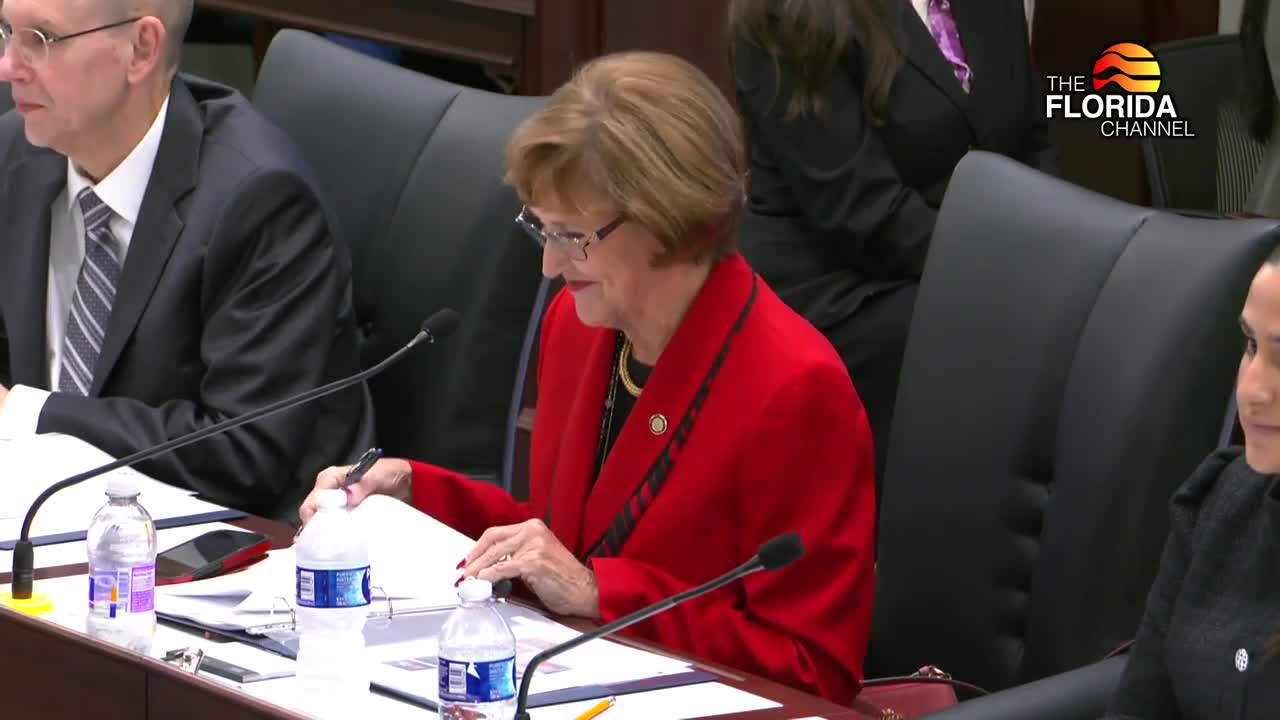
Summary
The Florida Board of Governors presented changes to the state university performance-based funding model to align with the SUS 2030 strategic plan, adjust benchmarks for programs of strategic emphasis and introduce a combined excellence-and-improvement framework to be tested alongside the current model before funds are reallocated.
TALLAHASSEE — The Florida Board of Governors this week described a planned overhaul of the state university system’s performance-based funding formula, saying the changes will be tested over the next year while the current model continues to determine state allocations.
Sarah Danagi, vice chancellor for finance administration for the Board of Governors, told the Senate Appropriations Committee on Higher Education that the model — in place in various forms for 12 years — will move away from separate ‘excellence’ and ‘improvement’ tracks and instead evaluate institutions on both measures simultaneously. “This is the twelfth year of performance based funding,” Danagi said, noting the model is scored on a 100-point scale.
Danagi said the board approved near-term changes that will apply to metrics 6 and 8a (the share of undergraduate and graduate degrees in programs of strategic emphasis), reflecting a 2023 board decision and a statutory requirement to re-review those programs every three years. She told senators the list of programs of strategic emphasis has shrunk from about 800 programs to roughly 200, prompting benchmark adjustments; the board voted to lower benchmarks for those two metrics while preserving rigor.
The board also adopted a new framework intended for implementation in fiscal 2728 that ties metric targets to each university’s starting point and the SUS 2030 strategic goals, aims to eliminate repeated perfect scores that add little differentiation and raises the bar systemwide. Under the new approach, an institution can earn excellence points by being a top-three performer, meeting or exceeding its board-approved 2030 goal, or by hitting an established cap on select metrics.
Danagi identified three metrics that need special treatment — an expanded affordability measure that includes students without loans, an academic progress rate (second-year retention with at least a 2.0 GPA) and the percent of Pell recipients — and explained why caps will be used to avoid unrealistic expectations where high performance is already widespread.
She said the board removed SUS transfer students from some graduation and progress metrics that previously penalized sending institutions when students transferred within the system; responsibility for such students will follow the students to their new institutions and an expanded transfer metric (9a/9b) will capture Florida College three‑year graduation rates and four‑year transfer graduation rates.
The board directed staff to run both the current and the proposed new model simultaneously, Danagi said. The board expects to vote on final metric choices in January and to have scores for both models by the June meeting; funds for FY 2627 will be allocated using the current model, and the new model is intended to be used for FY 2728 allocations.
Committee members asked whether scores would change dramatically under the new framework. Danagi said some institutions may see notable shifts on individual metrics, but the design includes differentiated goals based on where each university is today and a one‑year normalization (scoring the old way if higher) to soften abrupt impacts. “We were very careful to ensure that the new model is staying in compliance with state statute,” she said.
The presentation also included procedural changes around the board-of‑trustees choice metric (metric 10), giving trustees a menu of options to propose and allowing alternatives so long as they align with the strategic plan; Florida Poly and New College of Florida may request alternative approaches because of small graduate counts.
The Board of Governors plans additional workshops and data work over the coming year so that the new model can be refined before it affects funding decisions. The committee did not take any funding votes during the meeting; the board’s decision to keep allocations on the current model for the next fiscal cycle was reiterated.