Get Full Government Meeting Transcripts, Videos, & Alerts Forever!
Get email alerts on the Juvenile Education topic
No spam. Unsubscribe anytime.
DJJ reports early gains and capacity shortfalls in Florida Scholars Academy
Summary
Florida’s Department of Juvenile Justice reported enrollment, graduation and IEP‑identification gains in the first year of the Florida Scholars Academy but said staffing shortages and a ~260‑bed gap are constraining residential placements.
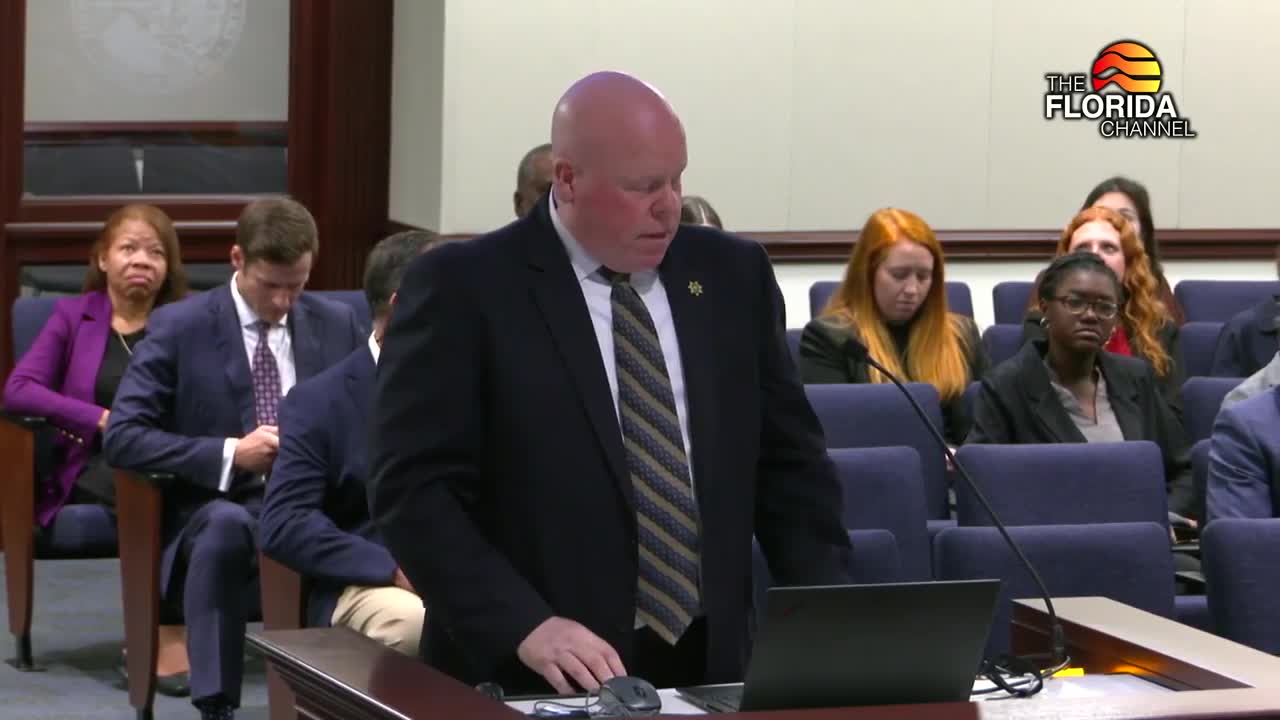
Secretary Matt Walsh, presenting for the Department of Juvenile Justice, told the Senate committee that the Florida Scholars Academy (FSA) — a unified education system for DJJ residential facilities — produced measurable early outcomes but faces capacity and staffing constraints.
Walsh reviewed the rapid timeline for creation: legislation signed July 1, 2023; board appointments and vendor contracting followed; a pilot launched April 1, 2024; and the first day of school was July 1, 2024. Florida Virtual School (FLVS) is the education provider under contract.
He said early technology gaps (students accessing inappropriate sites) were addressed through endpoint device lockdowns, web filtering, segregated network architecture and access controls, and that instruction now combines in‑person paraprofessional support with certified online teachers in a trimester schedule.
Walsh gave first‑year statistics: yearly enrollments just over 3,000 because of turnover; an average population of roughly 1,450; 1,008 students with disabilities; 10,138 total course completions (each equal to half a semester credit); and 226 graduations in the first year. He said 36 of 38 testing sites offered GEDs and that the Department of Education’s desktop and on‑site monitoring for ESE compliance was completed at 100% with no corrective action.
Walsh said FSA identified 11% more kids with Individualized Education Programs (IEPs) since implementation — producing more individualized supports — and that over 1,100 IEP team meetings convened in year one. He reported trimester metrics for year two (July 1–Oct. 31) including a student population of 1,436, 4,517 course completions in the trimester and 138 graduations.
On capacity, Walsh said there is a wait list for residential placements, particularly for girls, and estimated a need for about 260 additional beds to reduce detention wait times and provide appropriate residential placements. He also described staffing shortages in some regions (an Alachua County detention facility was cited as being staffed at roughly 40%). Walsh said DJJ’s top LBR priorities are per‑diem funding increases and more residential beds to meet demand.
Committee members asked about special‑education services, classroom management for students with behavioral needs, and staffing models; Walsh said the program provides one‑on‑one online instruction backed by in‑person paraprofessionals, immediate mental‑health contracting for students in crisis, and staff training on disability recognition and de‑escalation techniques.
Walsh also referenced research on officer suicide from FDLE’s wellness work and said DJJ hopes to bring certain staff under CJSTC oversight to improve standards and accountability.
Next steps: DJJ will continue program monitoring and provide accountability metrics to the Department of Education in January; senators asked for follow‑up on capacity and staffing plans tied to DJJ’s legislative budget request.