
State, utilities say Louisiana positioned to absorb large data-center projects after META deal
Get AI-powered insights, summaries, and transcripts
Subscribe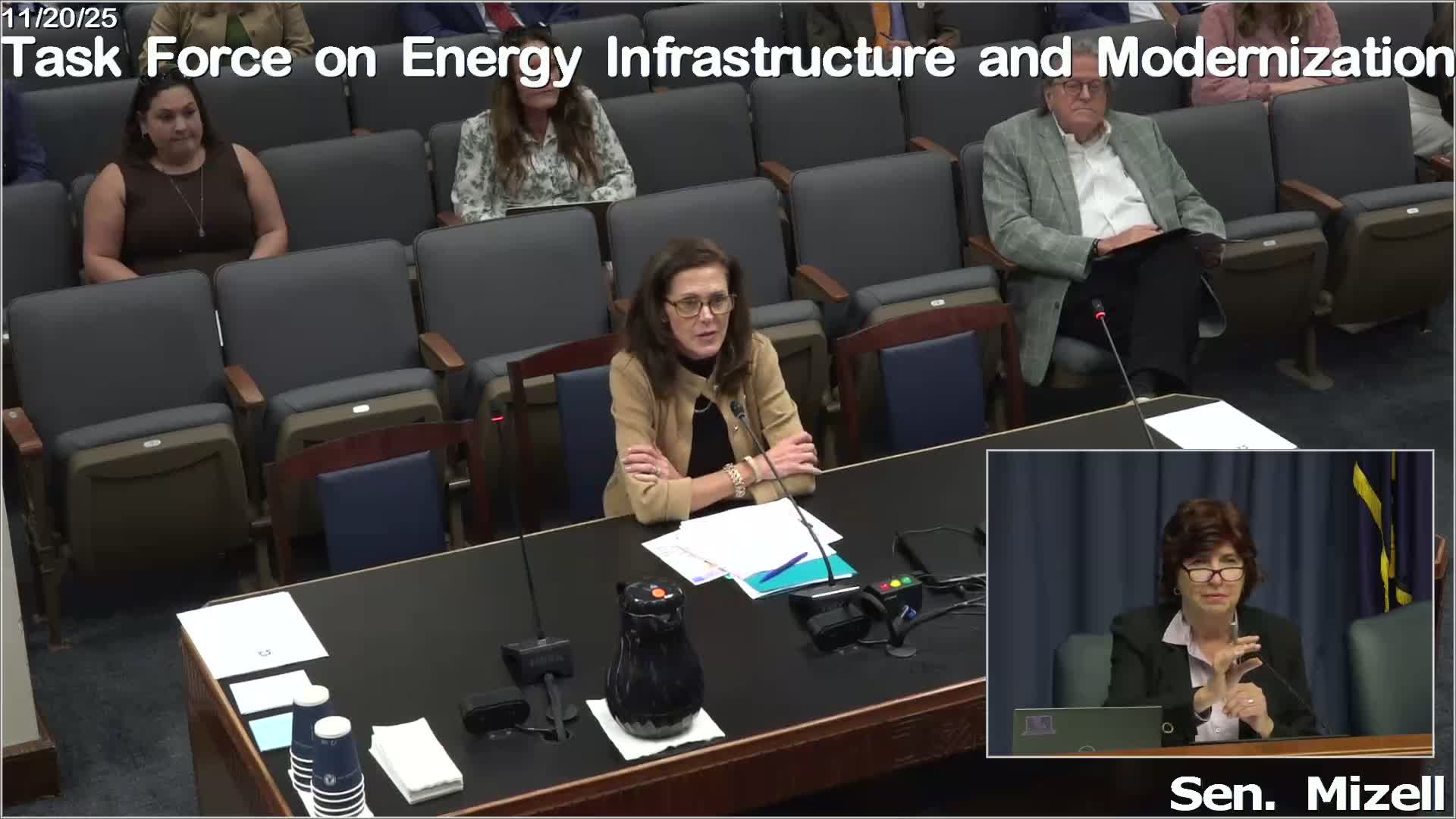
Summary
LED, the Public Service Commission’s consultant and Entergy told a Senate task force that Louisiana’s low industrial power costs, pipeline access and joint PSC-LED coordination—plus contractual protections in the Meta deal—create a predictable path for new hyperscale data centers, while officials warned more projects will require additional regulatory guardrails.
BATON ROUGE — State economic development officials and utility leaders told a Senate task force on Nov. 20 that Louisiana’s energy advantages and recent regulatory steps set the state up to host large data-center projects without shifting costs to most customers.
"Entergy has committed to provide up to 3 gigawatts of power for META by 2028," Secretary Bourgeois said in opening remarks, citing that commitment as a central reason the state could host Meta’s site and additional hyperscalers. Bourgeois and LED staff described Louisiana’s low industrial power prices, extensive natural gas pipeline network and a concerted front‑end coordination with the Louisiana Public Service Commission (LPSC) as the combined reasons firms are choosing the state.
The LPSC’s consultant, Lane Sisson, told the panel that the commission’s regulatory tools — especially an integrated resource planning process begun in 2012 and a recent rule requiring utilities to plan for physically deliverable generation — were designed to preserve both reliability and affordable rates as unexpected large loads arrive. "The rule is structured to require them to plan for a 100%," Sisson said, explaining how the LPSC’s minimum capacity-obligation framework (stair-stepped toward 90% planning coverage) forces utilities to show contracts or physical generation to serve future load.
Entergy Louisiana President and CEO Philip May told lawmakers the utility and Meta negotiated terms intended to prevent customer subsidy and to provide broader customer benefits. "Our contract with Meta assures that our customers will not subsidize that contract," May said, adding that Meta’s commitments also contribute to storm‑resilience funding and other system investments that Entergy and LPSC staff say will benefit customers over time.
Officials emphasized the combination of "speed and predictability" that hyperscalers require. Bourgeois said the state is focusing LED resources on "hyperscalers" with strong balance sheets because those companies bring scale, long-term contracts and workforce investments; she also described a playbook LED is developing for communities that may host projects.
The witnesses described protections now used in the Meta filings: certification hearings for generation and transmission, cost‑causation principles that aim to charge incremental costs to the new load, parent guarantees and minimum-bill provisions tied to a 15‑year contractual term. Sisson said the certification process and negotiation allowed the commission to require contract terms and other measures so the incremental costs would be borne by the project while also helping ensure overall system reliability.
Several task force members pressed witnesses on what would happen if planned generation or contracts failed to materialize. Sisson said penalties exist in the rule and that deficiencies most likely would result in higher costs that could flow to ratepayers if utilities failed to plan properly — a risk the rule aims to lower by requiring documentation (certificates, EPC contracts and enforceable commitments) before certifying new generation.
Officials also described work with regional grid operators to speed interconnection. Sisson said the LPSC and its staff pressed MISO and FERC for expedited interconnection pathways for certified needs and that the commission had participated in a new expedited review track to reduce queue delays.
The task force did not vote on legislation. Members praised the LPSC-LED coordination and signaled future hearings on transmission timelines, interconnection studies and how to scale safeguards if dozens of hyperscalers seek service in the same region.
Next steps: the task force will circulate additional documents and schedule follow-up meetings; the chair said members would receive dates for the next session.