
UN speaker urges consolidation of Gaza ceasefire, warns of dire humanitarian and reconstruction needs
Get AI-powered insights, summaries, and transcripts
Sign Up Free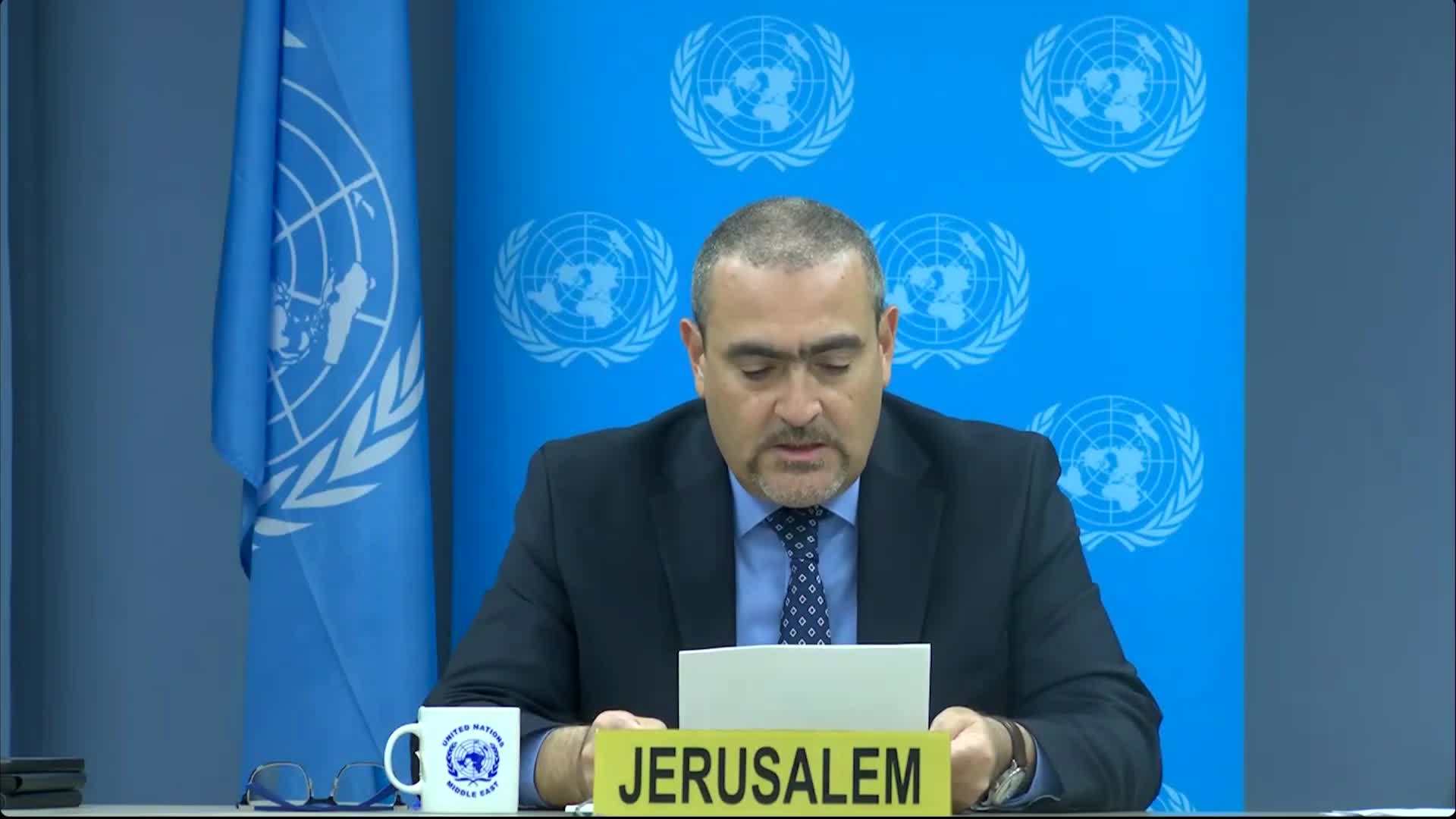
Summary
Ramiz Alakbayov told the Security Council the ceasefire in Gaza "has largely held" but recent strikes and sporadic attacks risk its collapse; he detailed urgent humanitarian shortfalls, an RDNA reconstruction estimate of about $53 billion, and called for expanded crossings and immediate repairs to water and health infrastructure.
Ramiz Alakbayov, Representative, told the United Nations Security Council that the ceasefire in Gaza "has largely held," but warned that recent strikes and sporadic attacks threaten the fragile pause and that parties must "exercise restraint and fulfill their commitments under the agreement."
Alakbayov said the pause has allowed a scale-up of aid but that enormous humanitarian gaps remain. He gave figures intended to convey the scale of the crisis: "The two years of fighting have left almost 80% of Gaza's 250,000 buildings damaged or destroyed," and "Over 1,700,000 people remain displaced," many living in overcrowded shelters without adequate water, medical care, or food.
He described immediate shortfalls in shelter materials, winter supplies and health services, saying hospitals "continue to struggle without electricity and reliable water, severely limiting their ability to care for patients," and warned of a public-health risk where "Sheikh Radwan Pond has effectively become an open sewage tank requiring immediate attention." Alakbayov called for unfettered passage of repair materials and for Israel to expand crossing capacity and expedite clearance of supplies, including United Nations consignments.
On logistics, he noted rerouting through the Jordan Corridor and Al Rashid Postal Road has complicated distributions, even as the UN reported operational gains such as an immunization campaign to reach 44,000 children and the reopening of hundreds of water wells. He said "Over 24,000 metric tons of aid had been collected," while about "190,000 metric tons of food, medicine, and shelter are prepositioned in the region," underscoring the need to scale entry points and resolve NGO registration issues.
Turning to recovery, Alakbayov said the European Union, United Nations, and World Bank are updating the rapid damage needs assessment (RDNA) that in March estimated reconstruction costs at about $53,000,000,000. He framed reconstruction as requiring not only material repair but attention to psychosocial needs, social cohesion and justice, and argued that recovery must be anchored to a clear political horizon leading to a negotiated two-state solution.
Alakbayov also raised the humanitarian impact of unresolved hostage cases, saying families have been reunited but "the bodies of 3 hostages have yet to be returned" and adding that "The bodies of the deceased hostages must be returned immediately." He called for efforts to identify missing Palestinians and for all parties to facilitate humanitarian access and approvals.
The briefing closed with appeals for donor coordination, including an EU-led Palestine donor group and preparations for a Cairo conference on Gaza reconstruction. Alakbayov urged that the current window to consolidate the ceasefire and scale up assistance "must not be lost."