
State police association asks legislature to restore collective-bargaining enforceability
Get AI-powered insights, summaries, and transcripts
Subscribe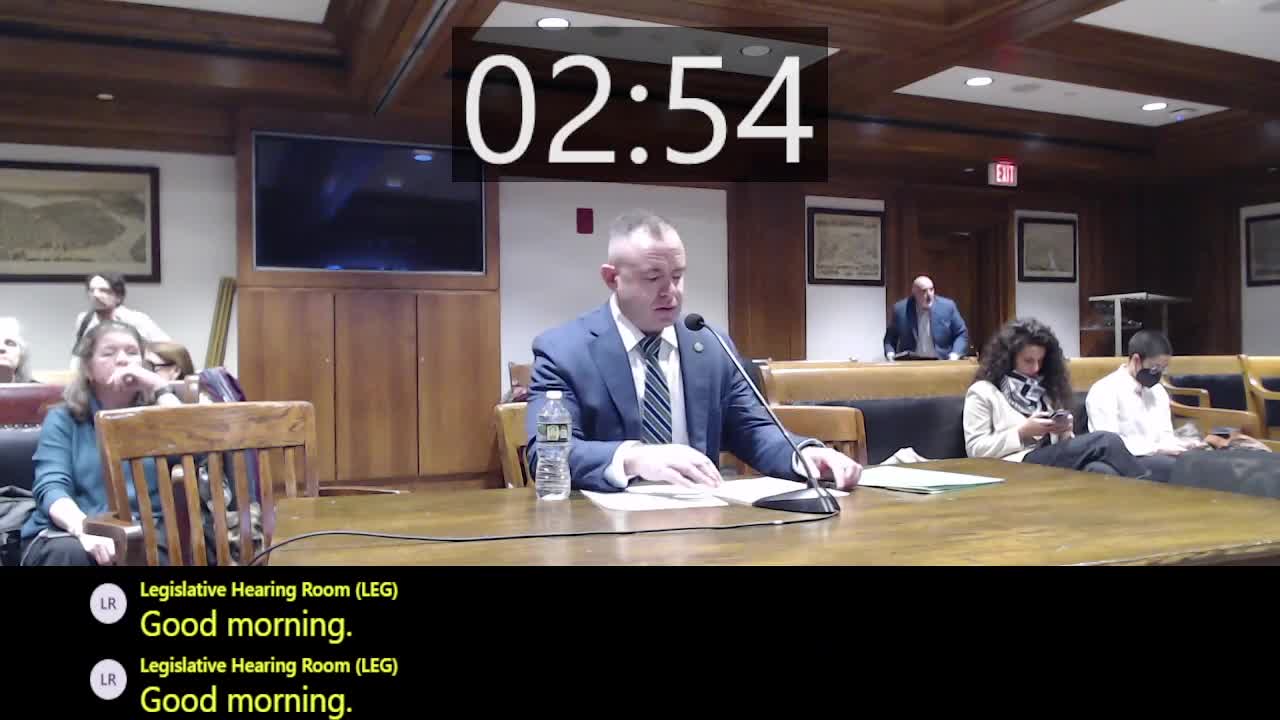
Summary
The State Police Association told a joint committee that S.1360 would correct an apparent omission in state law by extending protections that allow collective-bargaining agreements to supersede conflicting departmental rules, citing examples such as holiday staffing disputes.
Brian Williams, president of the State Police Association of Massachusetts, asked the committee to support S.1360 to ensure that negotiated collective-bargaining provisions for state troopers are enforceable against departmental rules issued under the colonel’s authority.
Williams said Mass. Gen. Law ch.150E §7(d) provides that collective-bargaining agreements prevail over conflicting policies for municipal police and firefighters, but that chapter 22C — the statute creating the colonel’s managerial authority — was not included among the statutes listed in §7(d). He called that omission an apparent oversight that has left troopers’ contract protections vulnerable to being set aside by the department.
In response to committee questions, Williams offered examples — including the department’s treatment of predictable holidays such as Marathon Monday and the Fourth of July — where members believe bargaining protections have been weakened or rendered unenforceable.
Williams urged the committee to support S.1360 to restore parity with municipal unions and maintain trust in the collective-bargaining process.