Witnesses urge Massachusetts to fund K–12, health and police training and to expand diversion options for radicalized youth
Loading...
Summary
Panels from Parents for Peace and Project Shema urged the Special Commission on Combating Antisemitism to recommend state-funded, standardized training for K–12 teachers, healthcare workers and law enforcement, plus pretrial diversion programs and family supports to prevent radicalization before it becomes criminal conduct.
Chair Simon Cataldo opened the Special Commission’s hearing by previewing circulation of a revised draft report and a planned vote next week. Several witness panels testified that prevention, not only enforcement, should be central to the commission’s final recommendations.
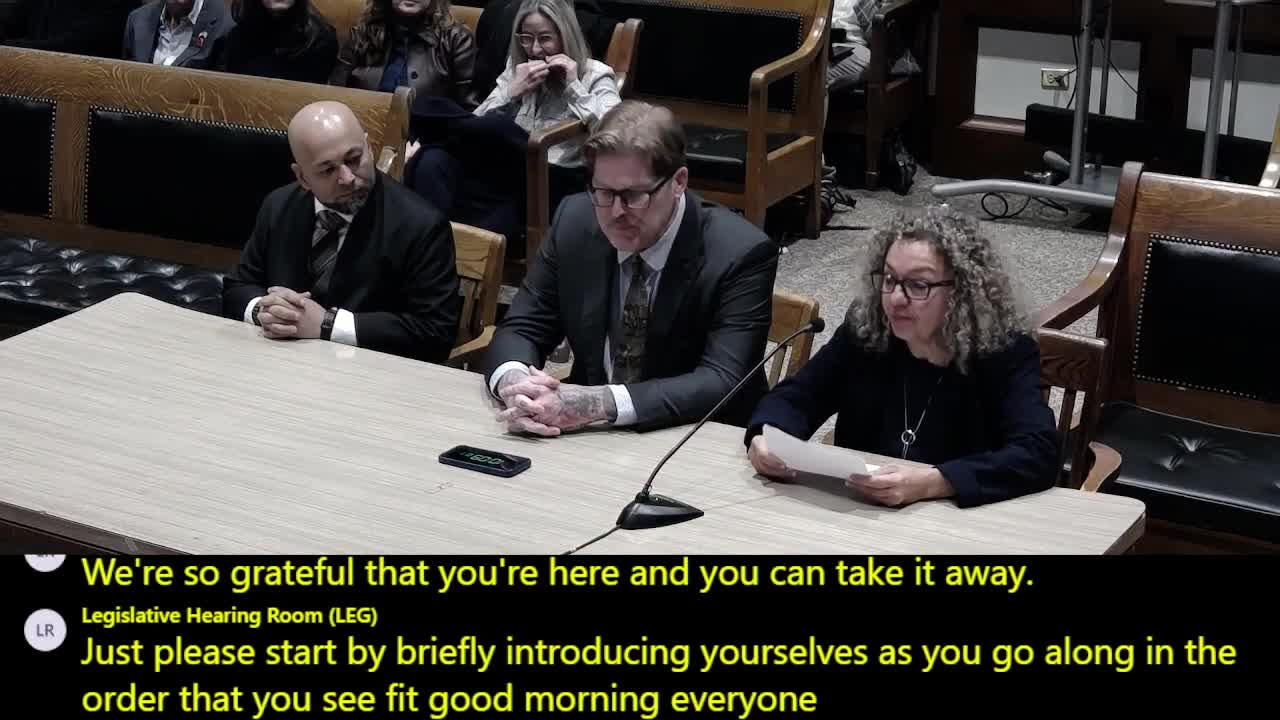
Miriam Nadry Churchill, executive director of Parents for Peace, told commissioners the group has intervened with hundreds of people over a decade and treats “extremism and antisemitism not just [as] a security issue, but a public‑health problem.” She urged the commission to recommend state budget funding for three standardized training streams: K–12 educators, healthcare professionals and law enforcement. “Let's equip our teachers, healthcare workers, and local police with the understanding, compassion, and skills required to keep every community safe,” she said.
Arno Michaelis, an exit peer specialist who described his prior role organizing neo‑Nazi skinhead groups, supported diversion and treatment approaches. “That pretrial diversion opportunity is … one that we need to seize,” Michaelis said, urging programs that allow people to learn, be accountable and avoid escalation into violence.
Panelists described a pilot at Ashland High School and ongoing partnerships with university researchers to evaluate outcomes. Oren Jacobson of Project Shema said effective education must first close four gaps: defining who Jews are, explaining how antisemitism works, teaching mechanisms of antisemitism, and countering the dismissal of Jewish voices. Jacobson added that much of his organization’s work focuses on administrators and staff because those audiences sustain institutional culture.
Commissioners asked practical questions about referrals, diversion logistics and court awareness. Witnesses recommended “train‑the‑trainer” models, centralized curricula, and a family helpline to support relatives who are reluctant to involve police. Multiple presenters said diversion is both an opportunity for early intervention and a necessary alternative when cases enter the judicial system.
The commission’s draft report already includes education and training recommendations; witnesses asked commissioners to attach funding and operational detail so pilots can scale statewide. The chairs said they will circulate updated language reflecting today’s testimony before the final vote.