Lifetime Citizen Portal Access — AI Briefings, Alerts & Unlimited Follows
Supporters press Convention of States resolution at Massachusetts hearing; opponents warn of risks
Loading...
Summary
Proponents of H3888 argued a convention would impose term limits and fiscal restraints; opponents and civic groups told the committee that a federal constitutional convention lacks enforceable safeguards and could threaten civil liberties and worker protections.
Supporters of a Convention of States resolution (H3888) told the Joint Committee on Veterans and Federal Affairs the mechanism is a constitutional tool to restore limits on federal power, impose fiscal discipline, and enact term limits.
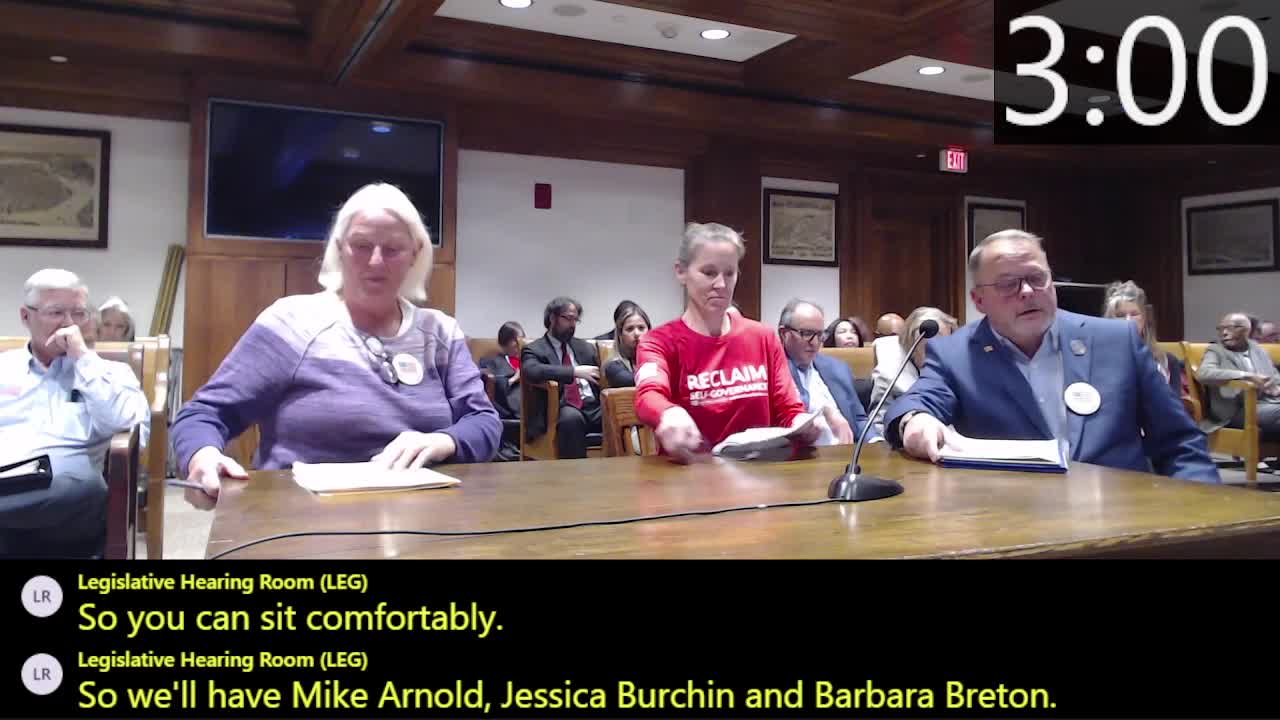
Michael Arnold, Jessica Burchin, Barbara Brenton and other proponents framed H3888 as a nonpartisan response to perceived federal overreach. Michael Arnold said supporters ‘‘stand before you in a remarkable place in support of H3888’’ and described the proposal as consistent with Massachusetts' history of civic leadership.
Opponents and many civic groups, including Common Cause, the League of Women Voters and the ACLU, urged caution or rescission of prior calls. They argued that Article V contains no detailed rules on delegate selection, agenda-setting, or spending limits and that a convention could propose amendments affecting voting rights, reproductive freedom, labor protections, and other entrenched constitutional rights. Gavi Wolf of the ACLU said in testimony that the ACLU "opposes the calling of any constitutional convention" that would weaken civil liberties.
Why it matters: Proponents say a convention is the only feasible path to reforms like term limits and a balanced-budget amendment; opponents say the legal and procedural uncertainty creates unacceptable risks. Testimony also highlighted a recent legal case — McCall v. Pelosi — that was dismissed on procedural grounds but demonstrated active organizing around Article V applications.
Substantive points raised: Proponents repeatedly cited public-opinion polls and argued that the convention process can be limited to specified topics; Convention of States representatives argued that prior mock conventions and the organization's ready-made frameworks show the process is manageable. Critics pointed to the absence of enforceable federal rules, potential for special-interest spending, and the possibility that aggregator tactics could combine dissimilar state applications to reach 34 states.
Next steps: The committee heard a large panel of both proponents and opponents. Members closed the public testimony period by voice vote; no committee recommendation on H3888 was recorded in the hearing transcript.