Get Full Government Meeting Transcripts, Videos, & Alerts Forever!
Get email alerts on the Battery Storage Siting topic
No spam. Unsubscribe anytime.
Advocates split as Massachusetts lawmakers weigh moratorium and wide setbacks for battery storage
Summary
A wave of town officials and residents urged an 18‑month moratorium and large buffer zones for grid‑scale lithium battery storage after local siting disputes, while industry and energy advocates warned that broad setbacks would effectively bar needed storage capacity to meet state clean‑energy targets.
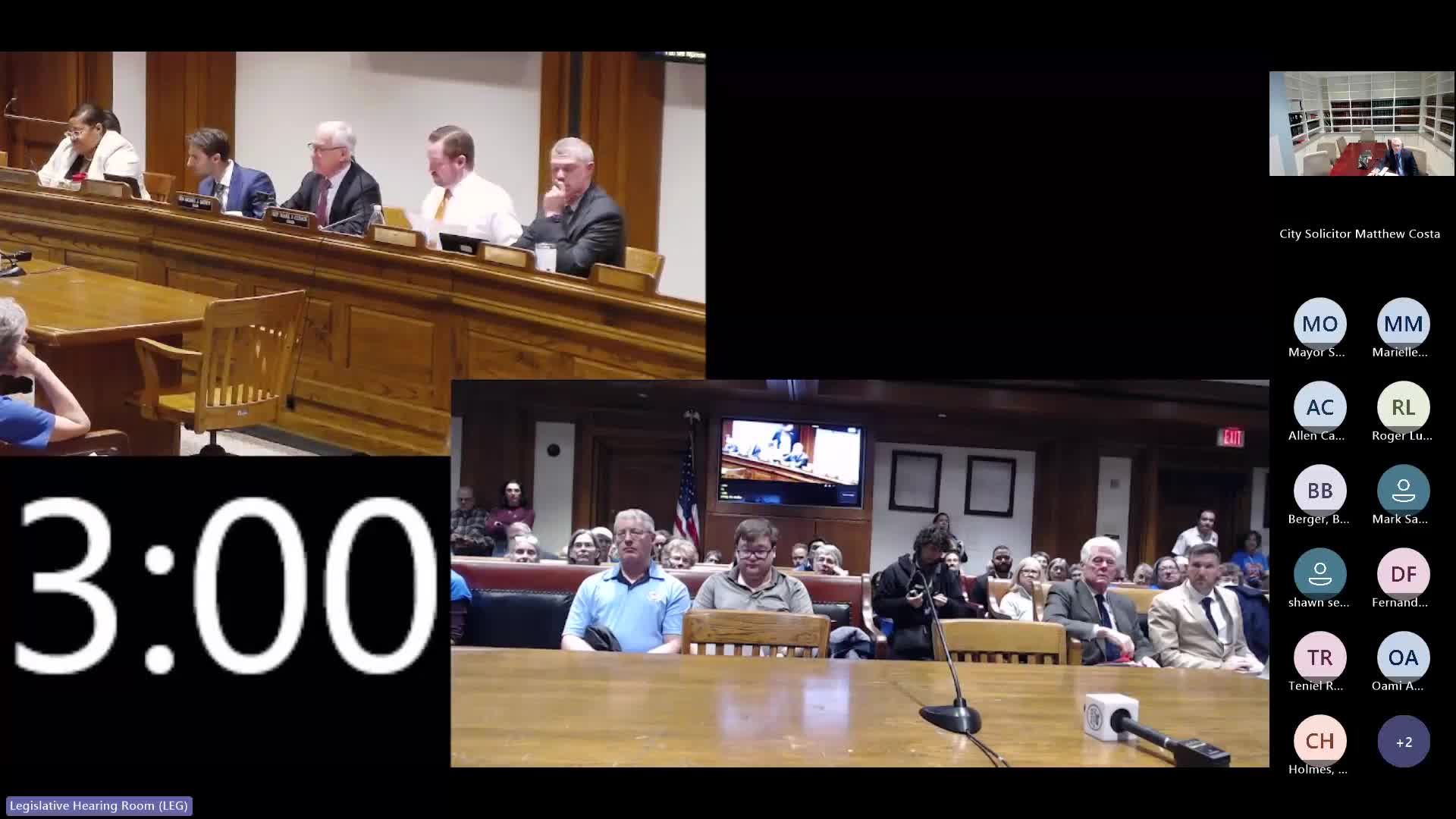
Supporters of H4689 and H4690 urged the Joint Committee on Telecommunications, Utilities, and Energy on Tuesday to pause approvals of grid‑scale lithium battery storage and study safety, emergency response and siting rules before projects proceed.
Representative Sweezy, who spoke about two bills seeking study and setback requirements, said one project she inspected sat roughly 200 feet from a residential property and a child’s playground and called that “very, very unsafe.” She described fires in other states that injured firefighters and warned of runoff and toxic waste risks from firefighting efforts.
Matthew Broderick, chair of his town’s BEST committee in Oakham, told the committee that an investor‑backed proposal would place dozens of shipping‑container sized battery containers near conservation land, an elementary school and the Ware River watershed and asked for an 18‑month moratorium and a comprehensive study of emergency response needs.
Several municipal representatives and residents echoed those concerns. Alan Capone of Tewksbury said a proposed site would lie about 560 feet from a 55+ community and close to conservation land and an aquifer draining to the Merrimack River, calling for a pause so siting choices can be better evaluated.
Industry and clean‑energy advocates cautioned the committee that broadly written setback mandates could make storage infeasible across most of the state. Nathan Rake, Renew Northeast’s manager for state and local affairs, said Massachusetts is targeting 5 gigawatts of storage by 2030 and that “under the proposed buffer zones in 99.99% of the Commonwealth, it would be infeasible for the development of battery storage technology,” citing an analysis that left only two viable interconnection points out of more than 300.
Rake noted that energy storage is already regulated by National Fire Protection Association standards adopted into the Massachusetts fire code in 2022 and urged reliance on existing Energy Facilities Siting Board processes and project‑level emergency planning rather than statewide prohibitive setbacks.
The committee heard environmental and conservation testimony urging cautious siting to protect wetlands, vernal pools and drinking‑water watersheds; representatives from affected towns said they had incurred legal and emergency costs defending local conservation and zoning when developers sought to site large systems.
The hearing closed without a committee vote on the bills. Supporters asked lawmakers for a formal moratorium and a study; opponents urged targeted project‑level mitigation and integration with existing regulatory review.