Massachusetts lawmakers hear wide testimony backing local-option rent stabilization
Loading...
Summary
At a Joint Committee on Housing hearing, tenants, municipal officials and advocates urged lawmakers to lift the state ban on local rent stabilization, proposing CPI‑plus or capped increases and exemptions for owner‑occupied and new construction to reduce displacement.
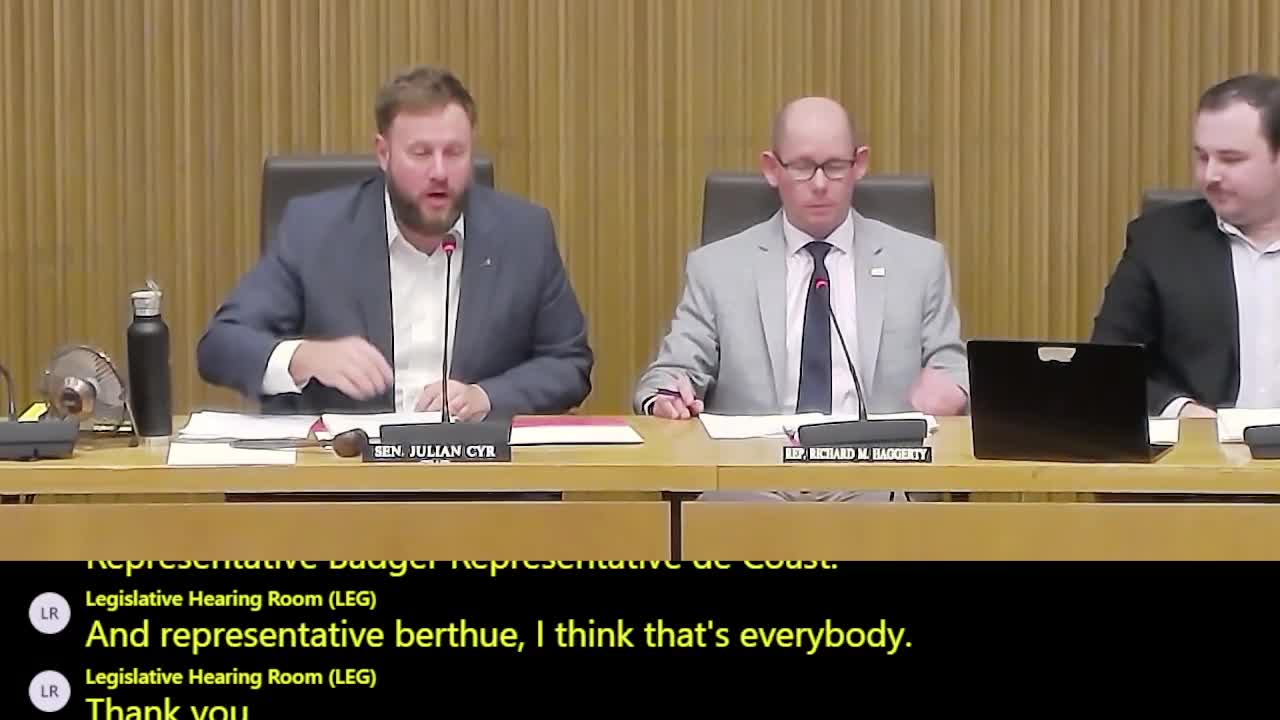
Senate Chair Julian Cyr and House co‑chair Representative Richard Haggerty presided over a hybrid Joint Committee on Housing hearing where a broad coalition of tenants, municipal staff, labor leaders and legislators urged the committee to lift the statewide ban on local rent stabilization.
Advocates framed the measure as a targeted, local option that would allow cities and towns to cap annual rent increases at inflation (CPI) plus a small margin or at a fixed percentage (most proposals in testimony capped increases at 5%). Somerville’s home‑rule petition (S22) was described in detail by Somerville staff and residents: the petition would allow a CPI+2% increase, capped at 5% annually, exempt owner‑occupied two‑ and three‑family homes, and exclude new construction for 15 years.
Tenants and tenant‑organizers recounted buildings sold to out‑of‑state investors, abrupt double‑digit rent hikes, and long eviction fights that displaced families and disrupted school continuity. Senator Ed Eldridge, who represents Somerville, asked the committee to “roll up our sleeves” and pass a workable rent‑stabilization law this term; he also noted signatures had been gathered for a statewide ballot question on rent control.
Municipal officials and housing staff said new housing supply alone will not protect residents currently at risk of displacement and that local tools are needed to preserve naturally occurring affordable housing. Somerville’s witnesses emphasized the combination of modest annual caps with exemptions and capital‑improvement pass‑throughs to protect small owners and to allow for necessary maintenance.
Opponents—particularly some small landlords and industry speakers—warned about adverse effects on supply and rising costs for owners. Those speakers noted operating cost increases (utilities, insurance, property tax) and questioned whether static caps would be workable without careful design and fair‑return provisions.
The hearing closed with lawmakers urging careful drafting to balance tenant stability with protections for small landlords, and with repeated requests that the committee consider the Somerville petition and related enabling legislation this session.
The committee did not take a formal vote at the hearing; the next procedural steps will depend on staff drafting and committee scheduling.