Get Full Government Meeting Transcripts, Videos, & Alerts Forever!
Get email alerts on the Library Challenges Book Bans topic
No spam. Unsubscribe anytime.
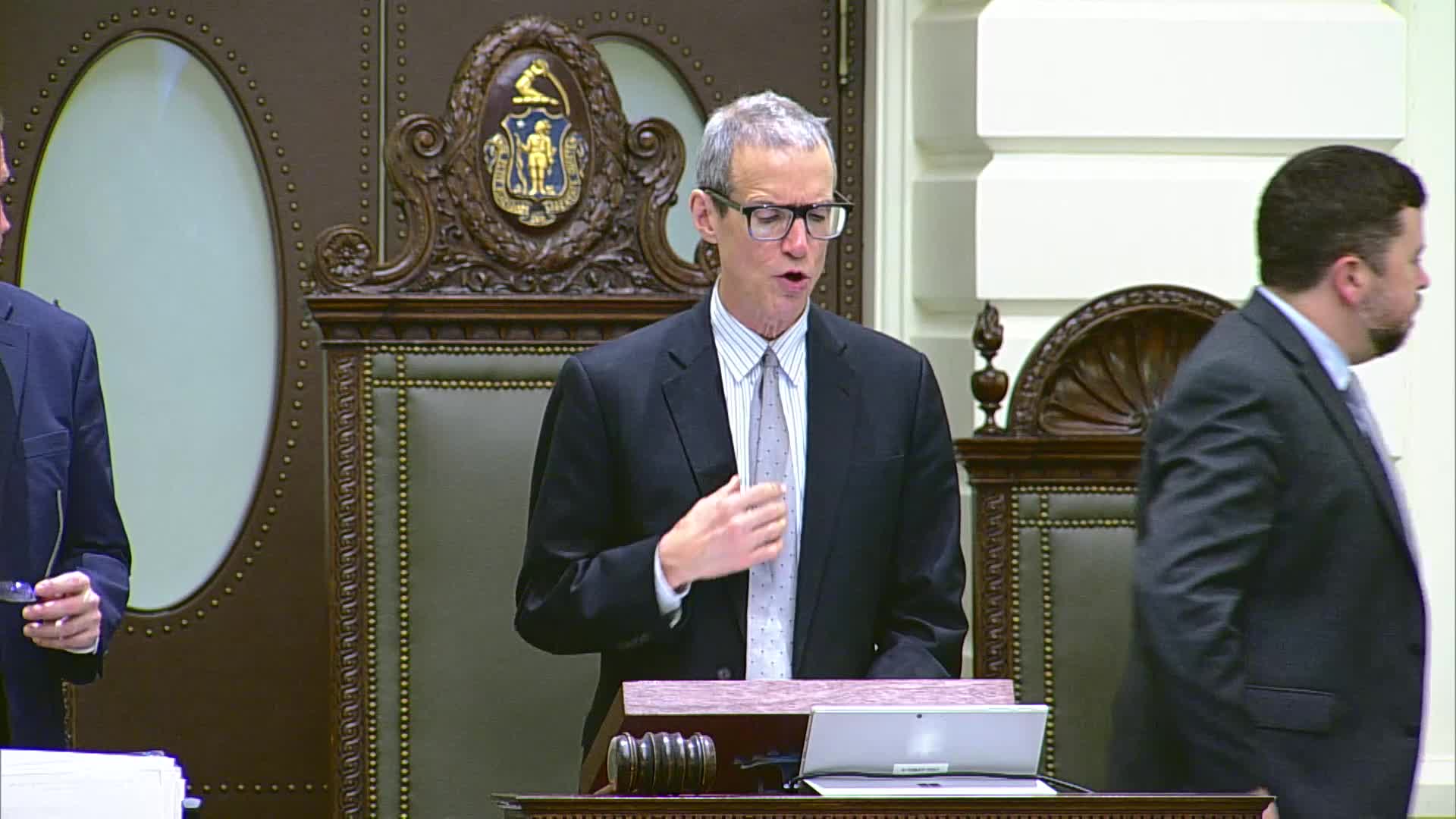
Mass. Senate advances ‘Free Expression’ bill after debate over book-challenge rights, parental notice and review timelines
Summary
The Massachusetts Senate voted to pass to third reading An Act Regarding Free Expression (S.B. 2696) after adopting a Ways and Means amendment and rejecting multiple changes that would have limited or expanded who can challenge library removals, required broad parental notification, or mandated strict review timelines.
The Massachusetts Senate on the floor considered a string of amendments to An Act Regarding Free Expression (Senate No. 2696), a bill that sets procedures for challenges to materials in school and public libraries and clarifies who has standing to seek judicial review.
Senator Crane, sponsor of Amendment No. 4, said the change would extend standing to authors and creators, allowing them to “go to court to challenge a school board's decision to remove material from a school library.” He argued authors suffer not only financially when their works are targeted but also lose the ability to speak through their work. Crane described the experience of a family member — whose novel was challenged — to illustrate the impact: “Authors have a strong interest in decisions about book removals,” he said. The Senate adopted Amendment No. 4 by a roll call announced on the floor as 37 in the affirmative and none opposed.
Subsequent debate turned to who should be allowed to initiate challenges and how school districts should handle them. Senator d Domenico proposed Amendment No. 5 to limit challengers to people directly connected to a school (employees, parents/guardians of students in that school, or students themselves), saying the change would guard against “well funded groups such as Moms for Liberty” filing numerous, often out-of-state challenges. Senator Comerford and other supporters framed that approach as protecting librarians and classroom decision-making from mass outside pressure and urged the Senate to consider the “entirety of the work, not just a word, a phrase, a page, [or] a picture.”
Other amendments drew sharp disagreement. Senator Ta (Essex & Middlesex) filed versions that would have required timely parental notification when materials are challenged, added parents to local review committees, and required school-library catalogs to display age or grade designations. Opponents argued such broad notification could politicize reviews and risk harassment of school staff. After debate and a roll call, the parental-notification amendment did not pass (the clerk announced 6 in the affirmative, 32 in the negative).
A proposal from Senator Duran (Amendment No. 9) to remove challenged materials from shelves while adjudication proceeds was rejected on voice vote; a separate motion (Amendment No. 10) to require school committees to resolve challenges within 90 days also failed on a roll call (7 yeas, 30 nays). Senator Durand’s Amendment No. 11 — which would have allowed judicial review of a school committee’s decision whether to remove or retain material — was opposed as a potential source of endless appeals and was not adopted.
Several amendments that would have changed process or added parental controls were defeated in recorded votes. By contrast, a Ways and Means amendment (Amendment No. 7) was adopted as amended. After consideration of the remaining amendments, the Senate ordered the bill to a third reading and passed it to be engrossed; the clerk announced the final roll call as 35 in the affirmative and 3 in the negative.
Key votes at a glance: Amendment No. 4 (authors’ standing) — adopted, 37–0; Amendment No. 8 (parental notification) — failed, 6–32; Amendment No. 9 (remove contested material while adjudicating) — not adopted (no recorded favorable voice vote); Amendment No. 10 (90‑day timeline) — failed, 7–30; Amendment No. 11 (allow appeal of retention decisions) — not adopted; Amendment No. 16 (require school-committee adoption of policy after hearing) — failed, 5–32; Ways and Means amendment (No. 7) — adopted; Bill ordered to third reading and passed to be engrossed — 35–3.
Speakers and attributions in this account follow the Senate floor record. Supporters of broader standing and transparency framed their proposals as protecting authors’ expression and parental rights to know about challenged materials; opponents consistently argued that some amendments would inject politics into professional library and curriculum decisions or create opportunities for harassment and repetitive litigation. The Senate left core elements of the bill intact while approving the Ways and Means changes and advancing the bill toward final passage.
Next steps: The Senate ordered the bill to a third reading and passed it to be engrossed. The record shows the Senate adjourned after the vote and will reconvene as scheduled. No final enactment or governor’s action is recorded in this transcript.
Quotes (representative): “Authors have a strong interest in decisions about book removals,” Senator Crane said. Senator d Domenico warned that challenges are “driven by well funded groups such as Moms for Liberty.” Opponents of broad notification said a mass-notification approach “really risks creating unnecessary alarm and politicizing what should be a professional and deliberative process.”
Note on authorities and process: The floor debate referenced judicial-review procedures in Massachusetts General Laws (chapter 30A, section 14) as an existing path for appeal; the clerk identified the measure on the third reading as Senate No. 2696, titled An Act Regarding Free Expression.