Get Full Government Meeting Transcripts, Videos, & Alerts Forever!
Get email alerts on the Public Health topic
No spam. Unsubscribe anytime.
Advocates press committee to treat relapse as a health issue, not a probation violation
Summary
Doctors, public defenders and recovery organizations urged the committee to pass H1913/S1117 so courts prioritize treatment over jail when relapse is the only probation violation; they argued incarceration increases overdose risk and disrupts recovery.
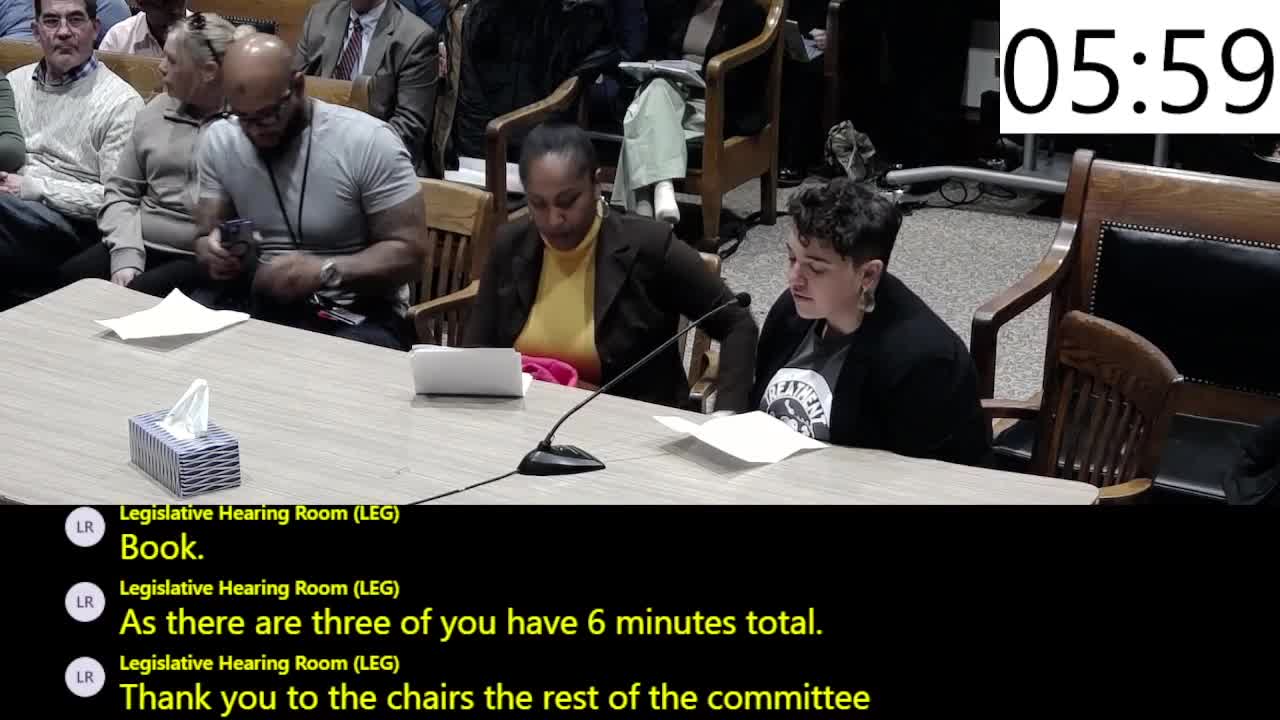
A large coalition of clinicians, public-health groups and defense attorneys urged passage of H1913/S1117 (treatment, not incarceration) during the hearing. Witnesses from Boston Medical Center, the ACLU, Massachusetts Organization for Addiction Recovery (MOAR) and public defenders described cases in which probationers who relapsed while engaged in treatment were jailed, disrupting care and increasing overdose risk.
Deb Goldfarb of Boston Medical Center said repeated short custodial stays "rip[] people away from all treatment connections they had in the community," arguing for court options that prioritize community-based care. The Massachusetts Medical Society and peer-recovery advocates presented evidence and clinical reasoning that relapse should trigger reassessment and adjustment of care, not automatic incarceration.
Defense counsel and CPCS staff warned that outcomes vary by courthouse and called for statutory clarity so that relapse while in treatment cannot be the sole basis for jail. Proponents asked the committee to report the bill favorably, citing harm-reduction data and the state's overdose statistics.
No formal action was taken at the hearing; chairs invited written testimony and technical edits.