Get Full Government Meeting Transcripts, Videos, & Alerts Forever!
Get email alerts on the Education Accountability topic
No spam. Unsubscribe anytime.
Lawmakers Hear Hours of Testimony on ‘Thrive Act,’ Split Over Charter Cap and Receivership
Summary
The Joint Committee on Education heard hours of testimony on S.374, the Thrive Act, with educators and unions urging an end to state receivership and supporters calling for community‑led turnaround plans while charter leaders and parents warned that Section 4 would shrink charter seats and force school closures.
BOSTON — Hundreds of witnesses told the Joint Committee on Education on Tuesday that Massachusetts’ system for identifying and fixing struggling schools needs major change — but they sharply disagreed about how to do it.
Senate Bill 374, called the Thrive Act, would replace the state receivership model with locally driven turnaround plans and new supports such as community school strategies, backers said. ‘‘State takeovers have not improved outcomes for students,’’ said Deb McCarthy, vice president of the Massachusetts Teachers Association (SEG 1347‑1354). The bill’s proponents also urged removal of punitive practices they say have displaced educators, stripped democratic oversight and failed to boost MCAS results in districts such as Lawrence, Holyoke and Southbridge.
‘‘We need to center the experiences of those who know our schools best,’’ AFT Massachusetts representative Jessica Tang said in virtual testimony, and asked the committee to focus S.374’s first three sections on assessment and accountability reforms rather than charter finance changes (SEG 943‑1030).
Opponents concentrated on section 4, a provision that would change the formula that lets districts in the state’s bottom 10 percent use a higher charter net school spending cap. Charter leaders warned that cutting that cap to 9 percent statewide would force thousands of seats to close. ‘‘Section 4 proposes closing Libertas,’’ the Springfield charter founder said, and threatened programs that serve predominantly Latino, Black and high‑needs students (SEG 512‑521). Tim Nicolette, executive director of the Massachusetts Charter Public School Association, urged rejection of section 4 and said the provision ‘‘ignores what’s working’’ in many charters (SEG 383‑426).
Testimony came from a range of witnesses: current and former teachers, union officials, principals and parents, as well as students who described how charter options changed their lives. Many witnesses urged a narrow framing of S.374 focused on the accountability toolset rather than on charter finance; several unions said they support removing section 4 from this bill and addressing charter funding in a separate vehicle (SEG 1460‑1480, 1459‑1479).
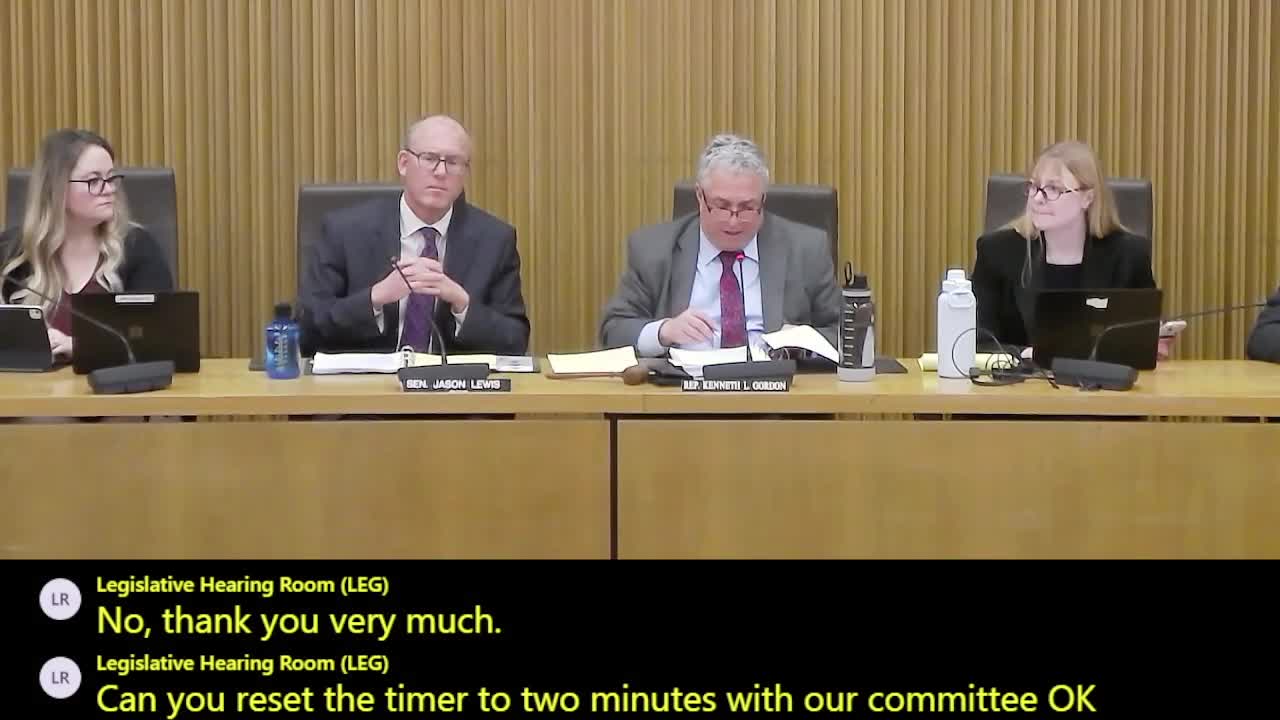
Senator Jason Lewis, co‑chairing the hearing, repeatedly pressed witnesses on how to balance measurement of school performance with the harmful side‑effects they described. ‘‘Basing that on just pure MCAS scores…is not an accurate way to measure school performance,’’ he told the panel, and he urged stakeholders to develop measures that reflect student growth as well as raw achievement (SEG 657‑674).
Committee members signaled openness to further conversation. ‘‘If we don’t come together and figure out something here, this issue is not going away,’’ Lewis said, noting the political pressure that produced last year’s ballot change on MCAS and graduation standards (SEG 680‑686).
Next steps: the committee closed testimony on S.374 after an extended panel and will consider the record as it decides whether to report the bill out of committee for further action.
Sources: Oral testimony before the Joint Committee on Education, Nov. 25, 2025. Direct quotes are identified with witness names and come from the hearing record.