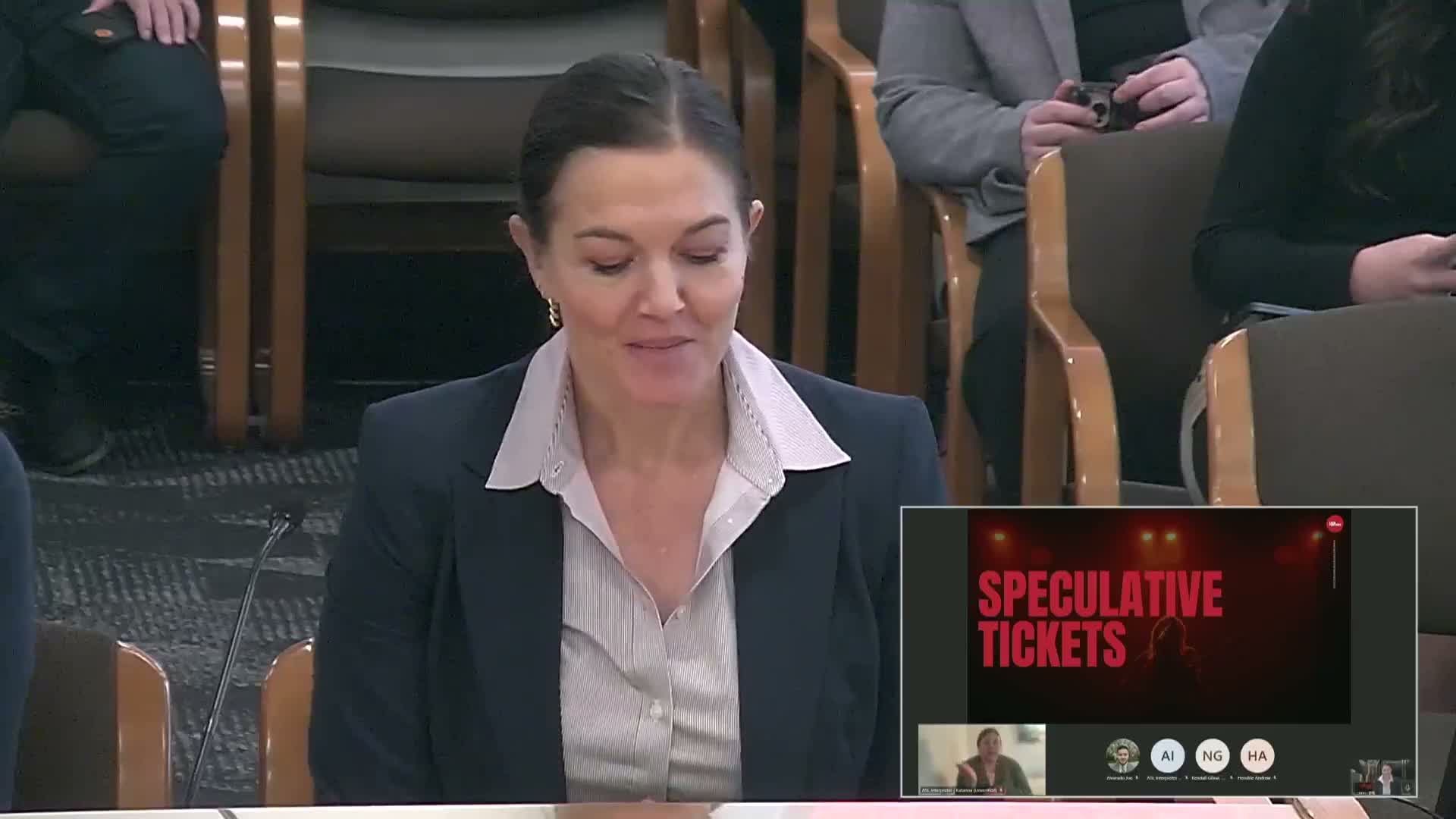
Venues, industry groups push Oregon lawmakers to ban "speculative" ticket sales that list nonexistent tickets
Loading...
Summary
Venue operators and the National Independent Venue Association urged the House interim committee to ban speculative ticketing—listings sold before the seller possesses the ticket—citing cases of fans paying inflated prices and arriving to find tickets invalid or nonexistent.
Representatives of Oregon venues and national venue groups urged state lawmakers on Nov. 18 to prohibit speculative ticketing—listings for tickets a seller does not possess—arguing the practice misleads fans, inflates prices and damages venues’ reputations.
Marnie Smith, owner and general manager of the Hayden Homes Amphitheatre in Bend, described instances she calls "Maingate Heartbreak," when patrons travel to a show and discover their secondary-market purchase is invalid. "Speculative ticketing is a highly deceptive practice that deceives consumers by making them think they're buying an actual ticket, when in fact the seller doesn't actually have tickets to sell," Smith told the House Interim Committee on Commerce to Consumer Protection.
Rachel Lembo, executive director of Portland'5 Centers for the Arts, said secondary listings sometimes show unavailable sections or continue to be listed after cancellations. She described an example where seats advertised on secondary sites were priced at $500 while comparable seats on the official site were $90.
Abby McKee, president and CEO of the Britt Music & Arts Festival, described local cases in which patrons were sold speculative tickets—one Medford resident bought two speculative Willie Nelson tickets for $1,500 each before on-sale and Britt staff intervened to reverse charges and accommodate the patrons. McKee said such incidents impose heavy staffing and reputational costs on local nonprofits: "We're a tiny, tiny nonprofit in a very small community...we're not going to be able to provide that staff time for every single patron." She said independent venues contribute roughly $1.4 billion to the state's economy and that those operations deserve consumer-protection safeguards.
Kendall Gilvar, representing the National Independent Venue Association (NEVA) and the Fix the Ticks Coalition, said other jurisdictions are already moving: "Maine and Maryland have already passed speculative ticketing outright," and several other states have introduced legislation or enforcement approaches. Gilvar described policy options used elsewhere, including fines per violation, platform obligations to verify sellers or private rights of action, and resale-cap models (for example, Maineimplemented a 10% resale cap). He said bans should cover both individual sellers and secondary platforms to prevent displacement of bad actors to other marketplaces.
Committee members asked whether platforms verify sellers possess tickets before listing, whether ordinary resale would be affected by a ban, and how enforcement would be structured. Panelists said verification practices vary by platform and that the policy focus should be on listings for tickets that do not exist or are not in a seller’s possession rather than lawful resale of legitimately owned tickets.
The panel did not propose a concrete Oregon bill during the informational session; advocates asked the committee to consider statutory language that would prohibit speculative listings and to weigh enforcement models ranging from civil penalties to platform-level obligations.