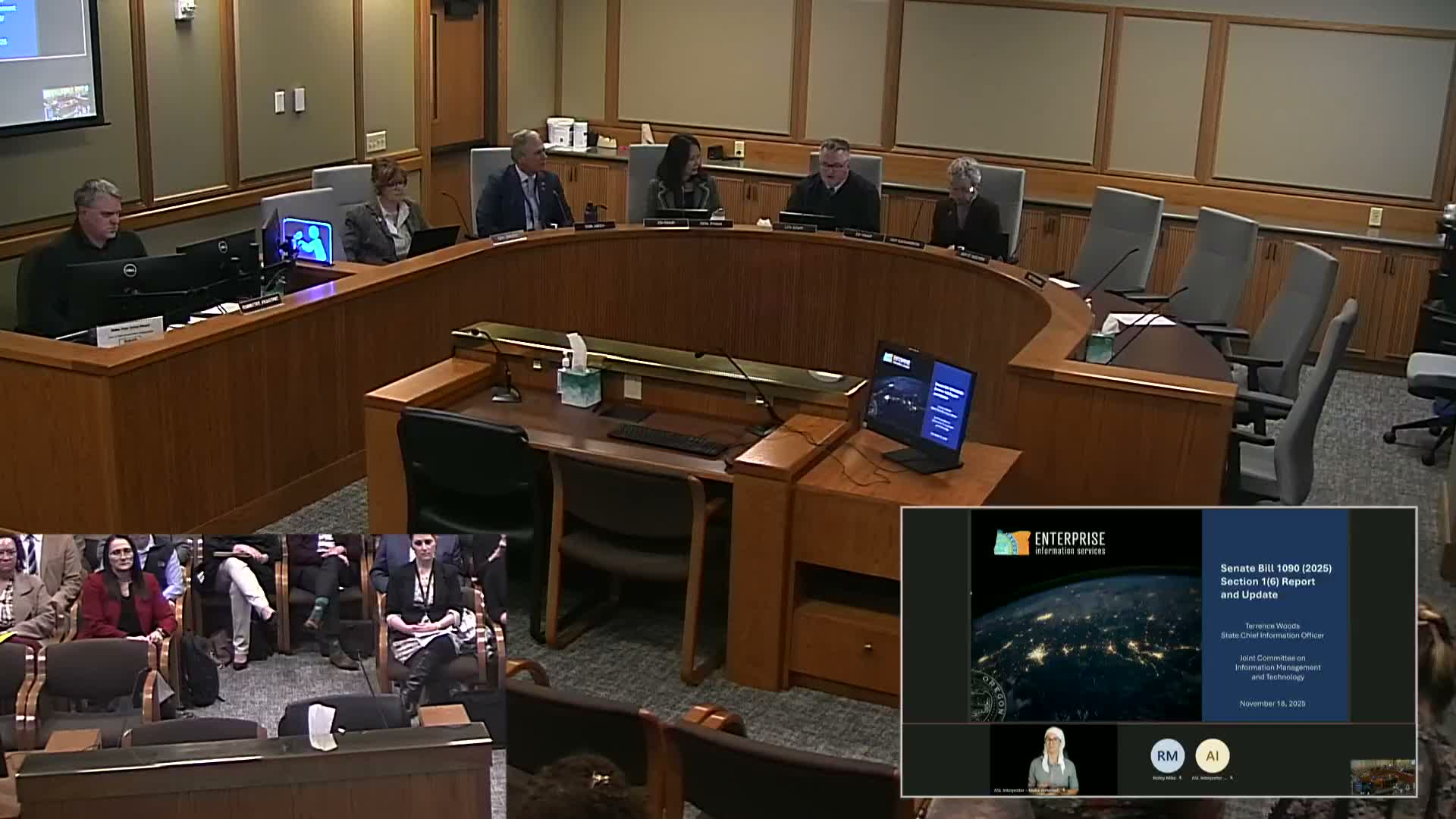
State CIO presents first consolidated IT budget report under SB 1090, flags prioritization work ahead
Loading...
Summary
The state chief information officer presented a consolidated report required by Senate Bill 1090 listing IT budgets and project requests approved by the Legislative Assembly, outlined assumptions and agency variations in reporting, and said next steps will establish prioritization criteria and procedures.
Terrence Woods, Oregon’s state chief information officer, told the Joint Interim Committee on Information Management and Technology that the first consolidated report required by Senate Bill 1090 is complete and posted to OLIS and the state CIO office. "This first report was our enterprise best effort," Woods said, describing collaboration with the Legislative Fiscal Office and agency staff to compile agency budget and project requests.
The report, Woods said, lists information technology budget and project requests approved by the Legislative Assembly for the 2025–27 biennium and was submitted to the governor and the committee as the statute requires. Committee staff reminded members that SB 1090 directs the CIO and legislative fiscal office to provide the consolidated list no later than Oct. 31 of each odd-numbered year.
Woods told members the report reflects agency differences in how IT is organized and budgeted: some agencies have discrete IT units, others embed IT in program budgets, and some contract third-party support. He also said the team treated approved budget line items as the requested amounts for initial reporting and did not independently verify each agency’s original request. "We made an assumption that the budget and project approved were requested," he said.
Committee members asked whether the state was prioritizing the "right" projects and whether projects addressed cyber risk and service reliability. Woods and staff said the next phase will focus on developing transparent prioritization criteria and procedures to evaluate project requests, and that Enterprise Information Services (EIS) will work with the Legislative Fiscal Office on that process.
Co-chair and members welcomed the consolidated view but emphasized that this committee’s role is policy: assessing whether the state’s IT investments support effective government operations, reduce vulnerability and deliver service to Oregonians. Woods said more detailed budget-by-budget figures and appendices are available in the posted materials for members who want dollar-level detail.
The committee took the report and moved on to the next agenda item without a formal vote; staff noted further work on prioritization will be brought back in future sessions.