
APTA, TriMet and rural providers warn of a transit funding ‘fiscal cliff’ and service cuts
Get AI-powered insights, summaries, and transcripts
Subscribe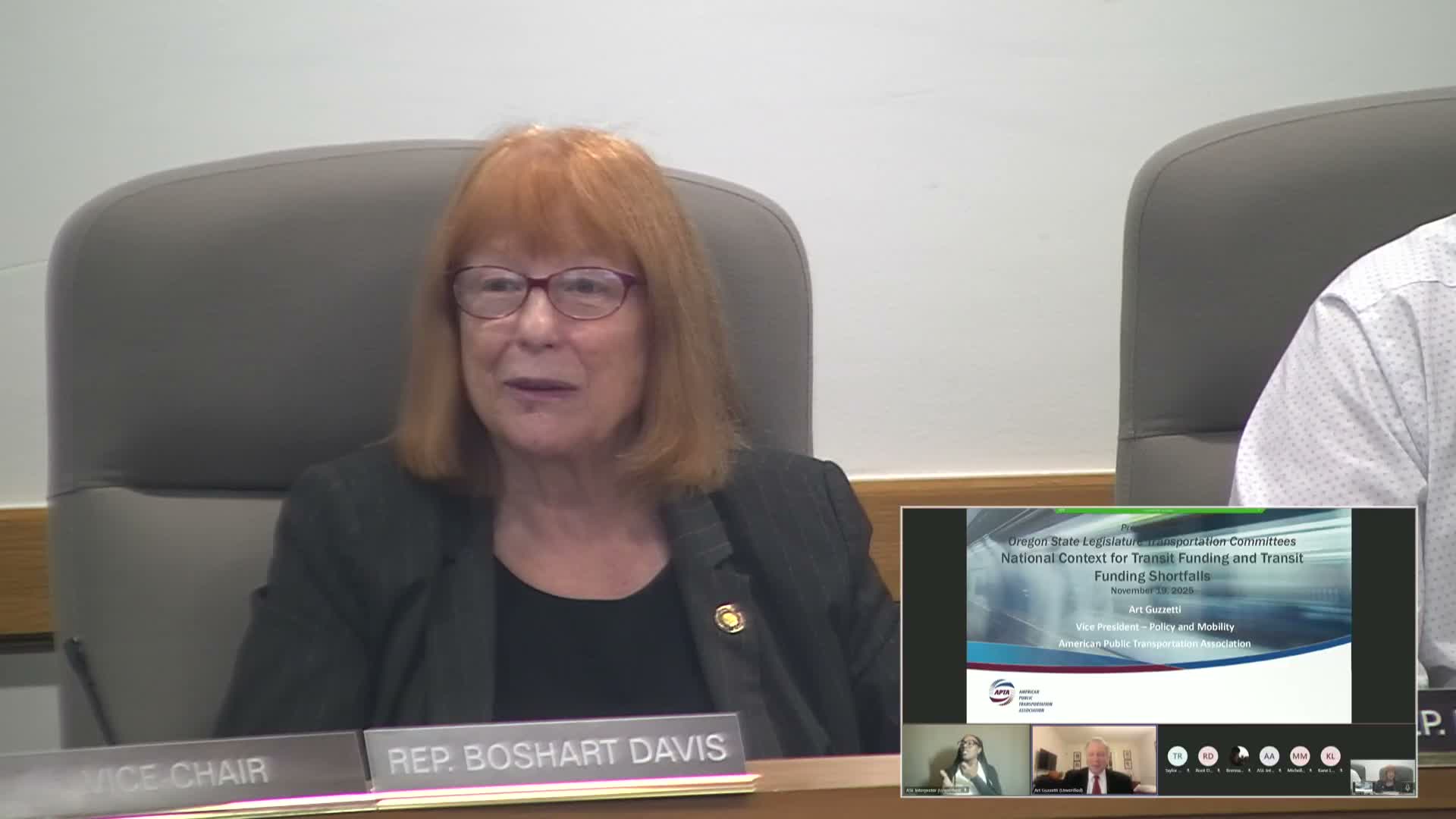
Summary
National and local transit officials told the committee that waning federal pandemic relief, inflation and changing ridership patterns have left Oregon transit providers facing large budget gaps; TriMet forecast at least 10% service cuts by 2027 without new sustainable revenue and rural providers said STIF increases are critical to avoid steep local reductions.
Arthur Gazzetti, vice president for policy and mobility at the American Public Transportation Association, told the committee that three factors—(1) the waning of federal emergency relief, (2) inflation and increased operating costs, and (3) changed ridership patterns—are producing a national transit fiscal challenge. He said regions that avoided cuts typically secured dedicated local revenue sources such as sales taxes or delivery fees.
JC Veneta, TriMet’s chief public affairs officer, described TriMet’s local situation: declining downtown commuting but rising demand among transit‑dependent riders; a 53% increase in operating costs between 2019 and 2024; a $700 million capital maintenance backlog; and an estimated $300 million annual budget gap that TriMet must close. Veneta said TriMet plans internal cuts, hiring freezes, and a future fare increase in 2028 but cautioned that without new ongoing revenue the agency will need to cut at least 10% of service by 2027.
Representatives of smaller and rural systems emphasized the local consequences of funding changes. Scott Chancy (Josephine County) and Kane Lester (Community Connection Northeast Oregon) explained that STIF funds are locally generated and that many systems rely on STIF for a large share of operations (Josephine County receives roughly $1.3 million in STIF annually—about 30% of its budget—and warned a STIF lapse could mean a 30% service reduction). Michelle Carson (Klamath Tribes) described the Quail Trail service that provides essential medical and elder transportation in very rural areas and said some riders would lose access if funding shrinks.
Lawmakers pressed transit leaders on how capital projects, safety investments and service redesigns affect budgets and on tradeoffs for different corridors and modes. Speakers offered to provide additional financial detail to inform legislative decisions on short‑ and long‑term revenue options.