
Oregon outlines $80 million ARPA-backed behavioral health workforce push; training, loans and bonuses credited with strong retention
Get AI-powered insights, summaries, and transcripts
Subscribe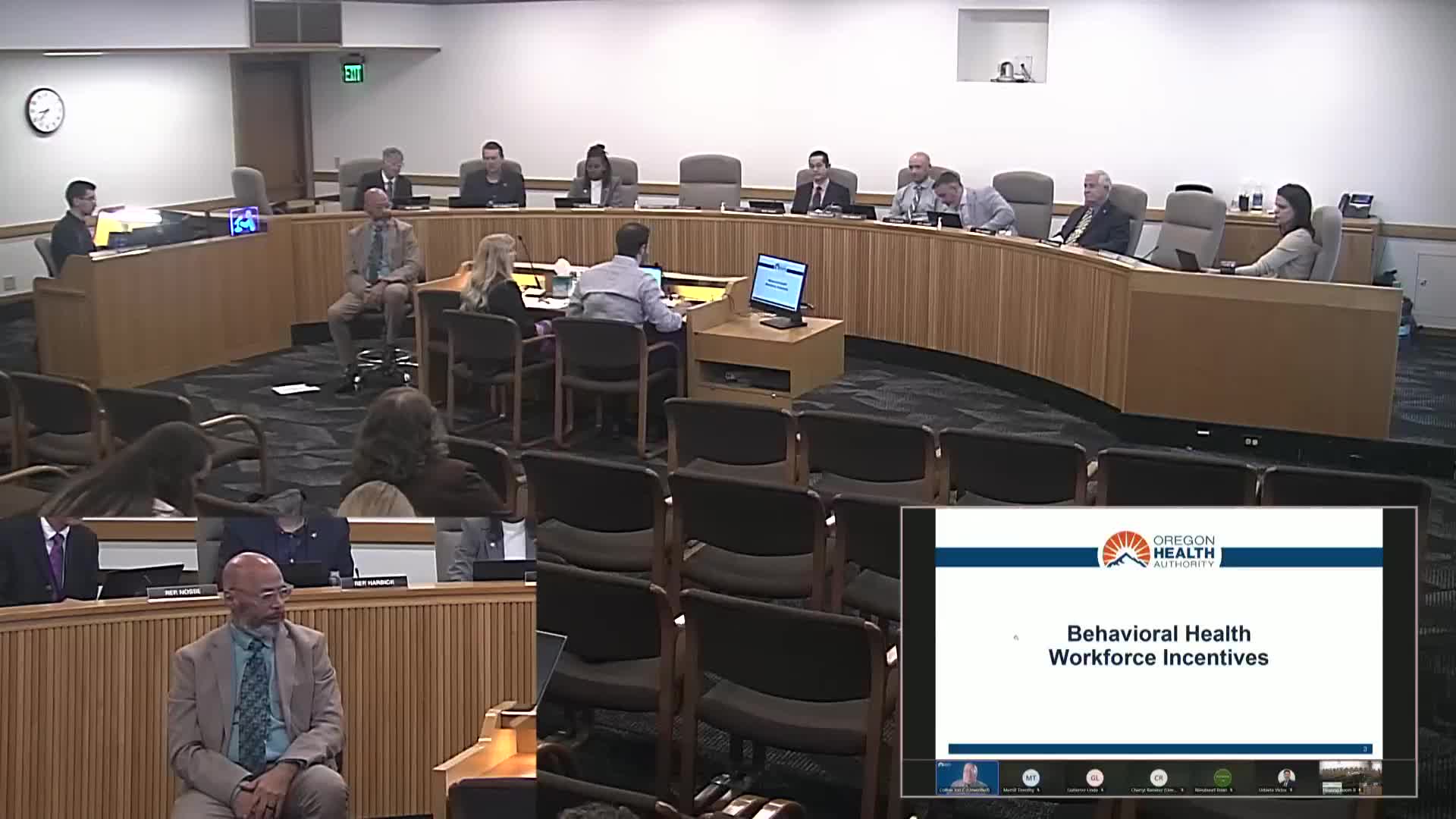
Summary
OHA officials told the House committee that the 2021 ARPA-funded House Bill 2949 and subsequent state investments have funded scholarships, loan repayment, supervision grants and bonuses that show high retention rates so far, while expansion of high‑school and fellowship pipelines aims to grow and diversify the workforce.
Oregon Health Authority officials told the House Interim Committee on Behavioral Health that a mix of federal ARPA and state funds have driven programs to recruit and retain behavioral health providers across the state.
Tim Nesbitt, manager of OHA’s behavioral health workforce incentives team, said “House bill 29 49 was passed in, 2021 and appropriate $80,000,000 of ARPA funding, American Rescue Plan Act funding, in response to the pandemic.” The money was divided between workforce incentives and clinical‑supervision grants and flowed into a mix of scholarship, tuition‑assistance, credentialing‑fee waiver, bonus and loan‑repayment programs.
Why it matters: Committee members pressed for clearer pathways from training to steady jobs and for ways to keep providers in Oregon after education. Several programs cited by OHA are explicitly designed to expand the pipeline (high‑school CTE and bachelor‑level entry points), reduce cost barriers to credentialing, and create supervision capacity so more clinicians can complete licensure.
What OHA reported: Nesbitt gave program totals and retention data the agency is using to evaluate impact. Highlights include: the tuition‑assistance and scholarships programs for education and training (126 so far but expected to grow as multi‑year programs complete), credentialing exam and initial‑license fee waivers (including a $130,000 obligation to the Association of Social Work Boards for exam fee waivers), and a clinical‑supervision grant that pays supervisors and incentivizes supervision capacity. For community mental health program (CMHP) set‑asides he noted roughly $5.5 million and reported retention of 89% for supervisees and 84% for supervisors within those set‑asides. Across non‑set‑aside providers the team reported 348 credentials gained, 900 supervisees hired, and 136 supervisors trained.
Loan repayment and bonuses: Nesbitt said the loan‑repayment program allocated $15,800,000 and awarded 282 providers across 25 counties, with an average award of $65,000 and a two‑year service agreement; the program is tracking an 89% retention rate. Bonuses and housing stipends totaling about $2.8 million supported 20 employers and were highlighted for success recruiting culturally specific providers and peer‑led organizations; OHA reported about 43% of bonus recipients identified as non‑white.
Education and pipeline work: OHA described investments in graduate and undergraduate pathways and high‑school career programs. Nesbitt noted recent expansion in high‑school CTE pilots — citing a Sunset/Beaverton program that grew from 16 to 51 students this school year, Lane County programs enrolling 41 students across nine high schools, and Salem‑Keizer programs placing students in paid internships. He also described support for child‑and‑adolescent psychiatry and developmental pediatrics fellowships (OHSU), where OHA-supported fellowships are expected to expand toward ten fellows by the 2026–27 academic year.
Committee questions and next steps: Members asked whether post‑graduation ‘stay’ bonuses could be added to convert trainees into long‑term Oregon providers. Nesbitt pointed to similar fellowship‑to‑practice models in other states and said the idea warranted support though short‑term budget constraints could limit new incentives. Representative Mannix also raised facility reuse ideas (the former Hillcrest campus) to expand residential capacity — a concept the committee asked staff to note for follow‑up.
What remains unspecified: OHA repeatedly framed results as encouraging but correlative; the agency expressly declined to claim direct causation between individual incentives and credential growth. Several eligibility, implementation and timeline details (for example, exact start dates and application criteria for some grants) were identified as “on the OHA website” or “to be updated,” and the committee requested follow‑up materials.
Next steps: Committee members asked OHA to provide updated timelines, eligibility details and a clearer ‘roadmap’ for how high‑school and undergraduate pathways connect to credentialing and reimbursement.