Rural and small transit providers warn STIF dependence leaves services vulnerable
Loading...
Summary
Representatives of Hood River County (CAAT), Josephine County and other rural providers told the Senate committee that STIF funding is central to operations and that recent special-session funds provide temporary relief; without sustainable revenue some providers expect staff cuts and service reductions (estimates varied by provider).
Multiple rural and small transit providers told the Senate Committee on Transportation that Oregon’s STIF allocations are critical to keeping local and regional services running and that a temporary infusion from the special legislative session will only delay difficult choices.
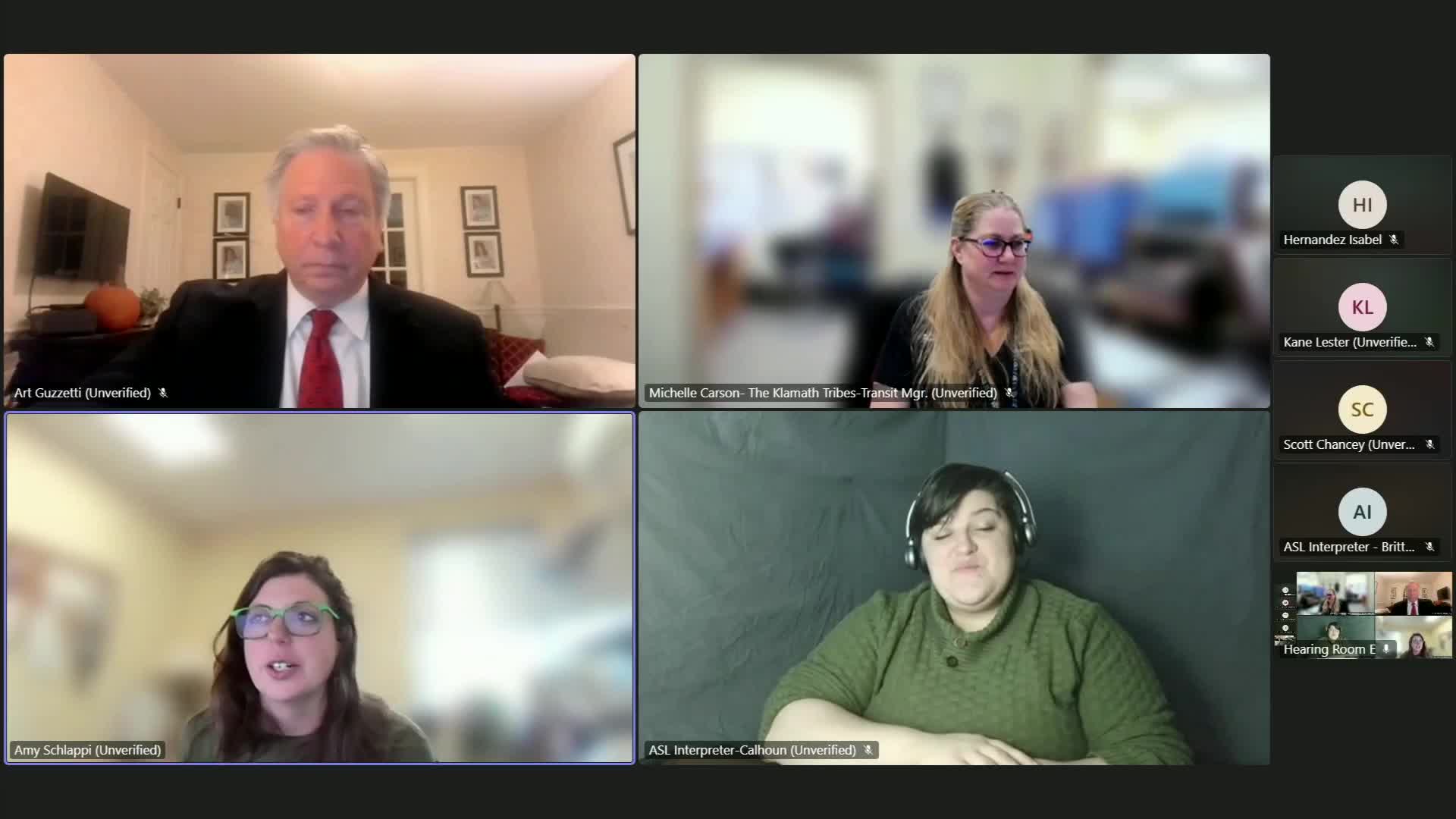
Amy Schlappi, executive director of Hood River County Transportation District (Columbia Area Transit, CAT), said STIF funding "accounts for approximately 50% of the revenue that CAAT receives on an annual basis" and that special legislative funding will maintain current services for the next two years; she also said the district will focus on capital projects and that staffing reductions could follow when temporary funds sunset. She added that CAAT projects a reduction of roughly 15% of staff if sustainable funding is not found.
Scott Chance, Josephine County transit manager, explained STIF mechanics and local impacts: he said about 90% of STIF dollars collected in a region remain there and that his system receives roughly $1,300,000 in STIF annually, which helps leverage more than $3,000,000 in federal funds. Chance warned that absent the additional funding some systems are projecting service reductions and that his agency's conservative estimate of potential system-wide service cuts would be about 30%.
Kane Lester (Community Connection) and Michelle Carson (Quail Trail) described the geography and social value of rural routes — long distances, free or low-cost services for veterans, elders and students, and limited staff and vehicles — underscoring how STIF supports connectivity to medical care, jobs and groceries in remote areas.
Providers asked lawmakers to consider the distribution mechanics and the planning constraints attached to STIF and special funding (recipients must amend existing plans) when weighing near-term allocations and longer-term funding structures.