Get Full Government Meeting Transcripts, Videos, & Alerts Forever!
Get email alerts on the Property Tax Reform topic
No spam. Unsubscribe anytime.
Senate approves package of property-tax reforms; supporters call relief, opponents warn of shifted burden
Summary
The Ohio Senate approved a series of bills aimed at limiting property-tax growth and creating fixed‑sum levy rules. Supporters said the measures deliver property tax relief; opponents warned they shift costs to local governments and weaken voter control over levies.
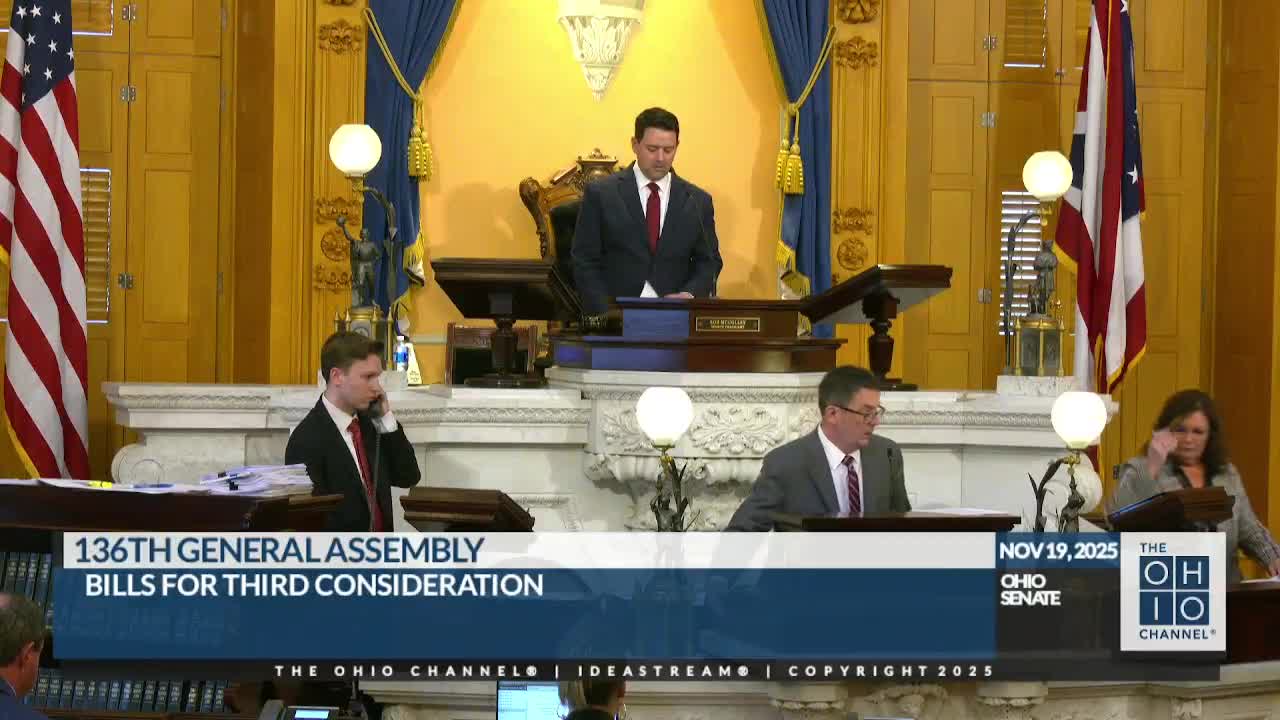
The Ohio Senate passed a package of bills designed to curb rapid property-tax increases and restructure how certain levies count toward school funding, concluding a day of extended floor debate.
Senator Sandy O’Brien, sponsor on multiple measures, said the bills were intended to "offer" property-tax relief for Ohio taxpayers and to close what she called "a few loopholes in the 20 mil floor" that had allowed some districts to increase property-tax revenue through emergency or substitute levies. "Our taxpayers whom we represent want property tax relief," O’Brien said on the floor.
The package included House Bill 129 (counting fixed-sum levies toward the 20-mil floor), House Bill 186 (an inflation-cap credit on the 20-mil floor and a phased owner-occupancy/nonbusiness credit change), House Bill 309 (expanding county budget commissions’ authority to reduce what they deem "unnecessary or excessive" levy collections), and House Bill 335 (limiting inside-millage growth tied to reappraisal). The measures passed on separate roll-call votes; margins ranged from 23–10 to 30–3 depending on the bill and amendments.
Opponents, led by Senator Nick Smith, criticized the approach as short-term and likely to shift costs. "This is not tax relief. This is a tax shift," Smith said, arguing the package reduces local communities’ ability to raise voter-approved revenue and that the state should instead fully fund the fair-school-funding formula. Smith and other critics repeatedly cautioned that reduced local revenue could lead to more levies, lower bond ratings, or service cuts if voters reject future levies.
Supporters, including Senators Kaler and Blessing, said the bills strike a balance by protecting taxpayers while preserving options for school districts in genuine emergencies. Blessing described the owner-occupancy credit changes as "$400,000,000 per tax year of property tax relief for every homeowner in Ohio" and said the package included protections to hold local governments harmless where required by the bills’ mechanics.
Several proposed floor amendments were offered and tabled during debate. For instance, Senator Hicks Hudson offered an amendment to ensure ballot labels clearly identify true emergencies; Senator Reineke moved to lay that amendment on the table, and the motion carried (24 yeas, 9 nays). Senator Smith proposed an amendment to restore a phantom-revenue fix; that amendment was also debated and tabled.
What comes next: each bill was passed and titled on the Senate floor; implementation details and hold‑harmless provisions will be addressed in administrative guidance and follow-up work between the legislature and local officials. The record shows sustained floor concern about the interaction among the separate bills and their combined fiscal effect on school districts and counties.
Votes at a glance: House Bill 129 passed (23–10); House Bill 186 passed (30–3); House Bill 309 passed (23–10); House Bill 335 passed (23–10).