Get Full Government Meeting Transcripts, Videos, & Alerts Forever!
Get email alerts on the Family Law topic
No spam. Unsubscribe anytime.
Senate passes overhaul of parenting-responsibility rules, emphasizes child's best interest
Summary
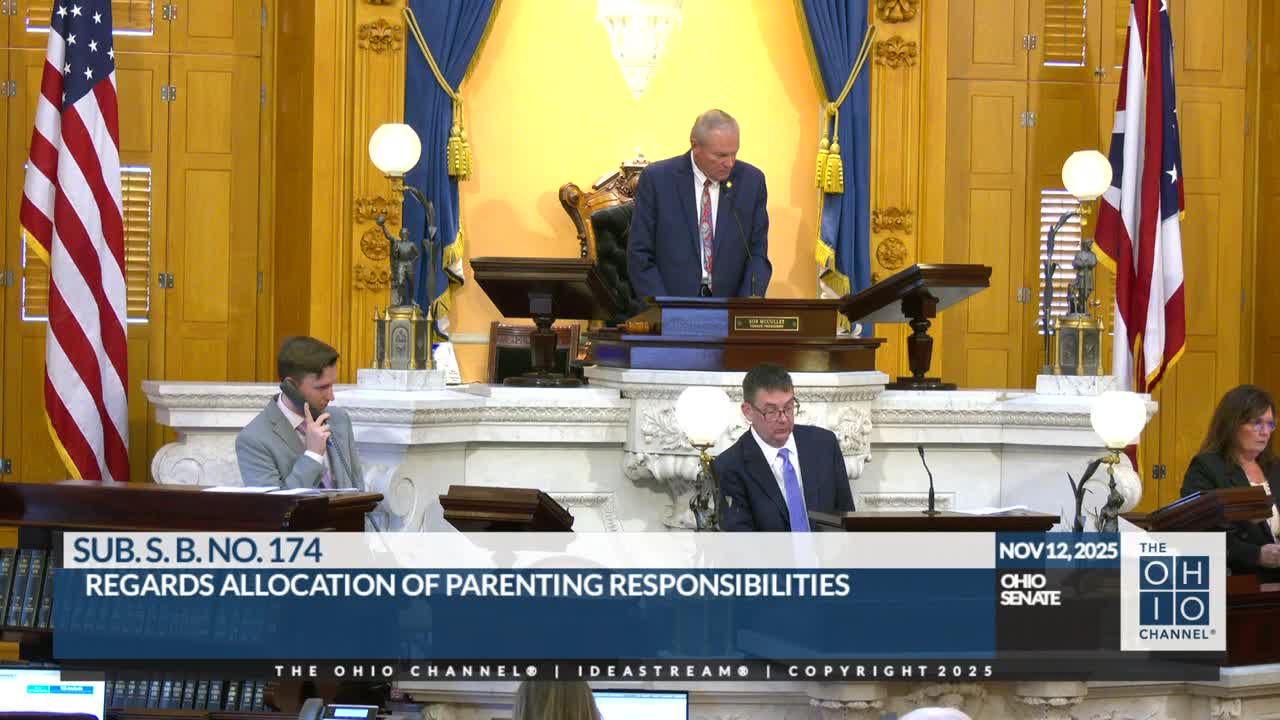
Senate Bill 174, which revises Ohio’s parenting-responsibility and parenting-plan law to emphasize the child’s best interest and require written findings when parenting time is not substantially equal, passed 29–2 after floor debate about maintaining parental rights and statutory factors.
The Ohio Senate voted to pass Senate Bill 174 on Nov. 10, a multi-year effort its sponsors described as a modernization of domestic-relations law focused on the best interest of the child.
Sen. Gavarone, the bill’s floor sponsor, said the legislation is the product of two decades of work with parents, mental-health professionals, attorneys and judges. She said the measure focuses on allocating parenting responsibilities — not removing parental rights — and added that courts must provide written findings when parenting time is not substantially equal or when a proposed parenting plan is not adopted.
Sen. Hicks Hudson, a co-sponsor, said the bill preserves parental rights while adding factors to the best-interest standard and includes provisions to help unwed parents secure legal relationships with children. Hicks Hudson also described steps taken during committee hearings to address opponents’ concerns.
Some senators expressed caution. On the floor, a small number of members voted against the bill; the clerk announced final passage with 29 yeas and 2 nays. Supporters emphasized that the bill aims to keep both parents engaged when appropriate and to require courts to explain deviations from equal parenting time in writing.
The bill’s changes include: a clarified definition of parenting responsibility that restores explicit references to parental rights; new factors for courts to weigh in best-interest determinations; and a requirement that the court explain in writing why a joint parenting plan or a plan proposed by one parent was not adopted.
Next steps: The bill was passed and titled; it will proceed to the governor for signature. Sponsors said the law is intended to standardize practices across jurisdictions while preserving judicial discretion to protect each child’s interests.