Get Full Government Meeting Transcripts, Videos, & Alerts Forever!
Get email alerts on the Floor Roundup topic
No spam. Unsubscribe anytime.
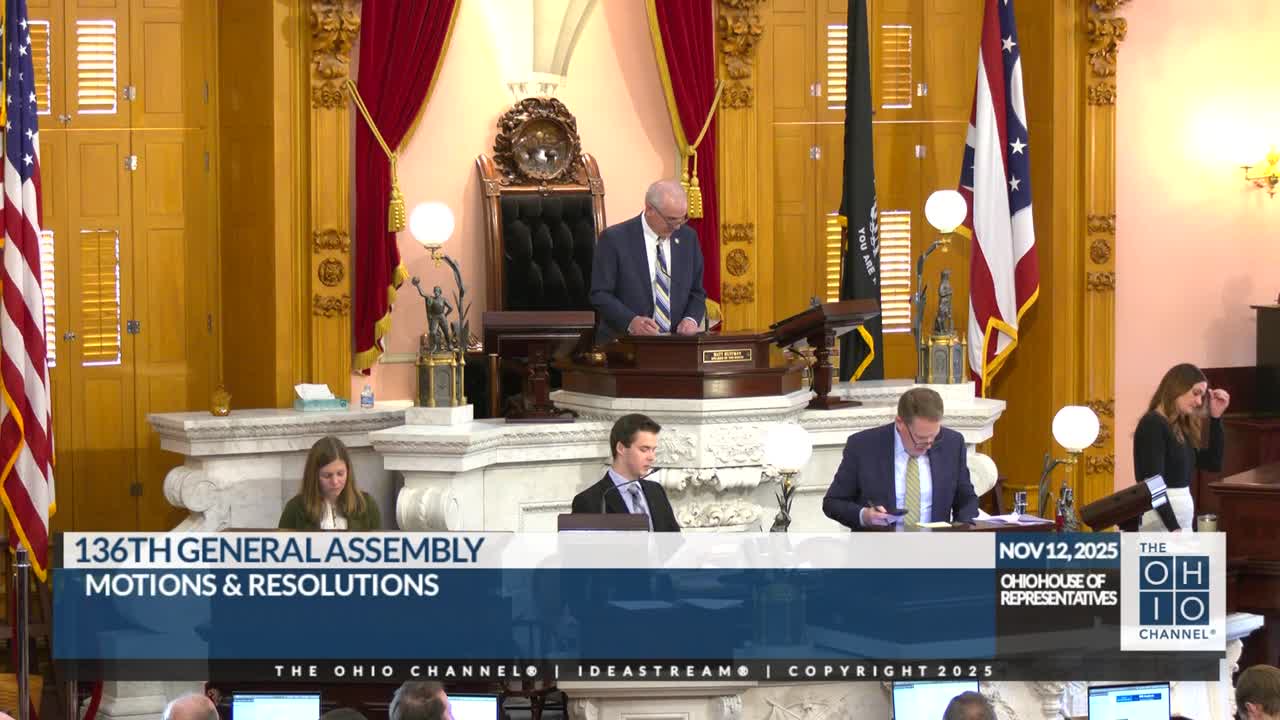
House floor roundup: memorial highways, licensure and health, EMS week, and other bills pass
Summary
The House approved a package of resolutions and bills, including memorial highway designations, an advanced practice respiratory therapist licensure, EMS Week designation, a specialty license plate, and statutory cleanups on light-based medical devices and epinephrine delivery in schools; most measures passed unanimously or by lopsided margins.
During the session the House approved a number of noncontroversial and informational measures in addition to the major bills covered separately.
Key floor actions included passage of:
- Senate Bill 148 (Specialist Lloyd Andrew Sellers Memorial Highway) — passed 93–0. - House Bill 213 (Tuscaroras Valley Memorial Highway, I‑70 designation) — passed 94–0. - House Bill 381 ("Do It For Jack" specialty license plate) — passed (clerk reported 91–0). - H.B. 253 (advanced practice respiratory therapist licensure) — passed unanimously (reported 94–0); sponsors said it addresses cardiopulmonary workforce shortages. - H.B. 311 (designating EMS Week in May) — passed 96–0. - H.B. 377 (revising code for application of light‑based medical devices; 'laser hair removal professional' title) — passed (reported 93–0). - H.B. 462 (allowing student use of intranasal epinephrine devices) — passed 94–0; sponsors said the bill updates statute to include recently FDA‑approved nasal epinephrine as an option in schools.
Procedural items: the House agreed to Rules & Reference referrals, concurred with senate amendments to other bills (including H.B. 10), announced committee meetings, informally passed H.B. 297 (veterans/civic organization allowances) and adjourned until the next scheduled session.
Votes at a glance: the clerk recorded affirmative tallies for the above bills as reported from the floor; members moved to agree to titles without objection in most cases.
Next steps: most passed bills will be transmitted to the Senate or to the governor as required by process.