
Oregon Public Defense Commission reports drop in unrepresented cases but cites capacity challenges
Get AI-powered insights, summaries, and transcripts
Subscribe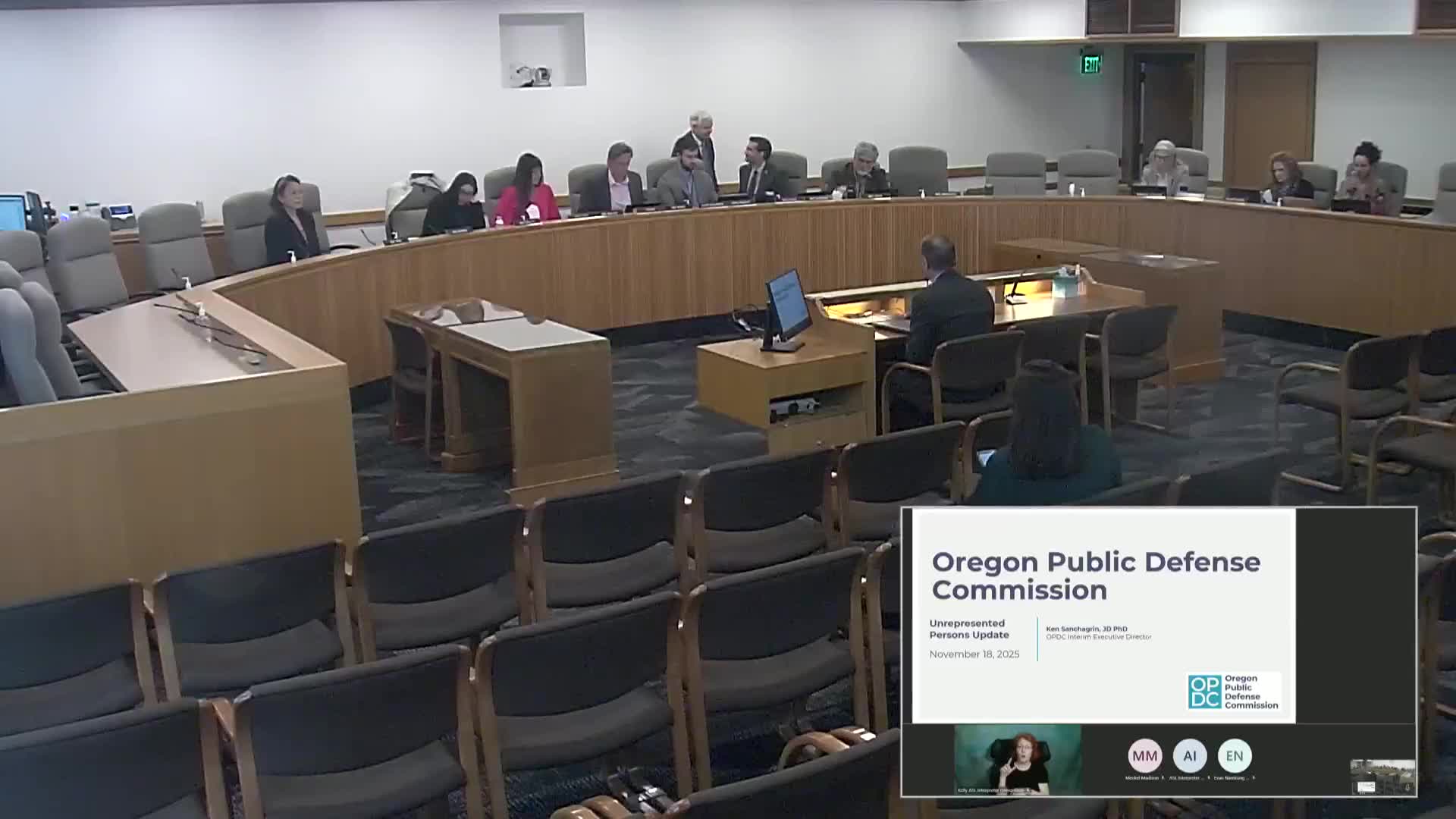
Summary
Interim OPDC executive director Ken Sancherkin said the state’s unrepresented‑defendant caseload has declined about 25–30% over the past year, crediting special dockets, consortia and trial‑team deployments; he warned that Multnomah County and other large jurisdictions still face capacity and data‑churn challenges.
Ken Sancherkin, interim executive director of the Oregon Public Defense Commission, told the House Interim Committee on Judiciary on Nov. 18 that statewide interventions have produced measurable improvements in the unrepresented‑defendant crisis but that capacity challenges remain in large counties.
"Whether we examine a 12‑month trend overall or look at the previous highs... we're down either by a quarter, or 30% looking at our unrepresented crisis across the state," Sancherkin said, attributing gains to a combination of new consortia, early‑resolution and special‑resolution dockets, and deployments of OPDC's trial team to crisis counties.
Sancherkin presented county snapshots: Coos County saw near‑elimination of the crisis after adding a consortia and monthly special dockets; Jackson County’s early‑resolution docket handled 147 cases; Marion County reported a 75% year‑over‑year reduction. Multnomah County remains a significant challenge owing to the size of filings and re‑filings; OPDC noted recent additions of newly licensed attorneys and trial‑team deployments intended to expand capacity there.
Committee members asked about how OPDC selects cases for ‘quick resolution’ dockets and whether provider productivity is being measured. Sancherkin said identification and triage are typically initiated by prosecutors and trial teams, and OPDC will monitor MAC (Maximum Attorney Compensation) utilization under recently issued contracts and a budget note conditioning some funding on providers meeting at least 90% MAC levels.
The presentation also addressed operational details: OPDC reported 20 trial‑team positions (20 filled currently), special resolution dockets handling around 20 cases per month in some counties, and deployment across 25 of Oregon’s 36 counties for conflict and crisis coverage. Sancherkin and members discussed lodging, travel costs and the challenges of redeploying staff over long distances.
The committee asked OPDC to continue monthly data updates, and members requested additional detail in January about how OPDC proposes to grow capacity and recruit new attorneys without simply reshuffling existing providers.