
Oregon Department of Energy unveils comprehensive energy strategy: modeling shows demand drop but rising electricity needs
Get AI-powered insights, summaries, and transcripts
Subscribe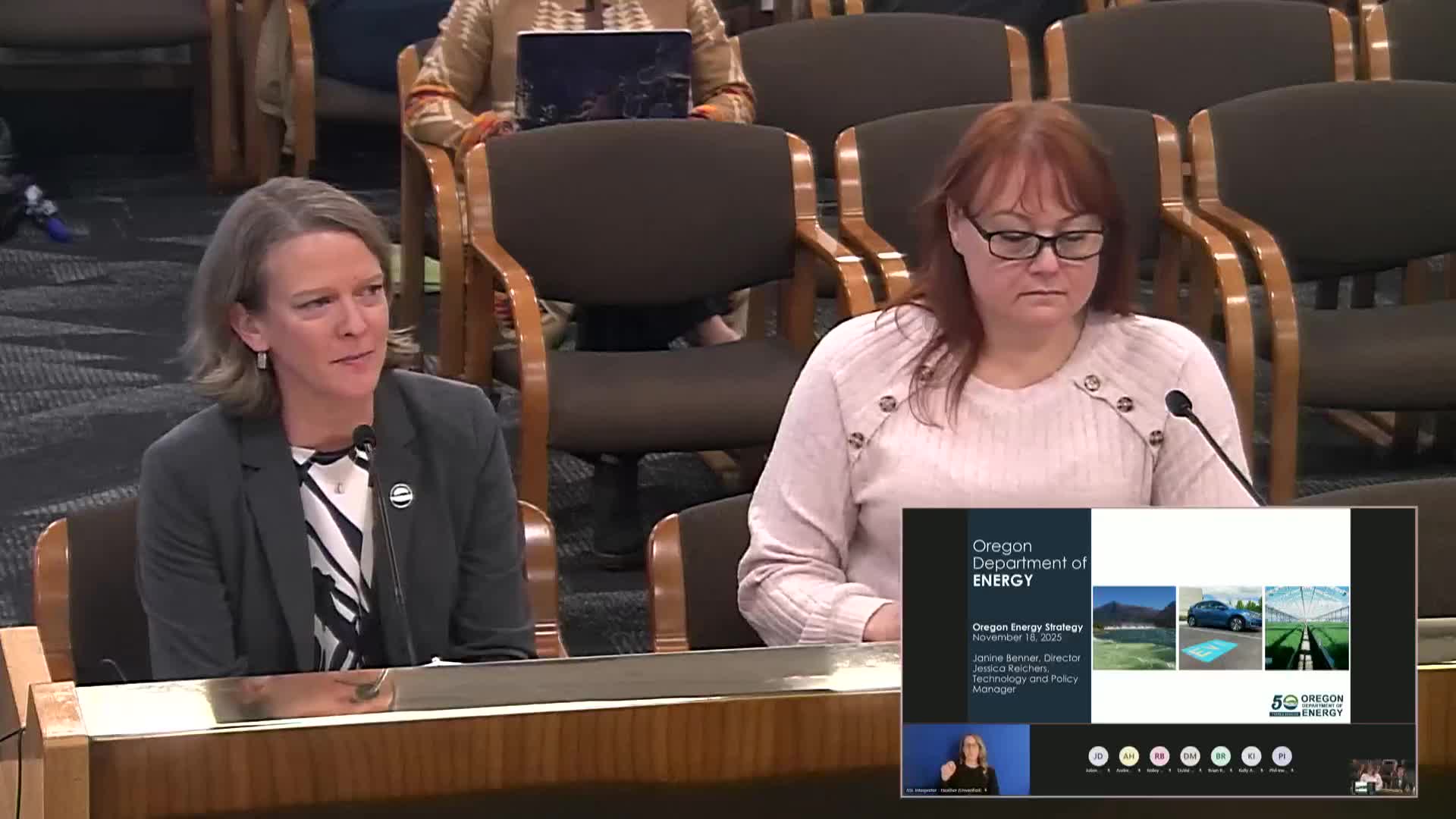
Summary
ODOE presented a five‑pathway energy strategy (efficiency, clean electricity, electrification, low‑carbon fuels, resilience) informed by modeling that found a potential 22% reduction in total energy demand by 2050 but increased electricity loads requiring new resources and transmission; near‑term actions include 42 policy items and an Equity & Justice Framework.
The Oregon Department of Energy presented the state’s first comprehensive energy strategy, prepared under HB 3630, and explained the modeling and public engagement that informed its recommendations.
Director Janine Benner said the strategy is intended as a “North Star” to guide decisions across electricity, transportation and fuels while recognizing statutory directives and policy drivers such as HB 2021, the Climate Protection Program and Executive Orders. “The question is how to ensure that the investments maximize benefits to Oregonians, minimize harm and avoid disproportionate effects on environmental justice and energy burden communities,” she said.
Technical manager Jessica Rikers walked senators through the modeling approach, which used Clean Energy Transition Institute and Evolved Energy Research to evaluate whole‑system scenarios. The modeling found that by 2050 total energy demand could fall about 22% from current projections even as electricity demand grows. The model selected a mix of solar, wind and battery storage to meet increased electricity needs and, for 2035 capacity needs, selected small clean gas plants under 25 megawatts as a least‑cost option given current inputs — a result ODOE flagged as sensitive to cost and technology changes.
The strategy organizes policy around five pathways (energy efficiency; clean electricity; electrification; low‑carbon fuels; resilience) and breaks each into high‑level policies and 42 near‑term legislative and policy actions for the next four years. Priority actions highlighted to the committee included addressing wildfire utility liability, transmission constraints, a revolving loan fund to support affordability and mapping utility capacity to accelerate charging and building electrification deployment.
Benner and Rikers emphasized the strategy’s public engagement: the modeling incorporated input from roughly 170 technical advisors and ODOE received 115 public comment submissions totaling more than 700 pages. The report also includes an Equity & Justice Framework aimed at centering disadvantaged communities during implementation.
Senators asked about land‑use impacts of large solar and wind deployments, the role of storage, assumptions that excluded commercial nuclear at present, and the timeline for implementation. ODOE said the strategy is meant to be updated periodically and that many actions can begin with limited state budget impact, while others will require legislation and funding. The committee closed the hearing with requests for deeper briefings on select topics.