
Subcommittee hears agency plans to meet 5% reduction target; lawmakers warn of programmatic tradeoffs
Get AI-powered insights, summaries, and transcripts
Subscribe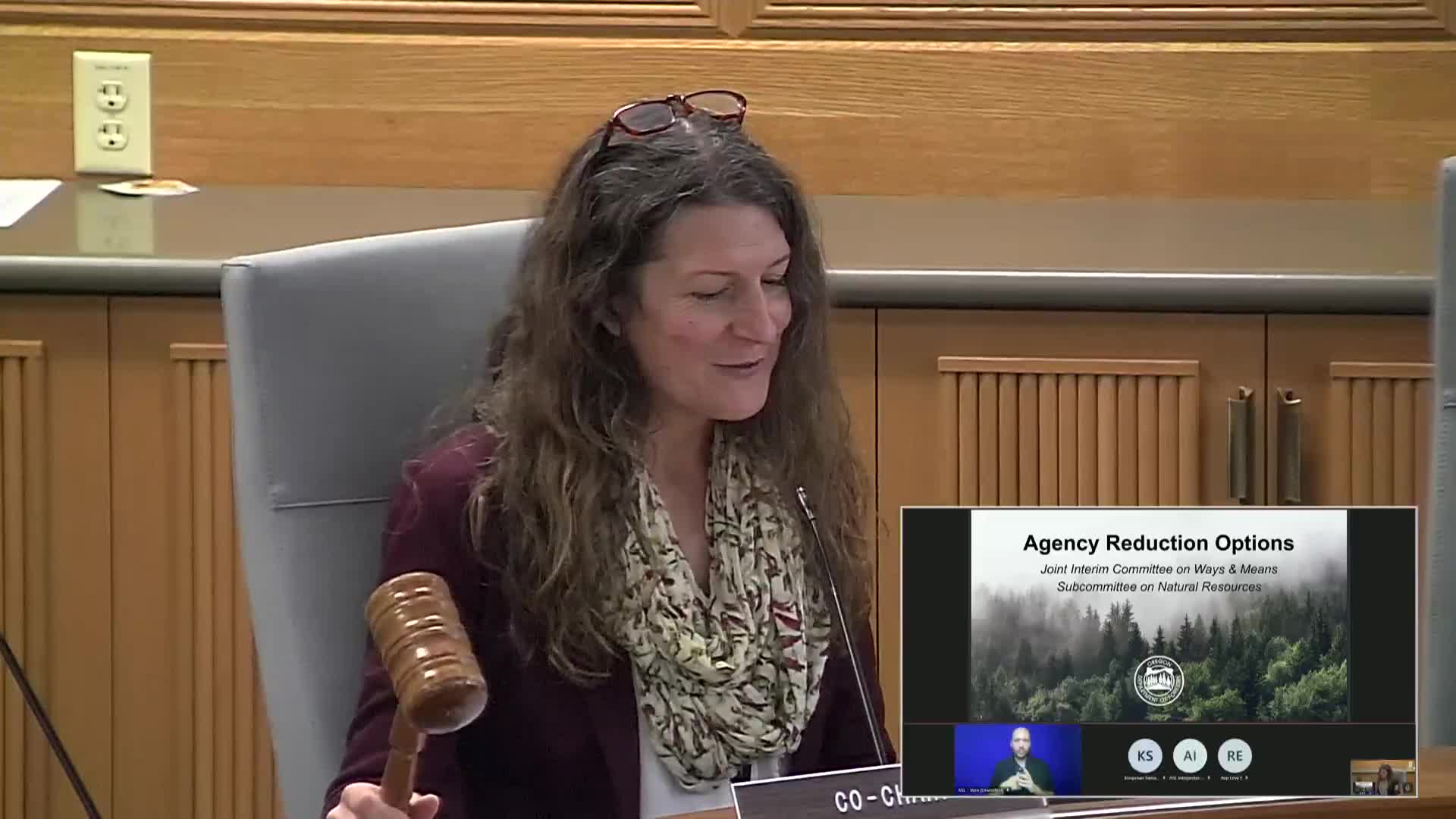
Summary
Seven natural‑resource agencies presented 5% expenditure‑reduction options to the Natural Resources Subcommittee. Lawmakers repeatedly warned that cuts to monitoring, facilitation and pass‑through grants could reduce data, hinder permitting, increase litigation and harm rural communities.
On Nov. 18 the Natural Resources Subcommittee heard seven agencies present options to achieve 5% expenditure reductions aimed at balancing the state's budget for the 2027 biennium. Agency directors and staff outlined criteria they used—prioritizing filled positions, using one‑time funds and vacancy savings first, and protecting federally matched programs—while lawmakers pressed for details on downstream impacts.
Key themes and agency highlights
- Department of Forestry: Kate Skinner described tradeoffs that included using one‑time detection camera funding and other sources to offset cuts. Lawmakers voiced strong opposition to reducing pass‑through insurance or PFA‑linked funds, warning it could jeopardize the Habitat Conservation Plan process.
- Water Resources Department: Director Ivan Gall and legislative coordinator Brynn Hudson emphasized protecting staff while reducing services and supplies. They proposed cuts to grants, stream gauging and data collection that lawmakers said could erode long‑term data series and planning capacity.
- Department of Energy: Director Janine Benner said DOE’s small general fund portion means the agency will feel cuts deeply; the department proposed limiting travel and contracted support while keeping core staff to protect federal match obligations.
- Department of Environmental Quality (DEQ): Director Leah Feldon and Matt Davis warned that the agency’s laboratory and programs funded by general and lottery funds are vulnerable. They said federally required monitoring for criteria pollutants would continue, but discretionary programs—such as some wildfire smoke monitoring, air toxics tracking, harmful algal bloom recreational monitoring and some water quality plans—could be paused under deeper reductions.
- Oregon Department of Fish and Wildlife (ODFW): Director Debbie Colbert described efforts to preserve field biologists and hatchery operations while proposing scaled reductions to outreach, pass‑through grants and select initiatives such as anti‑poaching outreach if deeper cuts are needed.
- Department of Agriculture (ODA): Jonathan Santow said the agency tried to spare core market access functions and staff but noted the interdependence of grants and partner programs (farm‑to‑school, wolf compensation, predator control), which would feel cascading effects from reductions.
- Department of Land Conservation and Development (DLCD): Director Brenda Bateman said housing production work accounts for ~40% of the department’s budget and cuts were allocated proportionally between housing and non‑housing programs; the agency planned to hold vacant, newly authorized positions first and trim support projects before cutting existing filled staff.
Lawmakers’ concerns
Multiple legislators warned that cuts framed as "one‑time" could become ongoing, that reducing facilitation and neutral conveners will raise litigation risks and that pausing monitoring programs risks public health and economic harm (citing prior harmful algal bloom impacts on drinking water). Several members asked staff to return with analyses of which grants are obligated and which funds remain unobligated in other accounts that the subcommittee might consider re‑allocating.
What happens next
Agencies were asked to provide follow‑ups by email on specific questions (for example, lists of cities with unexecuted grants and minimal funding thresholds for programs central to the PFA/HCP process). The subcommittee said it will continue work in chamber‑level planning meetings and may adjust recommendations before the February 2026 short session and budget reconciliation.