Get Full Government Meeting Transcripts, Videos, & Alerts Forever!
Get email alerts on the Public Records topic
No spam. Unsubscribe anytime.
Oregon Sunshine Committee urges clearer public‑records process, consolidation of exemptions
Summary
Cochairs of the Oregon Sunshine Committee told the House Judiciary committee the panel has reviewed roughly 250–275 exemptions and wants lawmakers to simplify timelines and recipients of public‑records reports and to consult the committee when drafting bills that affect records access.
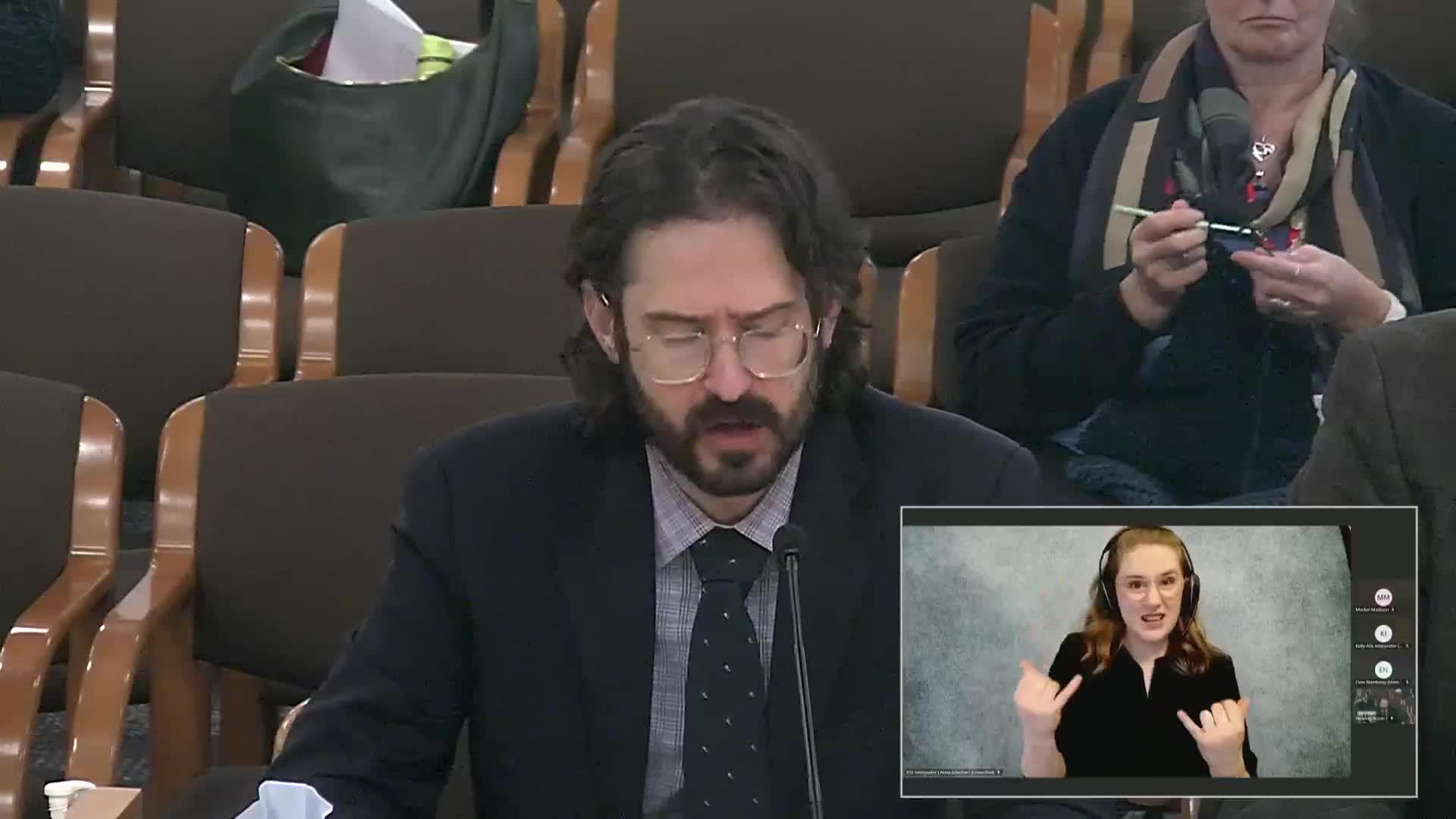
Cochairs of the Oregon Sunshine Committee told the House Interim Committee on Judiciary on Nov. 18 that the panel hopes lawmakers will use its biannual reports and expertise to simplify Oregon’s public‑records laws.
Charlie Fisher, state director at OSBURG and committee cochair, said the group — created by the Legislature in 2017 through House Bill 2101 to review exemptions — has examined hundreds of exemptions and recommends lawmakers separate procedural fixes from substantive exemptions. “When this committee started… there were over 550 exemptions to the public records law,” Fisher said, adding that the total has since grown to roughly 600–650.
Morgan Smith, Polk County Council and the committee’s other cochair, said the committee’s strength is the mix of perspectives from journalists, public‑interest advocates and government officials. Smith emphasized the need for a single, searchable repository for exemptions so local governments and the public can know what is and isn’t exempt. “It would be much more helpful … to have one single repository for that,” Smith said.
During Q&A, Representative Manning encouraged dividing any legislative package into two parts: one focused on process improvements (making requests simpler and faster) and another on substantive exemptions (why particular exemptions remain in statute). Committee members and witnesses also discussed the Department of Justice’s database as a practical tool and urged sponsors to confirm whether proposed new exemptions duplicate existing coverage.
The committee did not take formal action on the recommendations during the meeting. Fisher and Smith asked to return with compiled recommendations ahead of the 2027 session and offered the committee the Sunshine Committee’s assistance in reviewing bills that implicate public records.
The presentation highlighted the committee’s ongoing work — review meetings every other month, attention to categories such as health, judicial‑misconduct and investigatory exemptions, and the need to balance transparency with privacy — and asked legislators to consult the committee early in drafting bills affecting records access.
The committee plans to receive the Sunshine Committee’s biannual reports as requested and may consider drafting or sponsoring technical changes in future sessions.