Get Full Government Meeting Transcripts, Videos, & Alerts Forever!
Get email alerts on the Federal Housing Policy topic
No spam. Unsubscribe anytime.
State housing leaders warn HUD NOFO changes could shrink federal support for permanent supportive housing
Summary
OHCS and local providers told the committee that a new HUD Continuum of Care NOFO will re‑compete grants early, shift funding toward rapid rehousing and treatment models, impose a new risk review and compliance requirements, and could reduce federal support for permanent supportive housing and pressure state budgets and prevention efforts.
State and local housing officials briefed the committee on federal developments that could reshape homelessness funding and service models.
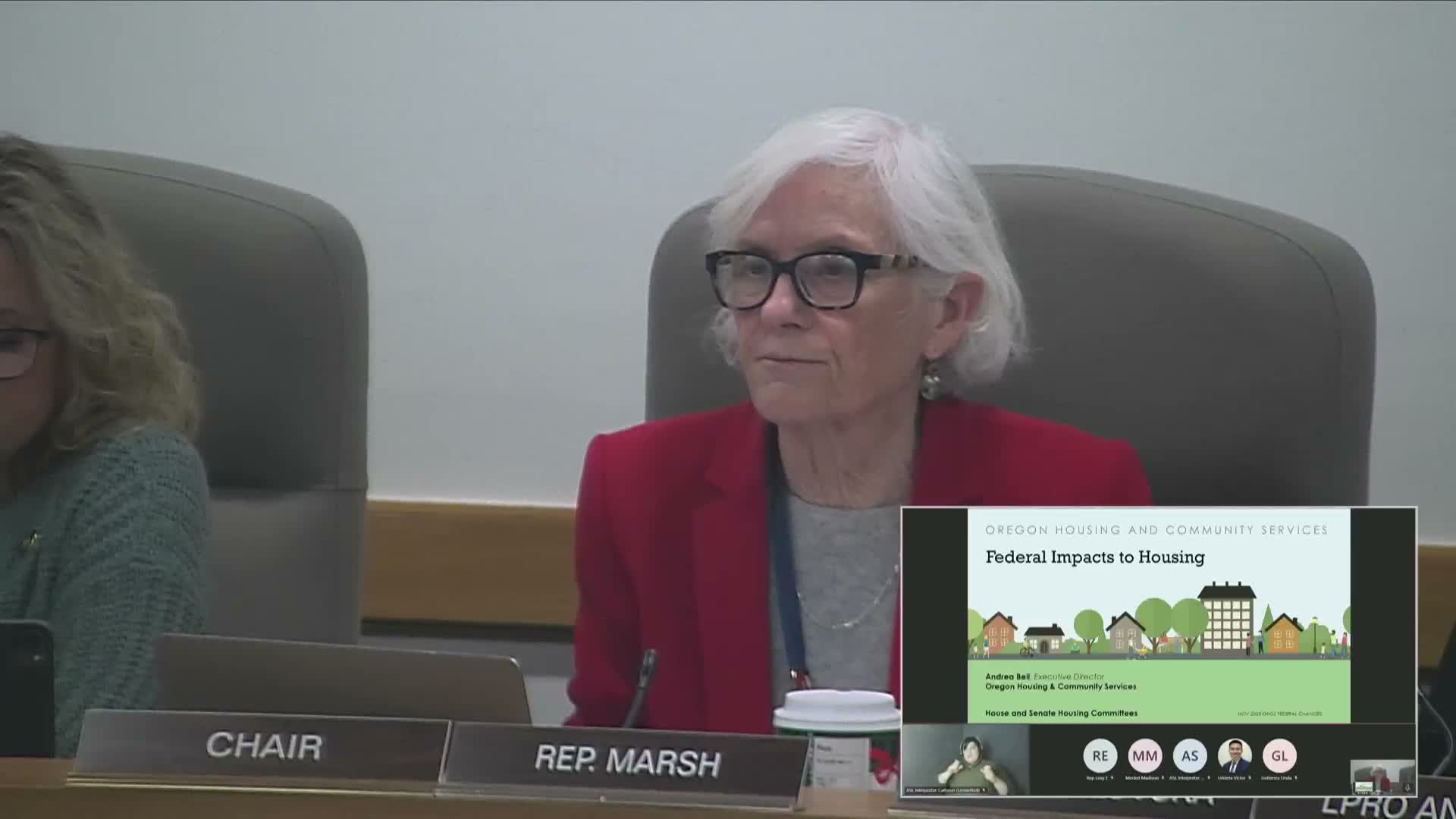
Andrea Bell (director, Oregon Housing & Community Services) said Congress recently passed a continuing resolution to keep the federal government operating and that the department is watching HUD’s budget negotiations closely; she warned House proposals that would eliminate the HOME program could reduce supply‑side production support for affordable housing if they proceed.
Jimmy Jones (Mid Willamette Valley Community Action Agency) described a HUD notice of funding opportunity (NOFO) published after the shutdown that will recompete Continuum of Care (CoC) grants a year early with rapid deadlines (CoCs must submit applications in mid‑January). Jones said the NOFO reallocates funds toward rapid rehousing and treatment‑oriented models, caps or reduces support for permanent supportive housing, requires recipients to demonstrate intensive services (including time thresholds for treatment‑related services), adds a new risk review that could bar non‑compliant organizations from funds, and imposes cooperation requirements with law enforcement and public camping criminalization in some cases.
Jones warned the scale of the change is large: nationally HUD’s announcement is projected to put roughly 170,000 formerly homeless people at risk of losing housing under the proposed reallocation and he estimated Oregon could see about 2,500 people affected if current supports are curtailed. He urged the legislature to avoid additional cuts to state prevention programs (EHA, SHAP, long‑term rental assistance, Oregon Rehousing Initiative) and to prioritize funding for eviction prevention and production of affordable housing.
State leaders said they will engage federal partners about NOFO details, seek clarity about continuum‑of‑care rules for permanent supportive housing, and watch congressional budget action on HOME, USDA and HUD appropriations closely. Committee members requested follow‑up briefings to assess impacts on local Continuums of Care and on state funding priorities.