Get Full Government Meeting Transcripts, Videos, & Alerts Forever!
Get email alerts on the Reproductive Health Funding topic
No spam. Unsubscribe anytime.
Oregon Emergency Board approves $7.5 million to cover Planned Parenthood payments after federal Medicaid ban
Summary
The Legislative Emergency Board voted to allocate $7.5 million from the emergency fund to the Oregon Health Authority to pay Planned Parenthood affiliates for reproductive‑health services after House Resolution 1 barred federal Medicaid payments to two Oregon affiliates beginning July 4, 2025. The measure passed amid sharp debate over priorities and network capacity.
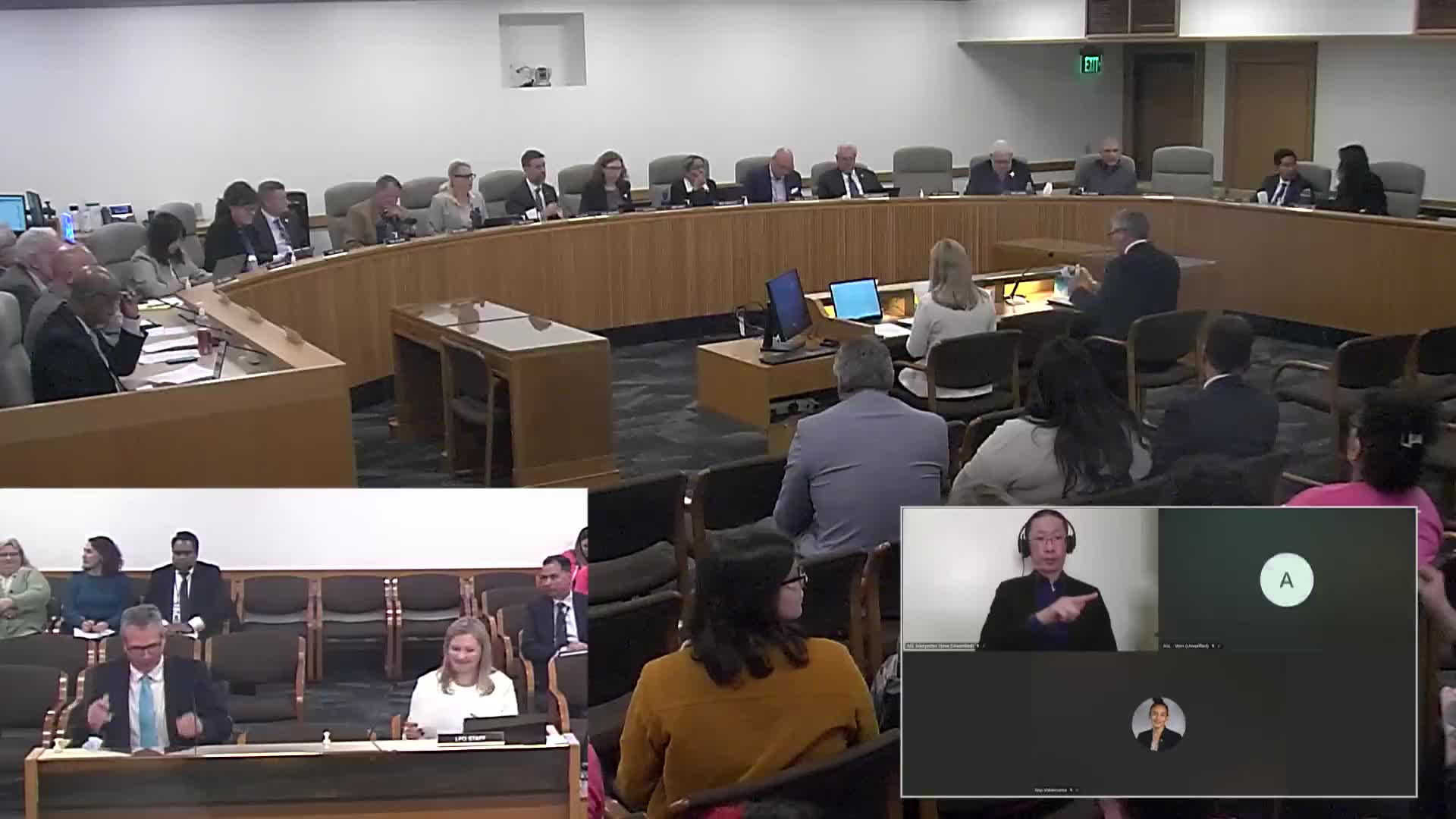
Salem, Ore. — The Oregon Legislative Emergency Board voted Nov. 18 to allocate $7,500,000 from the emergency fund to the Oregon Health Authority to facilitate payments to Oregon‑based Planned Parenthood affiliates after a federal Medicaid prohibition took effect this summer.
The Legislative Fiscal Office recommended the allocation, saying the funding would allow the health authority to continue covering services for Oregon Health Plan (OHP) members who had been receiving care from the affected affiliates. LFO staff and OHA officials told the board the prohibition — enacted in House Resolution 1 and effective July 4, 2025 — immediately halted certain federal Medicaid payments to two Oregon Planned Parenthood affiliates and created an operational shortfall.
Why it mattered: OHA and LFO witnesses said the loss of federal payments threatened access to preventive and reproductive health services across the state and that existing provider networks may not have the capacity to absorb patients if Planned Parenthood clinics close. LFO and OHA estimated the shortfall from the prohibition at roughly $16,700,000 and said about 70,000 Oregonians could be affected; by comparison, roughly 1,400,000 people are enrolled in OHP.
Debate on the floor centered on priorities and network adequacy. Opponents argued the emergency board should prioritize rural hospitals, maternity wards and broader OHP needs over funding a singled‑out provider. Senator Gerard and others criticized OHA’s budget growth and warned against rolling costs into future biennia. Senator Starr said Planned Parenthood had received nearly $70 million in prior general‑fund support over recent biennia and called the allocation a misaligned priority. Representative Owens and Senator McLean questioned whether coordinated care organizations and other providers could absorb patients and whether the request gave preferential treatment to a single provider.
Supporters, including Co‑chair Fahey and Co‑chair Wagner, pleaded that the request was narrowly targeted and urgent because HR 1 specifically singled out Planned Parenthood and because the clinics provide preventive and life‑saving services such as cancer screenings and contraception. “This is life‑saving care,” Co‑chair Fahey said, arguing that closures would reduce capacity and increase mortality from preventable disease.
Process and vote: The motion to approve the LFO recommendation passed on a roll‑call vote. The transcript records 13 votes in favor and 6 opposed, with one representative excused; the roll call as recorded in the meeting transcript includes Aye votes from Senator Sanchez, Representatives Smith, Gomberg, Valderrama, Evans, Ruiz, Co‑chair Fahey, Senator Lieber, Senator Taylor, Senator Campos, Senator Golden, Senator JAMA and one additional recorded “Aye” in the transcript (transcript text: "Poacher wins. Aye."). No abstentions were recorded and Representative Bruce Iverson was excused.
What it does not do: The allocation provides state funds to enable OHA to pay providers for covered services to OHP members; it does not (and the board did not purport to) change federal law or the federal Medicaid prohibition in HR 1. LFO and OHA said the state payment mechanism would be limited to OHP members and would not be used to pay for services provided to non‑Oregon residents who are not OHP enrollees.
Next steps: OHA said it would implement a fee‑for‑service mechanism or targeted contract amendments to ensure payments flow to providers serving OHP members. LFO noted that the expense will be reflected in current service‑level assumptions in the next biennium’s budget process, which could affect future planning.
Vote at a glance: The board approved the $7,500,000 allocation by roll call; recorded opposition included Representative Owens, Representative Elmer, Senator Gerard, Senator McLean, Senator Anderson and Senator Starr. Representative Bruce Iverson was excused.
Reporting note: Figures and program descriptions are based on the Legislative Fiscal Office presentation and testimony from Oregon Health Authority staff during the Nov. 18 emergency board meeting.