
Rose Quarter update: ODOT reports $480 million allocated, roughly $1.5 billion gap
Get AI-powered insights, summaries, and transcripts
Subscribe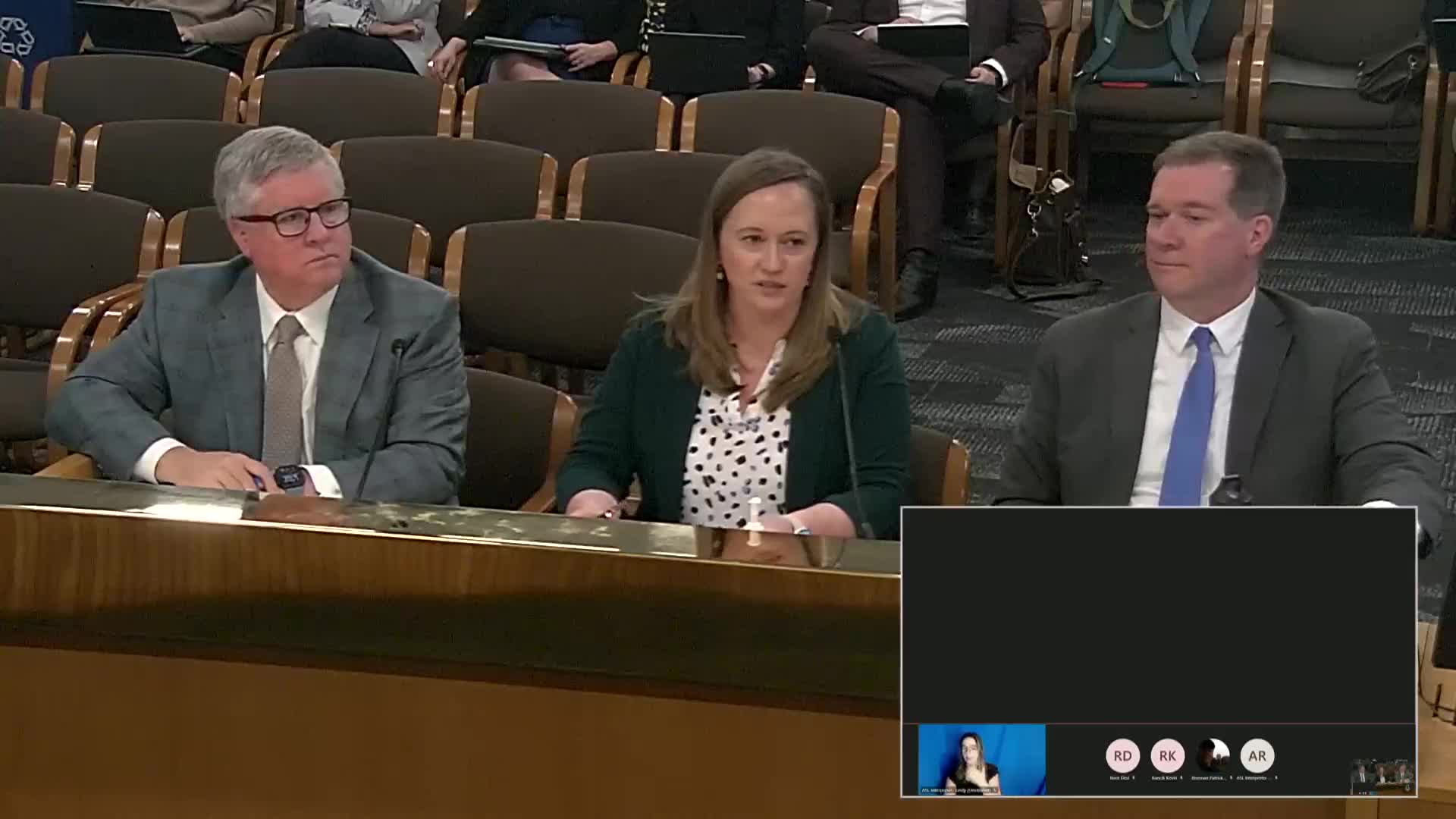
Summary
ODOT told lawmakers the Rose Quarter program now shows a $1.96–2.08 billion estimate, with $480 million committed and federal rescissions eliminating planned unobligated funds; staff will seek value engineering and funding options at the Dec. 11 OTC meeting.
Monica Blanchard, interim project director for the Rose Quarter Project, briefed the joint interim committee on the project’s status and an updated cost picture.
"This cost estimate for the overall program ... is 1.96 to 2,080,000,000.00," Blanchard said, and noted that Rose Quarter currently has about $480,000,000 allocated. She told the committee that recent federal actions rescinded unobligated portions of a Reconnecting Communities grant and that removal affected roughly $380 million of planned funding.
Blanchard said phase 1A — which has independent utility and includes stormwater and preservation work near the I‑5/I‑84 interchange — has received a notice to proceed and is mobilizing for on‑site construction in 2025. She also said the Oregon Transportation Commission allocated $250 million in HB 2017 Urban Mobility Strategy funds to Rose Quarter in December 2024 and that the commission will review cost‑saving opportunities and direction on the next phase at its Dec. 11 meeting.
Representative Mark Gamba asked whether ODOT has produced an apples‑to‑apples comparison of the highway cover (the “cap”) versus replacing multiple bridges and other mitigation strategies. Blanchard said the project has begun value‑engineering workshops and partner discussions, but that early efforts yielded only modest savings relative to the program’s $2 billion scale and that more work is underway.
ODOT described three primary strategies to close the funding gap: secure additional grants, seek legislative funding, and prioritize elements that can be completed within current resources. The committee asked ODOT to provide cost comparisons and a clear accounting of which elements could be delivered first to achieve benefits while reducing fiscal exposure.