
Higher Education agency outlines student‑first criteria and flags Oregon Promise, workforce grants for deeper cuts
Get AI-powered insights, summaries, and transcripts
Subscribe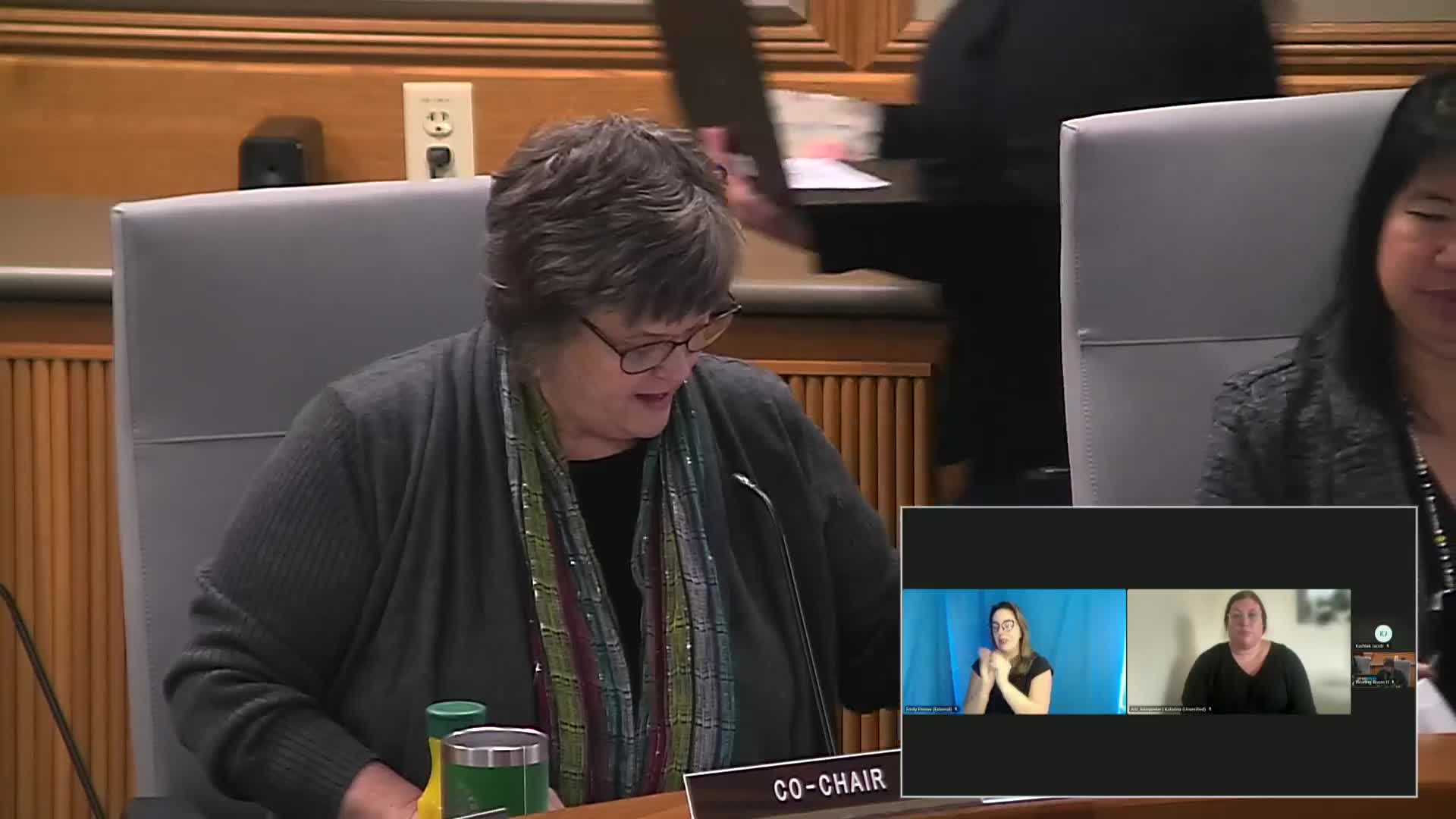
Summary
The Higher Education Coordinating Commission told a legislative subcommittee it prioritized minimizing student impact when modeling 2.5% and 5% budget reductions, held Oregon Opportunity and Tribal Student grants harmless, and said the final option at the 5% level would pause Oregon Promise awards to new students, saving roughly $13 million.
Ben Cannon, executive director of the Higher Education Coordinating Commission, told the joint interim education subcommittee that the agency used its strategic plan and an equity lens to guide recommended 2.5% and 5% reduction scenarios and that its overriding criterion was "how do we minimize the impact to students" from any reductions. He said most higher‑education dollars are pass‑through funds to community colleges and public universities, so agency operations represent a small share of the HEC budget.
Cannon said HEC first examined roughly 2% of its administrative budget and typical governor‑mandated reductions (about 1.5%), and then proposed deeper operational savings that would exceed the 2.5% target if necessary. He said the agency intentionally held the Oregon Opportunity Grant and the Oregon Tribal Student Grant harmless in its submission; "those programs would remain at LAB," Cannon said, referring to the funding level assumed in the agency model.
At the 5% reduction level, Cannon warned, several targeted programs would face larger reductions. He listed workforce grants, career pathway and industry engagement programs, the childcare grant for student parents, and—at the bottom of the 5% list—the Oregon Promise program. Cannon said: "Under our 5% approach ... the Oregon Promise program ... would not make awards to new students in the second year of the biennium," a change he estimated would realize about $13,000,000 in savings.
Committee members pressed HEC staff on specifics. Representative Wright asked whether vacant positions identified in the agency spreadsheet had been filled; Cannon said he would follow up with updated vacancy status and said vacant positions were one way the agency sought lower‑impact reductions. Senator Weber asked whether capital construction projects would be affected; Cannon said the HEC submission did not include reductions to previously bonded or legislatively approved capital projects. On questions about the College of Forestry, Cannon clarified that proposed reductions to statewide public services at Oregon State University could reduce capacity at the forest research laboratory and related extension activities.
Cannon acknowledged the short timeline for developing the reduction lists and the limited opportunity for broad consultation with community partners, but said HEC had solicited feedback from presidents and finance officers at colleges and universities and used that input to model impacts. He urged continued dialogue with the committee about trade‑offs, noting the agency "scratched the surface" of the issues and expected more detailed conversations through February and the coming months.
What comes next: the subcommittee will continue to question agencies and ask for more detailed analyses of downstream effects and alternatives; HEC agreed to provide follow‑up information on staffing vacancies and further detail on program impacts if the committee requests it.