Get Full Government Meeting Transcripts, Videos, & Alerts Forever!
Get email alerts on the Early Learning topic
No spam. Unsubscribe anytime.
Early-learning leaders warn budget cuts reduced ECAP slots and provider supports
Summary
DCYF and Head Start representatives said investments from the Fair Start for Kids Act increased capacity, but recent budget reductions (including deferred eligibility expansions and higher co-pays) and slots cut in ECAP have caused provider stress, reduced inclusion, and workforce challenges.
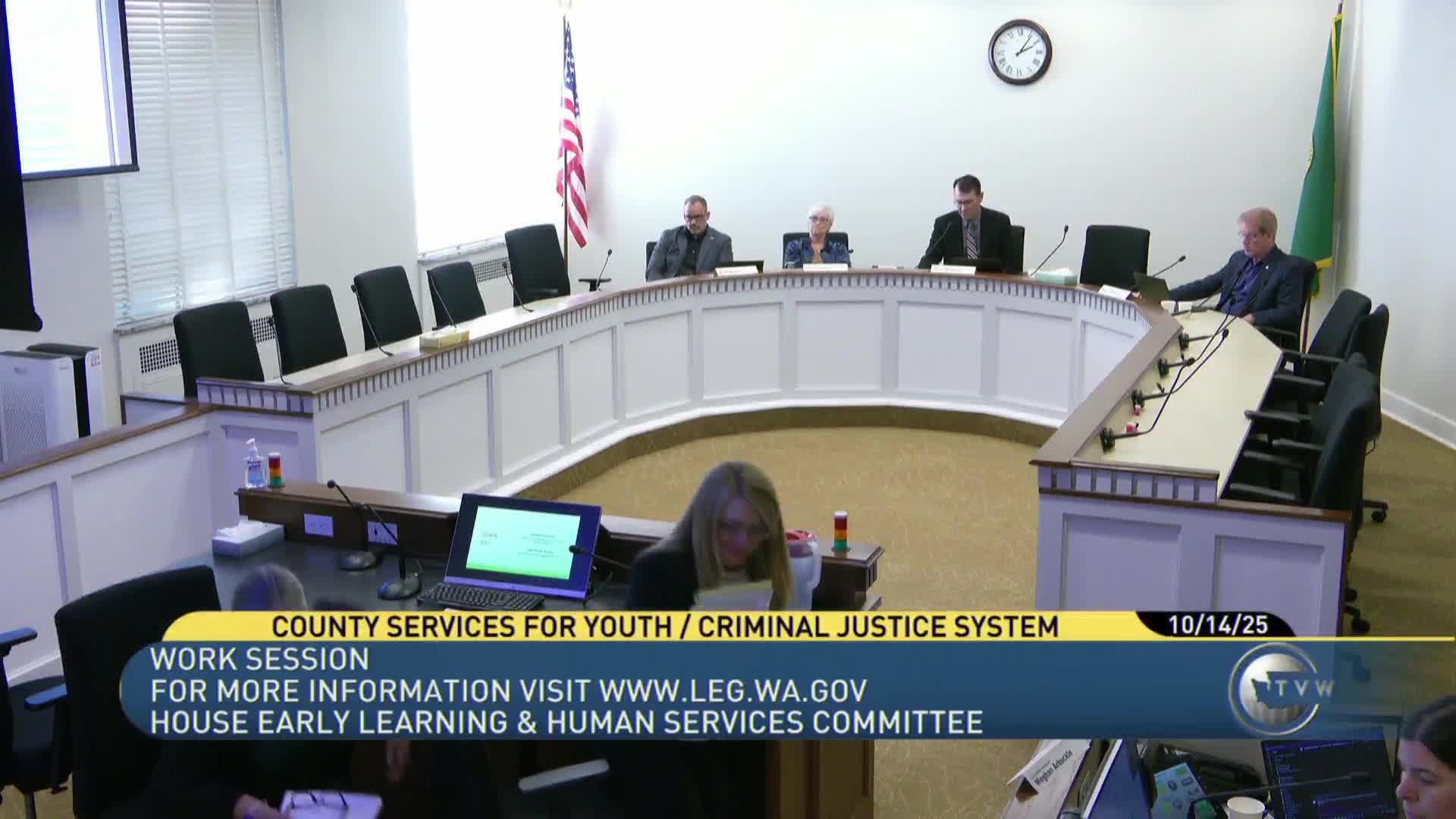
Nicole Rose, assistant secretary for early learning at the Department of Children, Youth and Families, and Katie Warren, deputy director at the Washington State Association of Head Start and ECAP, briefed the committee on the effects of recent policy choices and budget reductions on childcare and state-funded pre-K (ECAP).
Rose credited the Fair Start for Kids Act with expanding provider numbers and access: she said that "in May 2025, we are serving over 60,000 children in Working Connections childcare" and pointed to rising participation among preschool-age children. She also noted substantial investments: DCYF distributed more than $552,000,000 in grants to early-learning providers between 2020 and 2024 and raised rates that helped stabilize capacity.
Speakers outlined recent reductions and near-term changes: co-payments for families will rise beginning in October 2026 (Rose estimated they will range from roughly 5–7 percent of family income for most affected households), an eligibility expansion scheduled earlier was delayed to 2029, and the state expects about 3,000 fewer ECAP slots for the 2025–26 school year compared with 2024–25. Rose and Warren said some expanded-eligibility categories and incentive grants were eliminated or narrowed, and that infant/early-childhood mental-health consultant positions were reduced (from two per region to one in many areas).
Katie Warren described ECAP outcomes and unintended consequences of cuts: many children enter ECAP below developmental expectations and require comprehensive services; cuts have reduced inclusion options for children with IEPs, particularly in rural areas, and contributed to program closures where under‑enrollment made operations unsustainable. She warned that workforce shortages and funding uncertainty have directly affected classroom openings and provider recruitment.
Lawmakers asked for follow-up on co-pay formulas, uptake rates for ECAP and working-connections participation; Rose and Warren offered to provide exact uptake and co‑pay tables and said DCYF and partners are exploring steps to stabilize enrollment and provider supports.
The committee adjourned after the early‑learning discussion; no formal votes were taken on early-learning funding during the session.