Get Full Government Meeting Transcripts, Videos, & Alerts Forever!
Get email alerts on the Property Tax Rate topic
No spam. Unsubscribe anytime.
Committee approves cap on property‑tax revenue growth and tightens new‑growth rules
Summary
The committee advanced a property‑tax rate amendment that caps additional revenue a taxing entity may gain through truth‑in‑taxation at 5% and narrows how 'new growth' is calculated; local governments urged caution about local service impacts and capacity to fund infrastructure.
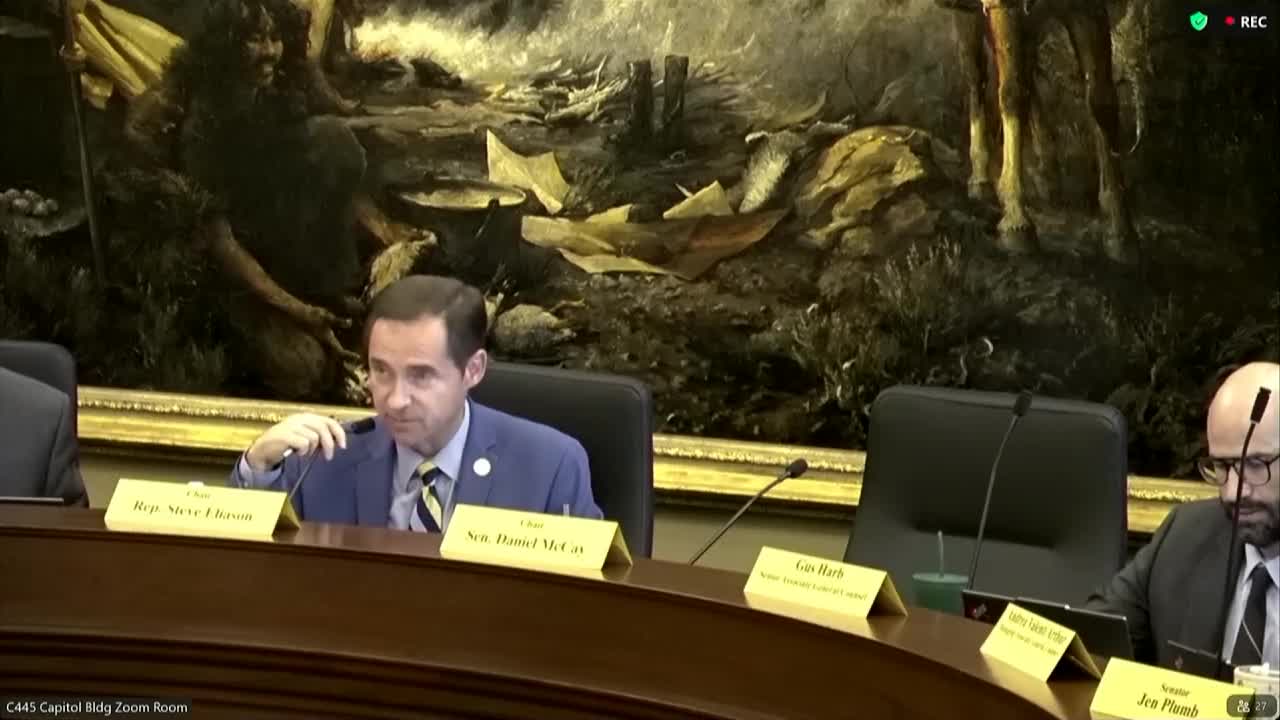
Senator McKay presented a property‑tax rate amendment on Nov. 19 that would place a 5% cap on the additional revenue a taxing entity may secure through truth‑in‑taxation and tighten the new‑growth calculation. He said the measure aims to smooth extreme spikes, improve predictability for homeowners and reduce the perception that truth‑in‑taxation has become a ritualistic formality rather than meaningful public accountability.
The proposal would also limit the portion of property improvements that can be counted as new growth (the presentation described requiring new growth to constitute a 100% increase of the property value to be treated as such) and would exclude certain tangible personal‑property increases in project areas from the new‑growth base.
Representatives from the Utah League of Cities and Towns and the Utah Taxpayers Association testified. Cameron Dale of the League cautioned that cities rely on property‑tax revenue — about 14% of an average bill goes to cities — and warned a blanket cap could hamper funding for public safety and infrastructure. Billy Hesterman of the Utah Taxpayers Association urged careful review to avoid unintentionally creating a routine floor for annual increases.
Committee discussion focused on trade‑offs between predictability and local flexibility. Senator McKay said the 5% figure was chosen after reviewing historical patterns; he described it as higher than typical inflation but intended to allow limited, predictable increases and emergency flexibility.
Representative Kyle moved the bill with a favorable recommendation and the committee carried the motion with several members recorded in opposition; the chair declared the motion passed.