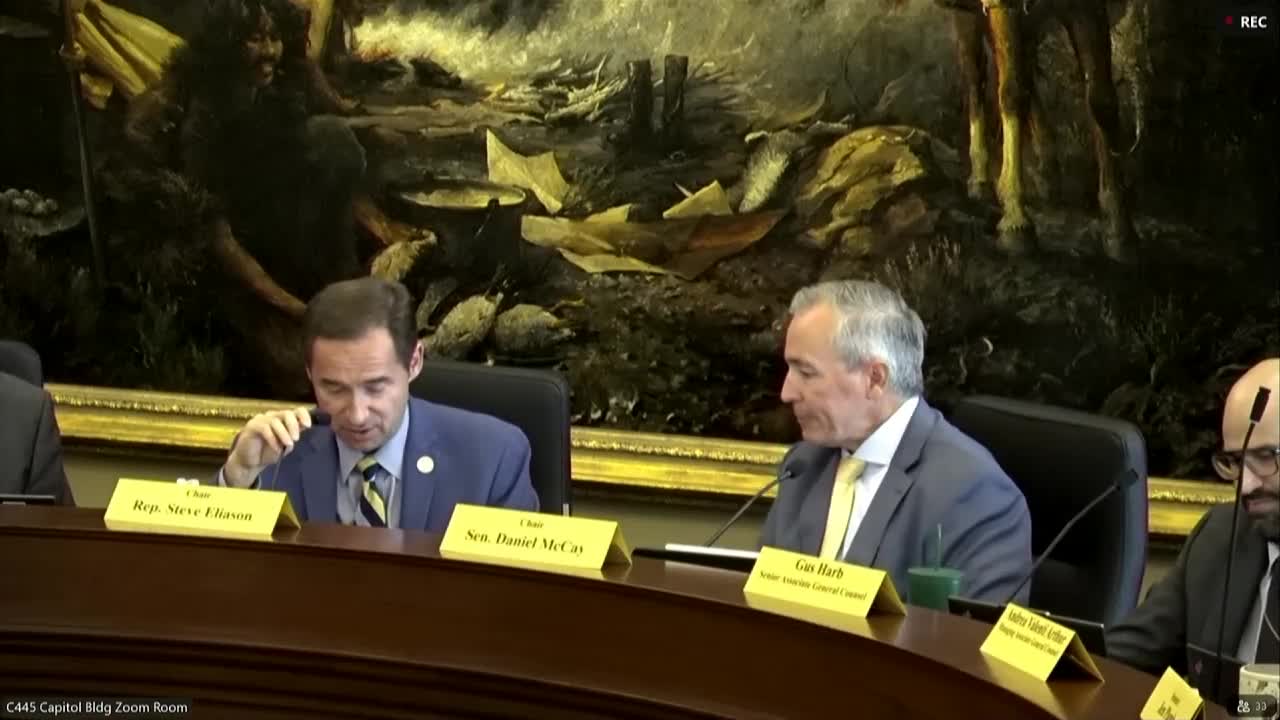
Committee debate splits over proposed shift from abatements to deferrals for property‑tax relief
Loading...
Summary
Senator McKay’s draft would expand property‑tax deferral options and raise review thresholds; supporters say it protects the tax base while helping homeowners remain in place, opponents and public commenters said the proposal is premature and highlighted the disabled‑veterans abatement program’s large share of circuit‑breaker spending.
Senator McKay presented a comprehensive property‑tax relief package on Nov. 19 that would expand deferral options and change how abatements operate in Utah. McKay framed the measure as an attempt to preserve the broad property‑tax base while offering targeted relief to homeowners who lack cash income to meet rising property taxes.
McKay illustrated the problem with an anecdote: a homeowner on a small footprint who believed her home to be worth roughly $250,000 but whose assessor value approached $800,000 and whose lot value, he said, could exceed $1,000,000. He argued that large accumulated home equity can let high‑asset homeowners receive abatements that shift the tax burden to other taxpayers. His bill creates a non‑discretionary deferral pathway (income, liquidity, age and ownership tests) and a county discretionary deferral with lower income thresholds and a 50% base‑year reduction of tax liability; deferred amounts would accrue and be due at sale. McKay proposed a delayed effective date to give counties time to prepare administratively.
Committee members raised several concerns: Representative Peck and others worried about elderly homeowners losing assistance or being forced from homes; Representative Miller and others asked whether the counties and treasurers are prepared to administer the new program and whether the state or counties should pay for the costs. McKay said counties had requested state‑level offsets but some counties preferred the state pay if the program expanded.
Several public commenters urged more work with county treasurers and assessors. Jerry Schmidt said the draft was "premature," urged attention to the disabled‑veterans circuit‑breaker program (which he said received $59,000,000 of $68,000,000 in circuit‑breaker spending last year), and warned against solving housing problems "on the backs of the poorest of our state." Steve Erickson of Crossroads Urban Center echoed concerns that forcing people into deferrals was not appropriate and urged more deliberation.
The committee considered a substitute motion to pass the bill with a favorable recommendation but the roll‑call failed (the transcript records a tie with several 'no' votes noted). The sponsor said he remains open to amendments and further county consultation. The bill therefore did not advance with a favorable committee recommendation on Nov. 19.