
Urban Indian Center tells Utah committee it expanded clinical and behavioral health services but needs sustainable funding
Get AI-powered insights, summaries, and transcripts
Subscribe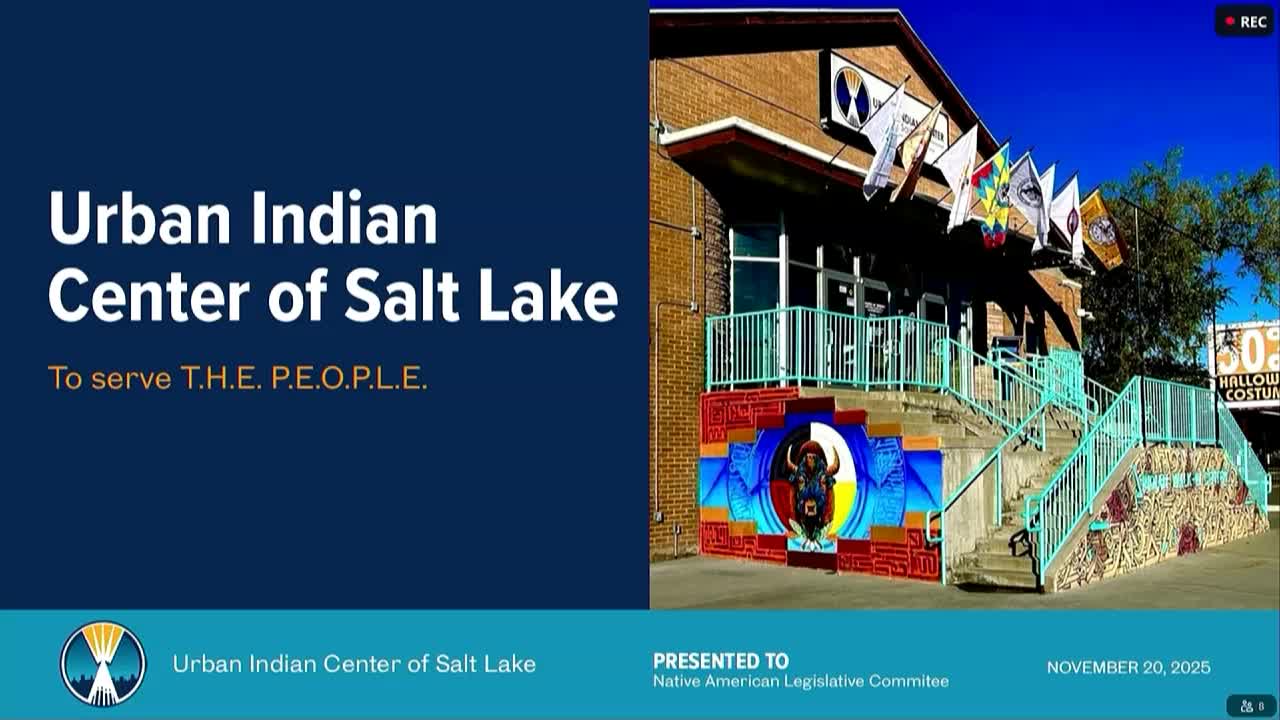
Summary
The Urban Indian Center told the Native American Legislative Liaison Committee it now provides primary care and behavioral health services and serves multiple tribes across several counties; leaders said federal funding through IHS is limited and the center seeks sustainable revenue and Medicaid/Medicare billing to support growth.
The Urban Indian Center told the Native American Legislative Liaison Committee on Nov. 20 that it has expanded from a community resource into a clinic offering primary care, pediatrics, geriatrics and behavioral health services and is now the only Urban Indian Organization in Utah.
Matt Post, executive director, said the center is native-led and governed and that it served clients from ‘‘about 114 different federally recognized tribes’’ last year. He described a new clinic in Murray opened in 2024 and said the center has grown to more than 50 employees as it builds its clinical and behavioral health programs.
‘‘In the 2020 census, over 3,000,000 people were served by UIOs across the country,’’ Post said, and he noted a funding shortfall: ‘‘IHS allocates only 1% annually to the urban Indian programs, whereas you see over 70% of all AIAN population are in urban and suburban areas.’’
Craig Sandoval, director of clinical operations, described the center’s service area — Salt Lake, Utah, Davis, Weber and Tooele counties — and said outreach and culturally relevant care drive utilization. Rhonda Duvall, outreach manager, described community engagement and cultural programming meant to make the center a ‘‘one-stop shop’’ for health and social needs.
Committee members asked about eligibility and governance. Post said the center typically serves established clients who live in the named counties, and that the board has nine members with ‘‘about seven of the nine’’ identifying as Native, meeting the majority-Native requirement for a UIO. He said the center operates as a 501(c)(3) and pursues grants while developing Medicaid and Medicare billing to improve sustainability.
Why it matters: Committee members expressed support and noted the center’s growth in clinical services addresses gaps in culturally relevant care for Native Utahns. The center’s leaders asked for continued partnership and attention to funding disparities that affect urban Native health services.
The committee thanked presenters and moved on to the next agenda item. The Urban Indian Center’s presentation included requests for more sustainable funding and emphasized data gaps that complicate planning.