Get Full Government Meeting Transcripts, Videos, & Alerts Forever!
Get email alerts on the Human Trafficking topic
No spam. Unsubscribe anytime.
Committee backs narrowed human‑trafficking amendments after stakeholder input
Summary
Lawmakers moved a revised human‑trafficking draft out of committee after counsel and Senator Musselman described narrowly tailored definitions, new penalty tiers based on mental state, patronizing offenses, and reinserted 'benefiting from human trafficking' language; defense and AG representatives said the changes improved prosecutorial clarity.
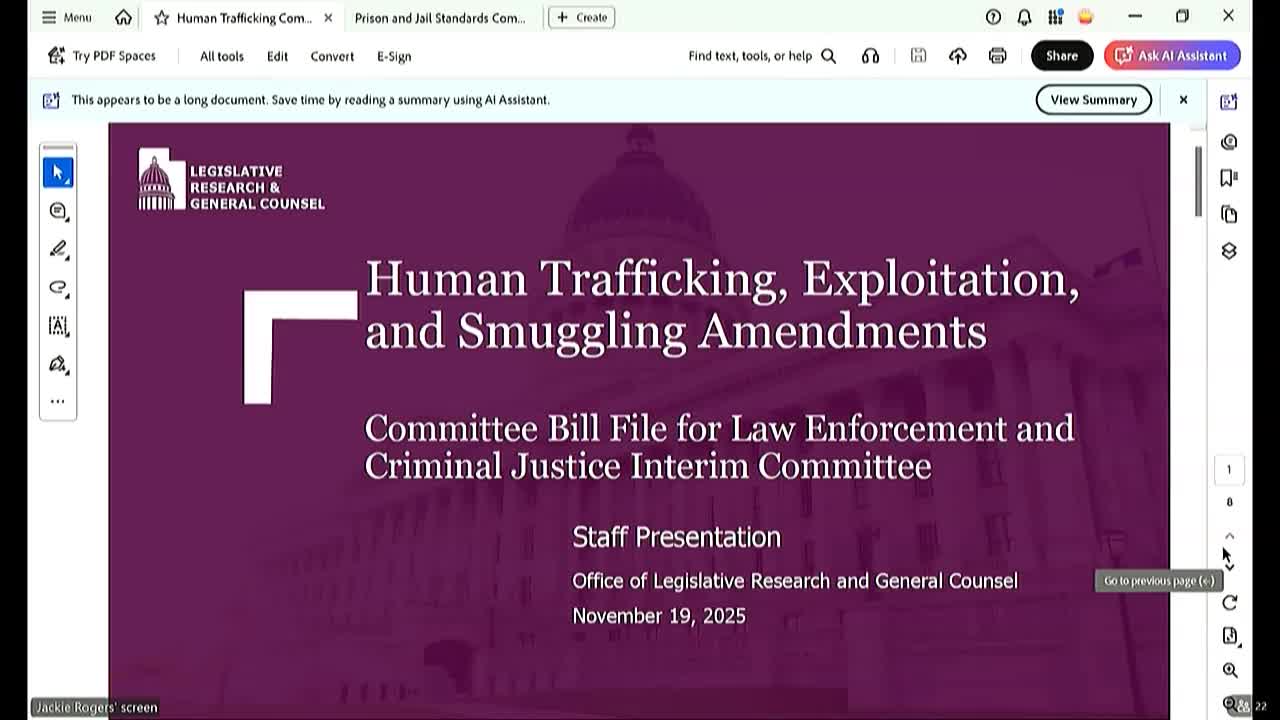
Senator Musselman and Jackie Rogers presented a revised human‑trafficking bill that lawmakers described as the product of extensive stakeholder work with defense attorneys, the attorney general’s office and law enforcement.
Jackie Rogers said the draft narrows and refines multiple definitions and penalty structures. "This draft now breaks out the penalty based on the actor's mental state," Rogers told the committee, explaining that the bill differentiates higher penalties for conduct done knowingly and lower penalties for reckless conduct. The draft also reintroduces a revised "benefiting from human trafficking or smuggling" provision without a penalty point so it can identify additional categories of liable actors and adds offenses involving vulnerable adults.
Senator Musselman said the aim is to "protect real victims of trafficking, while ensuring the honest employers using legal migrant labor are not unintentionally swept into criminal liability." He said better definitions and tiered penalties will make prosecutions clearer and prevent overbroad application of the statute.
Stakeholders at the hearing said the changes made significant improvements. Mark Moffat of the Utah Defense Lawyers Association said the prior statute's breadth had allowed unexpected applications in practice and that narrowing "hones the bill in on the types of conduct that are appropriate for prosecution." Craig Peterson, director of the Justice Division at the Utah Attorney General’s Office, expressed his office's support and urged committee approval.
Representative Sandberg moved to favorably recommend the draft as a committee bill; the motion passed and the committee recorded the measure as a committee bill to be handled during session. Committee members noted the bill represents compromise: many disagreed with parts but felt comfortable advancing it to session-level negotiations.