
Panel backs changes to juvenile/adult recidivism definitions, narrows housing rules for certain homicide cases
Get AI-powered insights, summaries, and transcripts
Subscribe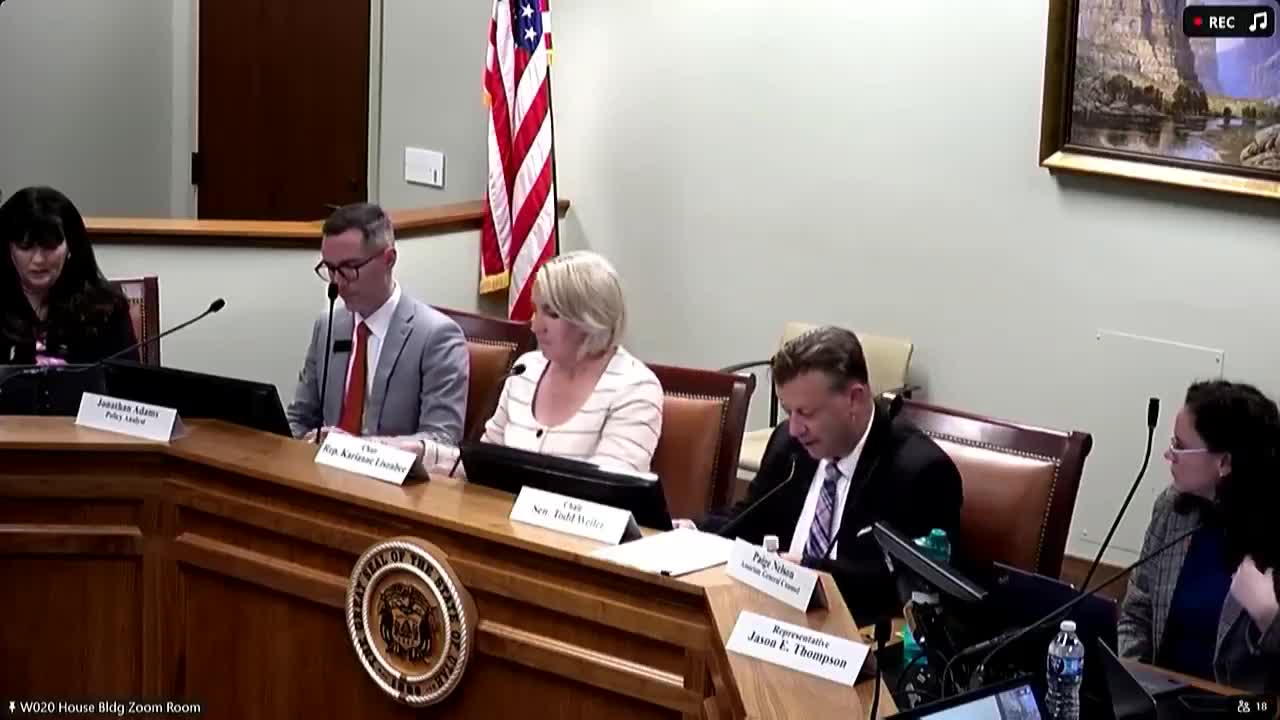
Summary
The committee favorably recommended draft criminal and juvenile justice legislation that revises recidivism definitions, allows staggered recidivism reporting windows and gives judges narrow discretion to order corrections custody for minors convicted of aggravated murder when they were 17 at the offense but 18 at sentencing.
Representative Karianne Lisonbee presented draft legislation to revisit the statutory definition of recidivism and to adopt juvenile‑justice language aligning with Juvenile Justice Oversight Committee (JJOC) definitions. The draft also adds limited flexibility for housing arrangements when youth are detained and permits a district court, in narrow circumstances (aggravated murder where offense occurred at 17 and sentencing occurs at 18 or older), to commit a minor to Department of Corrections custody at the judge's discretion.
Public testimony included Pam Vickery (Utah Juvenile Defender Attorneys), who asked that recidivism be tracked at multiple intervals (6 months, 1 year, 2 years and 3 years) to show trends. Law enforcement representatives and county sheriffs supported limited judicial discretion for the most egregious cases, arguing family members of victims are affected and that housing aggravated murder defendants with younger detainees raises safety concerns.
Committee members adopted a verbal amendment to collect recidivism data at staggered intervals (6 months, 1 year, 2 years and 3 years) and then voted to favorably recommend the measure as amended.
Outcome: The committee adopted the amendment and advanced the bill as a committee file.