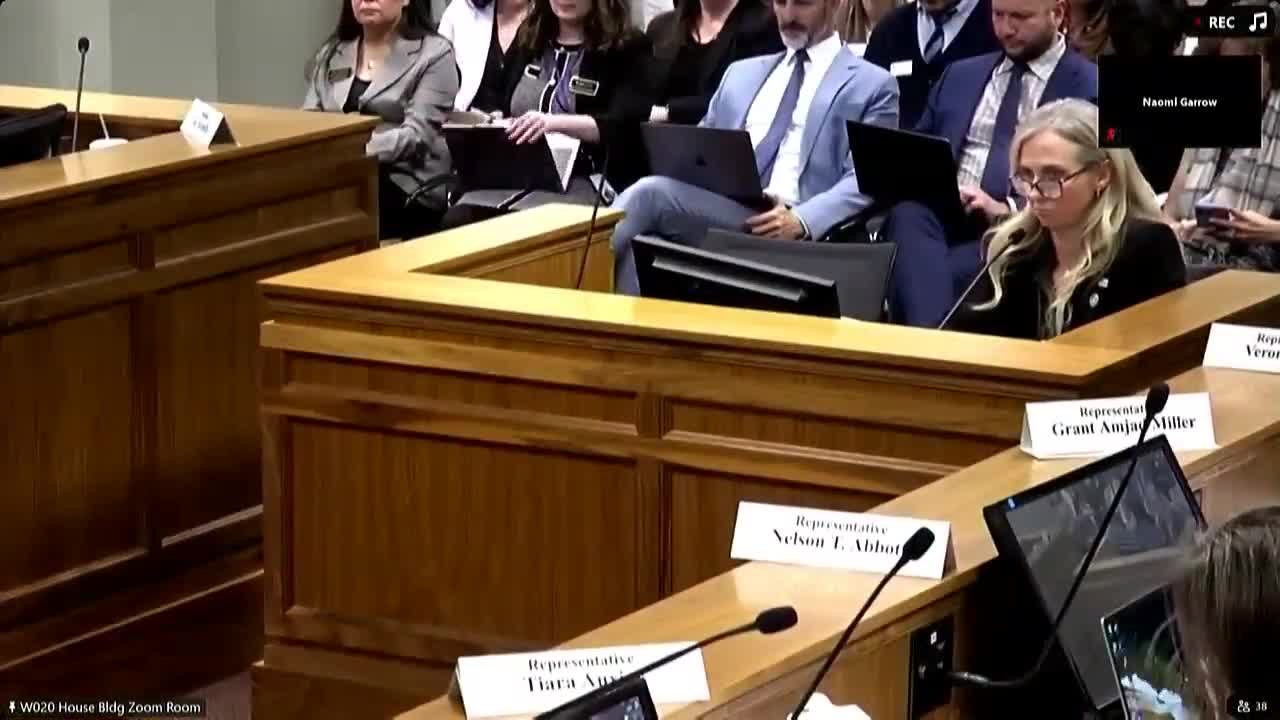
Judiciary committee advances adoption-reform bill to tighten agency oversight and add protections for birth parents
Loading...
Summary
The interim judiciary committee voted to advance draft adoption amendments that raise reporting standards, create a child-placing-agency consortium, increase certain payment caps and add a 72-hour revocation window for consent; the measure passed as a committee bill with two no votes.
Representative Katy Hall presented a package of adoption amendments the committee described as the result of extensive stakeholder collaboration and multiple interim meetings. "There has been a coming together and a lot of good compromises," Hall said while outlining reforms aimed at improving transparency, agency oversight and protections for birth and adoptive parents.
Hall told the committee the bill would require fuller disclosure in advertising, prohibit financial incentives in advertising, require agencies to report complaints and violations, and create a child-placing-agency consortium run by the Department of Human Services for oversight. "One of the biggest things that we do in this bill is creating the child placing agency consortium," Hall said.
On costs, Hall said the committee increased a previously discussed cap from $4,000 to $8,000 and added a weekly allowance structure "dollars 200 a week plus 75 for dependent," with the sponsor noting figures could be tweaked. The draft also clarifies the right to legal counsel, expands post‑birth mental health therapy sessions, and allows a birth parent to revoke consent or relinquishment within 72 hours (with an option to waive that right).
Committee members pressed drafting and policy questions. Counsel explained that a drafting convention uses "may not" for prohibitions and "shall" for mandatory actions. Several members focused on Medicaid‑related data collection and enforcement, asking why the state would collect out‑of‑state Medicaid status and how enforcement would work; Hall and staff said the data is for oversight and to avoid shifting costs to Utah taxpayers.
The bill drew mixed reactions in committee debate. Representative Abbott said she would vote no, citing caps on living expenses and weekly allowances: "I'm gonna vote no on this bill ... that's because of the caps that we place on things like living expenses, gifts, the weekly allowance." Other members, including Representative Thompson and Senator Wyler, said the package strikes a balance between protecting birth parents and preventing bad actors and moved to advance the measure as a committee bill.
During limited public comment, Matt Holton of adoption agencies and Tara Romney Barber of the Children’s Service Society of Utah and the Utah Adoption Council praised the collaboration on the draft.
Outcome: Senator Wyler moved that the committee favorably recommend the draft as a committee bill; the committee approved the measure and the chair reported it passed "with 2 no votes." The committee asked sponsors to work on remaining concerns before the January session.
Next steps: The bill will be revised with requested clarifications and returned for further consideration in the January 2025 session.