
Oregon says state‑based marketplace remains on track for 11/01/2026 go‑live
Get AI-powered insights, summaries, and transcripts
Subscribe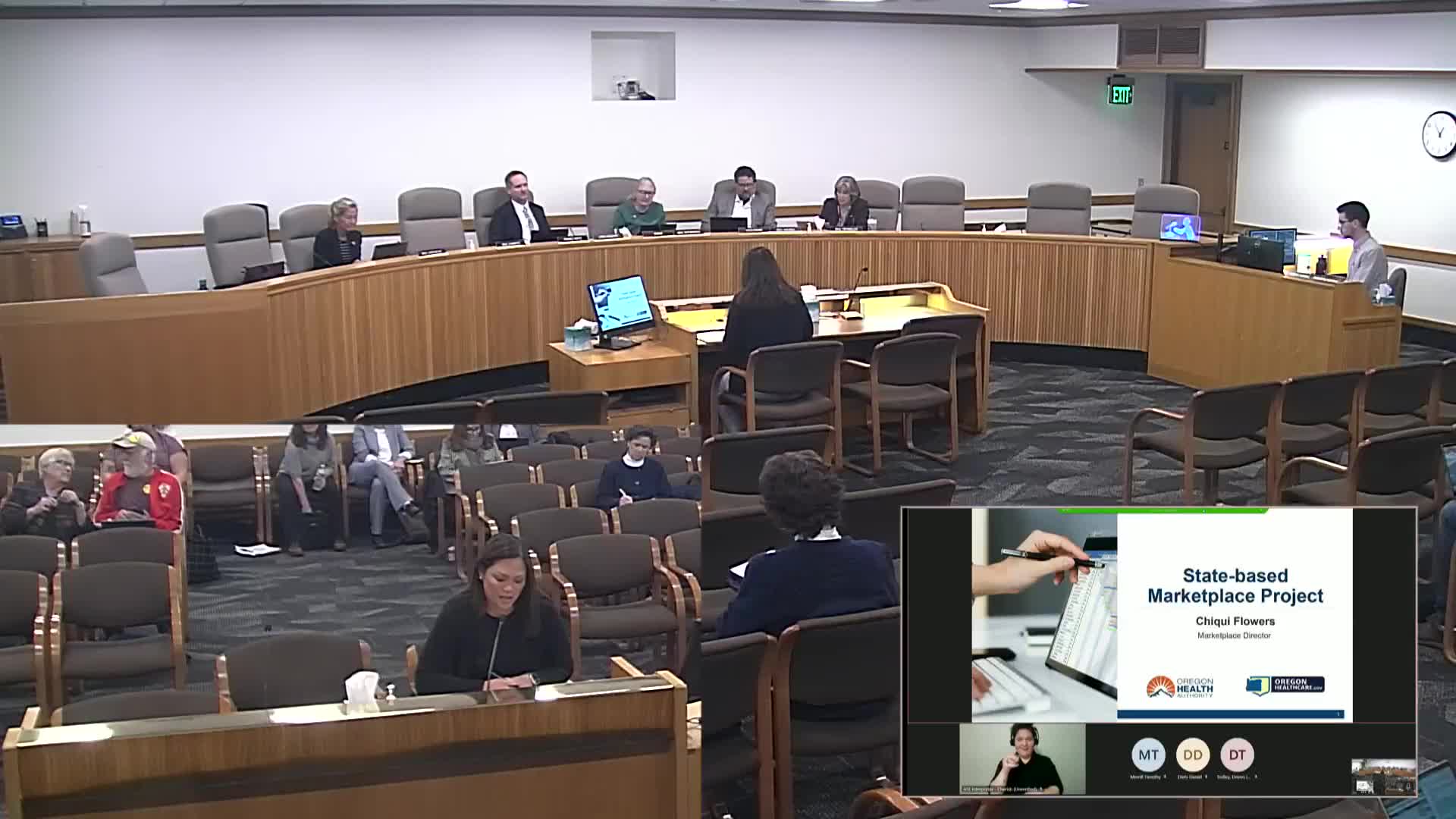
Summary
Oregon Health Insurance Marketplace staff told a Senate committee the state plans to transition from healthcare.gov to a fully state‑based marketplace by Nov. 1, 2026, to improve consumer data, local assistance and program flexibility — while federal rule changes (HR1, program integrity rules) will require tightened income verification and other operational changes.
Oregon officials told the Interim Senate Committee on Health Care that a multi‑year project to move the state from the federal healthcare.gov platform to a fully state‑based marketplace (SBM) is on schedule and designed to give Oregon more control over data, consumer assistance and policy options.
"We are on track to complete this transition in time for open enrollment for the 2027 plan year," Chicky Flowers, director of the Oregon Health Insurance Marketplace, told the committee. The transition implements Senate Bill 972 (2023) and includes a new technology platform, a state consumer assistance center and a target go‑live date of Nov. 1, 2026.
Flowers said the SBM will enable real‑time access to demographic and enrollment data, improved coordination with Oregon eligibility systems, more tailored outreach and the flexibility to design state programs and special enrollment periods that meet Oregon needs. She described a vendor partnership with Get Insured and a phased implementation that entered an active implementation phase in August, with a planned soft launch around Oct. 1 and full operations aimed at Nov. 1.
Committee members raised federal policy changes that will shape implementation. Flowers summarized provisions of HR1 and the HHS Marketplace Program Integrity and Affordability Rule that become relevant for state operations, including stricter pre‑enrollment income verification, changes to premium tax credit repayment caps and a requirement that open enrollment end no later than Dec. 31 in future years. "This data is critical for understanding who we are serving and where we can improve equity and access," Flowers said about the state data the SBM will collect.
Devon Trolli, executive director of Pennsylvania’s exchange, described how a state‑level system enabled targeted ZIP‑code outreach during Medicaid redeterminations, faster escalation handling, automated income verification from state wage and tax data, and the ability to test state affordability programs. Trolli said SBMs often improve the consumer experience because states control the end‑to‑end application and assistance processes.
Flowers provided enrollment context: the marketplace sees roughly 160,000–180,000 applications and about 140,000 plan selections per open enrollment period, and she and Trolli described vendor and CMS coordination tasks that will continue through 2026. Committee members asked about potential cost savings; Trolli said SBMs typically give states more levers to manage costs and outreach but require careful operational design and cooperation with federal agencies.
No formal action was taken. Witnesses said partner listening sessions, user testing and partner training will continue through 2026 as the state prepares for the transition.