Get Full Government Meeting Transcripts, Videos, & Alerts Forever!
Get email alerts on the Elections topic
No spam. Unsubscribe anytime.
Ohio House adopts tighter absentee‑ballot deadline after lengthy floor debate
Summary
The House passed Senate Bill 293 to require absentee ballots be received by 7:30 p.m. on election day, eliminating the four‑day grace period; supporters said it aligns Ohio with other states and court guidance, opponents warned it could disenfranchise voters and was rushed through with limited input.
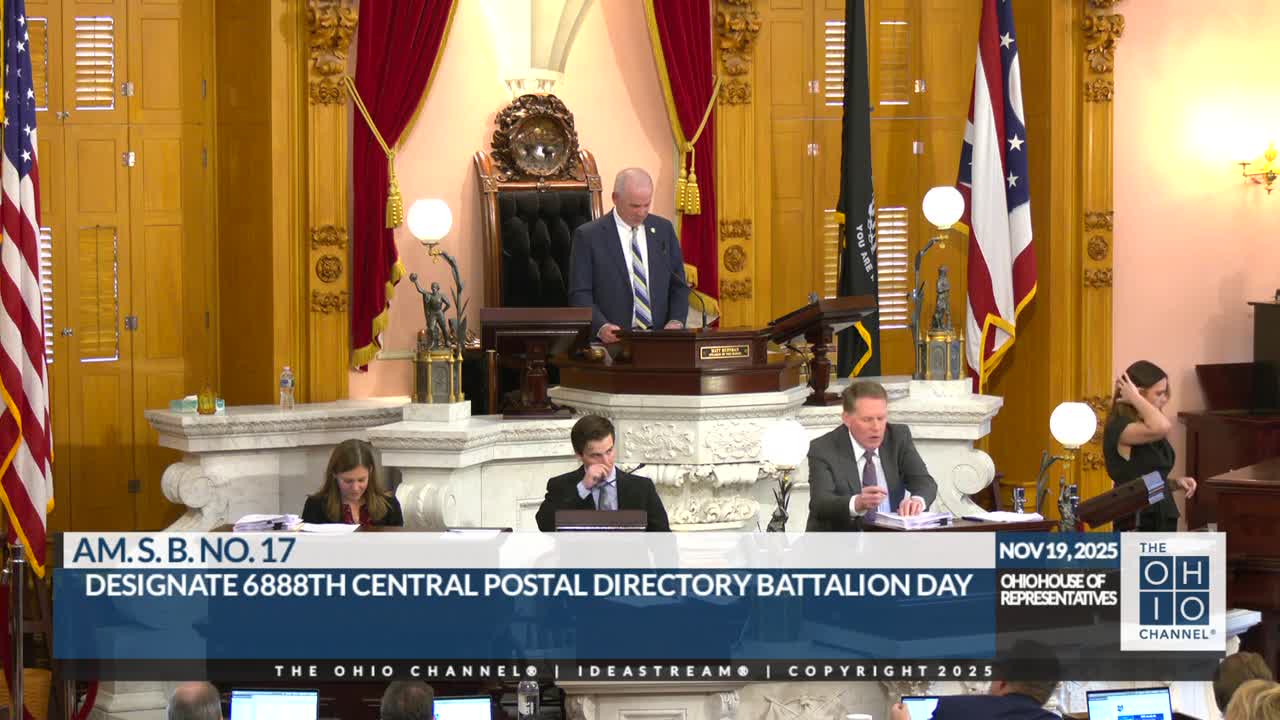
The Ohio House on Nov. 18 passed Senate Bill 293, a measure that requires absentee ballots to be received by county boards of elections by 7:30 p.m. on election day.
Supporters framed the change as a necessary alignment with other states and recent federal court rulings. Representative Ray said, "Senate Bill 293 requires that all absentee ballots be into the board of elections by 07:30PM on election day." Backers said the measure will provide consistency for the 2026 primaries and harmonize Ohio practice with surrounding states.
Opponents argued the change removes a long‑standing four‑day postal "grace period" and risks discarding ballots delayed by mail. Representative Russo said the bill "eliminates that 4 day grace period" and cited testimony that nearly 8,000 Ohio ballots could be affected based on the 2024 cycle. Representative Brownlee and others pressed for amendments that would protect voters with data‑mismatches and preserve administrative safeguards; several floor amendments were moved and tabled during the debate.
The House recorded the vote after floor discussion and amendments; the clerk reported the bill passed with 58 affirmative votes and 29 negative votes. Members who spoke in favor stressed election integrity and uniform deadlines; critics warned the change was rushed during a long session and called for additional safeguards, such as permanent absentee lists and clearer notice to voters flagged for registration issues.
What happens next: The bill now proceeds to enrollment and then to the governor. Sponsors and opponents both said they expect further legal and administrative questions about implementation to follow.