
School leaders present K–8 achievement data and EL Education rollout; committee asks for subgroup tracking over time
Get AI-powered insights, summaries, and transcripts
Subscribe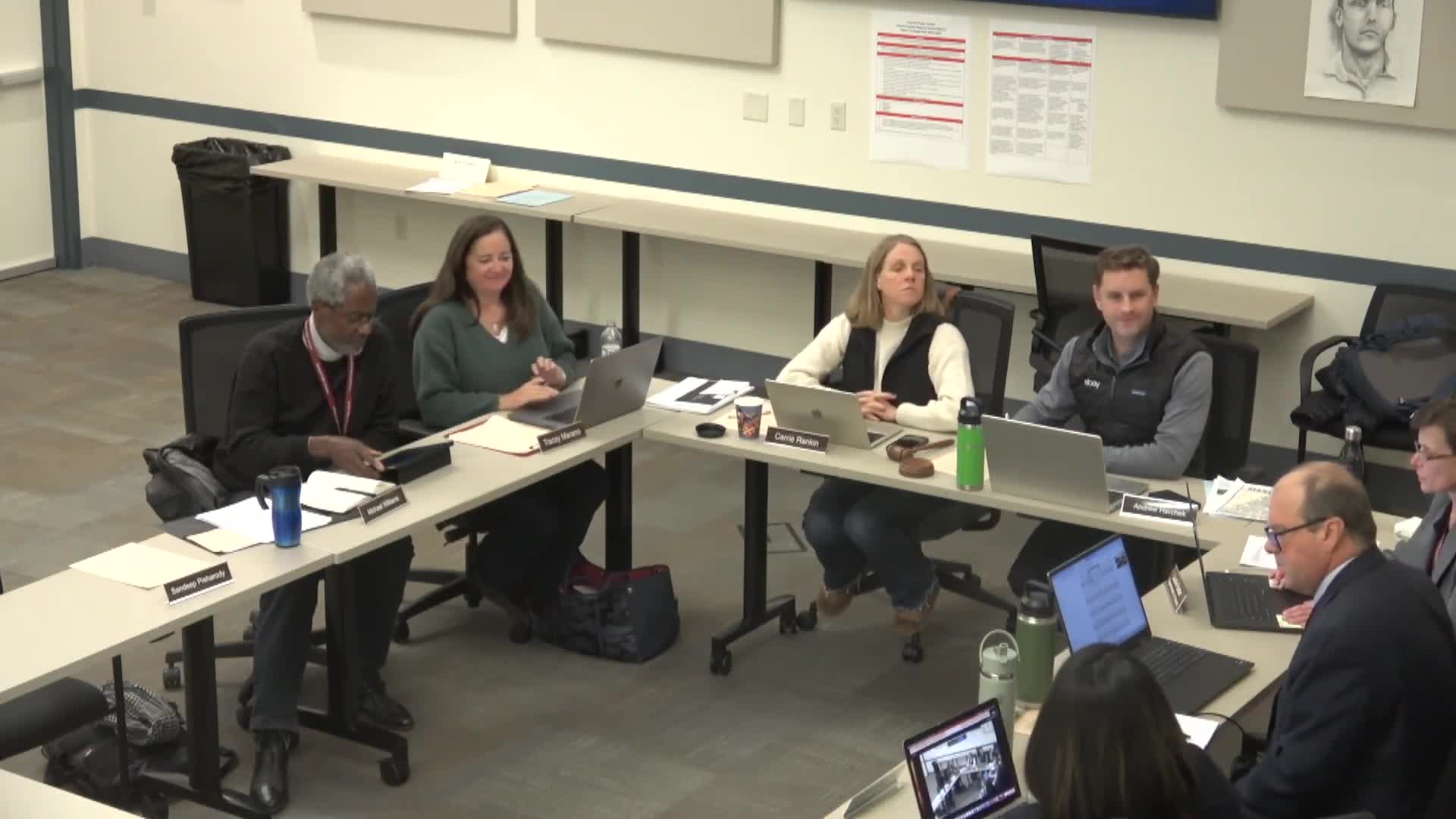
Summary
Administration told the School Committee that Concord’s K–8 MCAS and local screener data show strong overall performance but persistent gaps for historically marginalized subgroups; district is rolling out EL Education and expanding DIBELS and MTSS data teams to target interventions.
District administrators presented K–8 MCAS and internal screener results to the Concord School Committee on Nov. 19, noting district performance above state averages in many content areas while acknowledging persistent achievement gaps among subgroups, especially Black students.
Shelley (district presenter) said the district has adopted DIBELS for K–5 literacy screeners, uses STAR and other formative tools, and is in the first year of a two‑year rollout of EL Education for ELA. "We knew we needed to look at English language arts. EL is in its first pilot year," she said, adding that about 75% of teachers are implementing EL practices this year. Administrators described ongoing professional learning, instructional coaching, and MTSS data teams that meet regularly to identify and support students needing additional intervention.
Committee members asked for clearer cohort and subgroup trend reporting so the community can track progress over time. One member cited DESE MCAS figures showing nonproficiency rates for low‑income and Black subgroups and asked how district interventions will be measured and reported. Administrators responded that multiple formative measures (DIBELS, STAR, curriculum assessments) and individual student profiles are used to guide instruction and that some subgroups are small enough that the district focuses on individual student trajectories as well as cohort trends.
The committee encouraged transparent, periodic reporting on subgroup progress and measurable targets so the public can see whether gaps close in coming years. No formal vote was taken; administrators said the EL rollout will continue and that curriculum review for math is planned as a multi‑year effort.