
Utah commission opens contingency bill file, adopts resource-plan amendment after auditor and fiscal analyst briefings
Get AI-powered insights, summaries, and transcripts
Subscribe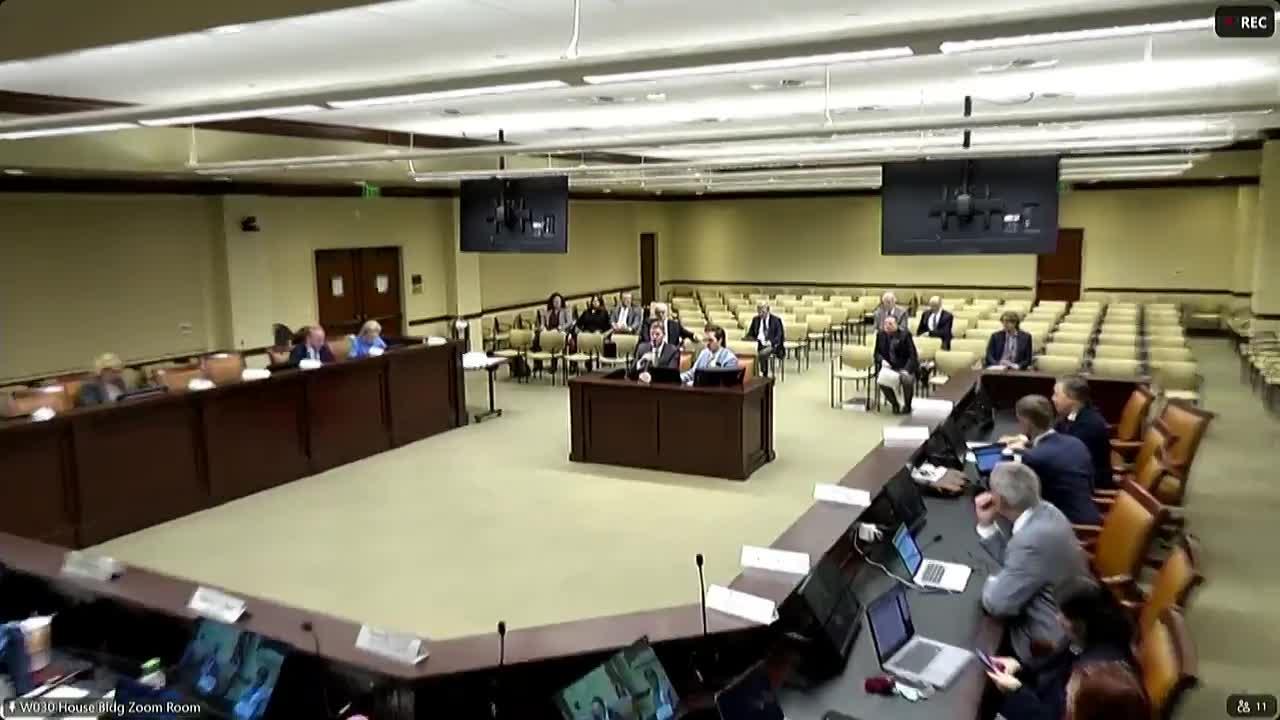
Summary
Following expert testimony, the commission agreed to open a bill file on federal-fund contingency planning, formed a working group, and unanimously adopted an amended state resource management plan. State auditors and Utah's fiscal analyst recommended stress-testing, legislative review thresholds and a dedicated federal rainy-day fund.
Utah’s Federalism Commission moved from diagnosis to near-term action Nov. 20, voting to open a commission bill file on contingency planning and adopting an amended state resource management plan after receiving briefings from the legislative auditor and the state fiscal analyst.
Kate Minche, legislative auditor, presented the auditor general’s high-risk framework for federal-fund reliance and said that required agency contingency plans had been submitted for FY2024, but that further monitoring and capacity-building were needed. She recommended options including formalizing a federal-focused rainy-day fund, stress-testing additional federal-dependent programs beyond Medicaid, and expanding grant tracking to higher education.
Jonathan Veil, director of Utah's Fiscal Analyst Office, presented state-specific fiscal context: federal funds represent roughly 27% of Utah’s overall budget with 75% of that tied to social services; Utah’s combined discretionary rainy-day funds total about $1.2 billion but statutory limits restrict how much can be used for lost federal funds. Veil urged creating a separate federal rainy-day fund for short-term political volatility and for longer-term transitions, formalizing priority lists of programs that legislators would be willing to backfill in a downturn and increasing scrutiny of large, multi-year federal grant applications.
Actions taken: The commission approved minutes of the Oct. 16 meeting, voted to open the contingency-planning bill file (with a working group to develop draft language), and adopted the amended state resource management plan (a language clarification regarding private forest stewardship). Staff will collect commissioner comments on the federal guidance-letter tracker by Dec. 4 for a Dec. 9 report to the Legislative Management Committee.
Why it matters: The committee’s actions institutionalize a legislative pathway to prepare statutory and budgetary solutions ahead of potential federal funding reductions, and create a nearer-term schedule for drafting contingency responses for the 2026 budget cycle.
Ending note: Commissioners asked chairs to circulate proposed letters or draft actions to be considered at the next meeting; the commission signaled readiness to use letters, coordinated federal delegation engagement or resolutions as tools to push back against federal guidance that may exceed state jurisdiction.