Get email alerts on the Economic Analysis topic
No spam. Unsubscribe anytime.
State water commission's economic-analysis tool explained; legislators debate thresholds and indirect benefits
Summary
Department of Water Resources staff demonstrated the EA (benefit-cost) tool used to evaluate state cost-share for water projects; lawmakers, engineers and water districts debated thresholds, treatment of maintenance versus new capital works, and how to value indirect or environmental benefits for rural reconstruction projects.
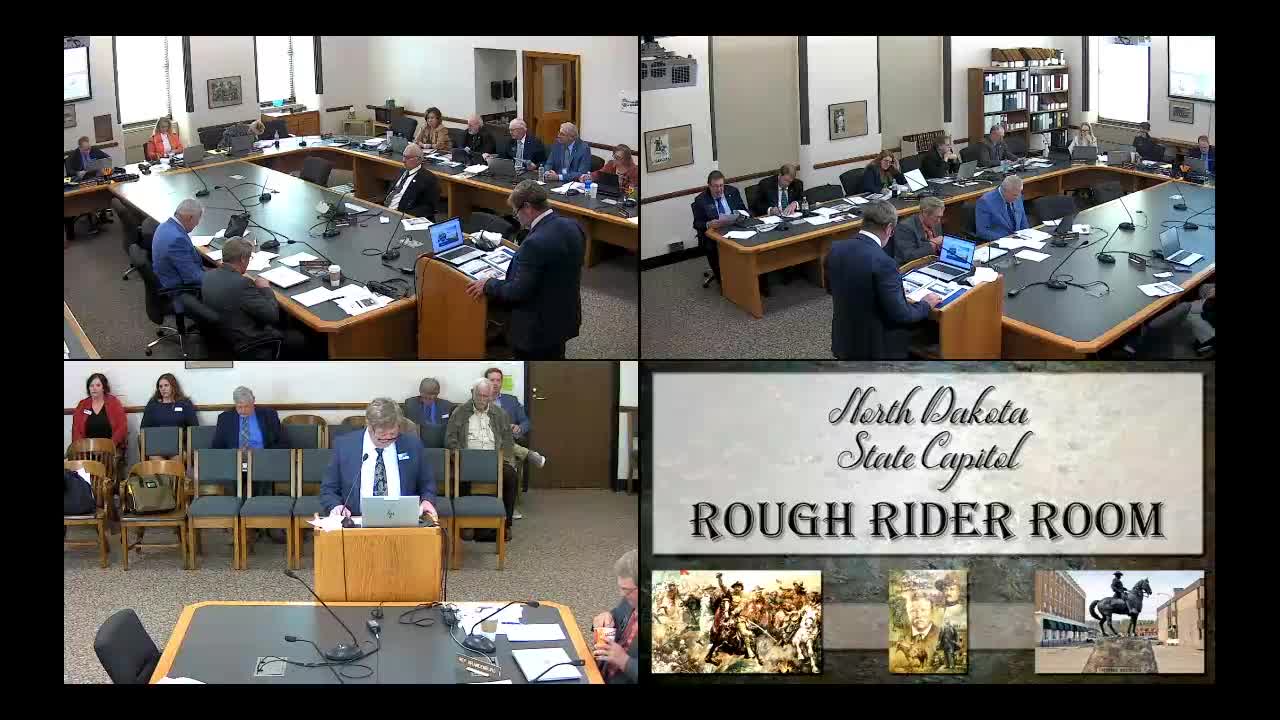
Department of Water Resources Director staff and the State Water Commission presented the agency's economic-analysis (EA) tool and defended its use as an objective benefit-cost method required by 2017 statutes. The tool computes present-value benefits and costs over a 50-year horizon using standard discounting and federal guidance.
Duane Poole (DWR) and staff walked the committee through model inputs (urban structure damage, rural crop losses, infrastructure and saved maintenance), discounting, event-probability inputs (2-, 5-, 10-, 50-, 100-year events) and typical cost and duration to complete an EA ($2,000'$7,000 by DWR estimates if preconstruction engineering is available). Poole said roughly two-thirds of completed EAs produced benefit-cost ratios >= 1.
Legislators and water-district engineers raised operational concerns: the EA's focus on demonstrable direct benefits can disadvantage reconstruct projects whose routine maintenance backlog or changed hydrology are not easily captured as new benefits; maintenance costs and deferred O&M are contested inputs. Local engineers urged more flexible treatment for reconstruction and for tools to better reflect infrastructure, tiling and long-term productivity improvements.
Commissioners and DWR noted the commission retains discretionary funding authority to support projects even when EA scores are below 1 and that the tool was designed to increase transparency and fiscal accountability. Committee members asked DWR to supply a dataset of recent EAs, including applications with BCR <1 and the actual commission funding outcomes; staff agreed to provide that information for follow-up review.
What's next: The committee asked the Department of Water Resources for the EA-application dataset and planned further study on whether thresholds or scoring methods should be adjusted to better capture reconstructs, maintenance and indirect benefits.
AI generated
The text on this page is AI generated. Summaries, highlights, analysis, and video transcripts are all produced from the original source material.
AI can make mistakes, so if you spot one, and we will fix it for everyone.
Note: the source content is unaltered by us. Any content source we link to, be it a video, an audio recording, or a document, is presented exactly as its publisher released it. That publisher is usually a government body, sometimes an individual official or another organisation.