Get Full Government Meeting Transcripts, Videos, & Alerts Forever!
Get email alerts on the Rail Freight topic
No spam. Unsubscribe anytime.
North Dakota shippers warned merger could cut competition, reduce market access
Summary
A BNSF public-affairs representative told the Interim Agriculture and Water Management Committee a proposed merger of major freight railroads could eliminate interline lanes, increase market concentration to about 45% and raise costs for agricultural shippers; she urged local stakeholders to engage the Surface Transportation Board review.
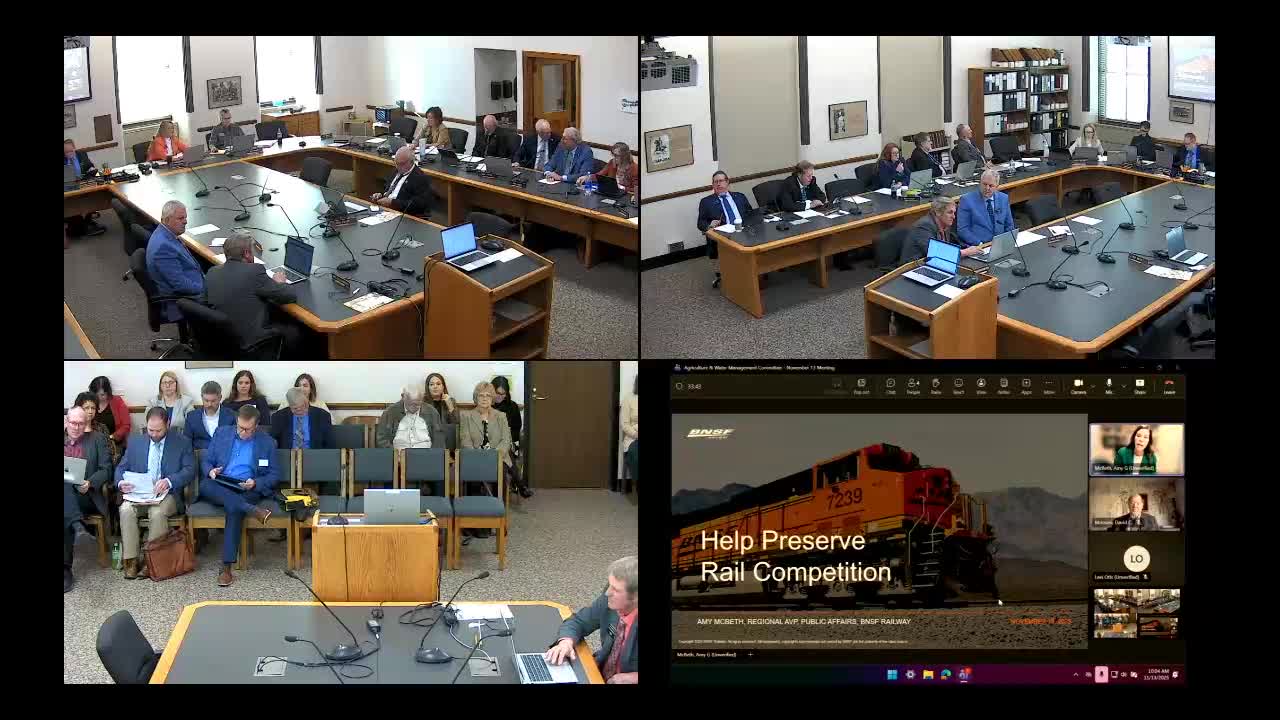
Amy McBeth, public affairs representative for BNSF, briefed the Interim Agriculture and Water Management Committee on a proposed merger of two Class I U.S. railroads and its likely effects on national freight competition and North Dakota shippers.
McBeth said the transaction would combine a western carrier with an eastern carrier and "would control almost half of the nation's, freight rail market, a 45% market share." She told the committee the Surface Transportation Board (STB) must determine whether the merger is in the public interest under 2001 merger criteria, including effects on competition, downstream impacts, service to customers and whether claimed benefits could be achieved without a merger.
McBeth warned the proposal could reduce optionality for local producers: "We estimate that if this merger were to go through, 160 lanes that are available today would go away because those are NS, Norfolk Southern interchange, essentially." She and committee members said fewer interline choices could translate into higher rates or degraded service for shipments from North Dakota to Eastern mills and markets.
Committee members asked about federal vs. state authority to respond. McBeth noted freight rail is federally regulated and urged constituents to file comments with the STB if they are concerned about local impacts. She cited experience from past rail integrations and said regulatory concessions have sometimes led to protracted litigation and unresolved access problems for decades.
The committee did not take formal action on the merger at the meeting. Members were given contact information and asked to notify affected local shippers and commodity groups so North Dakota voices are considered in any STB proceeding.
What's next: The STB will follow its merger-review procedures; the committee encouraged local shippers and trade groups to submit evidence to the STB on potential effects to service options and costs for North Dakota-origin freight.