Utah committee advances OPLER-backed changes to health‑profession regulation after amendments
Loading...
Summary
After hours of public testimony from audiologists, nurse practitioners and physician groups, the interim Business & Labor Committee amended and moved forward a bill implementing many recommendations from the Office of Professional Licensure Review (OPLER) that shift some professions toward mandatory certification, while removing contested audiology/hearing-instrument language for separate consideration.
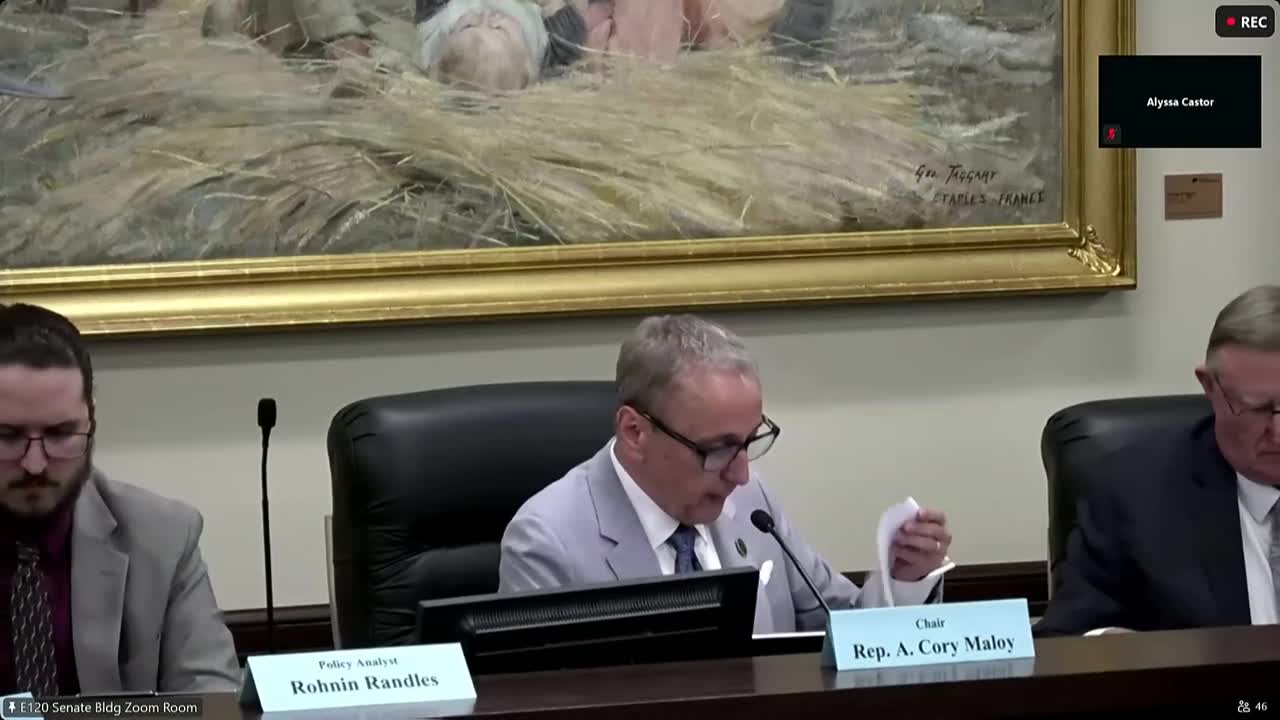
SALT LAKE CITY — The Utah Legislature’s interim Business and Labor Committee on Tuesday advanced a broad package of scope‑of‑practice changes for several health professions that reflects recommendations from the Office of Professional Licensure Review (OPLER), but lawmakers trimmed contentious audiology provisions after extensive public comment.
Tyler Moore of the Office of Legislative Research and General Counsel said the bill incorporates OPLER recommendations and “modifies the scope of practice requirements for health professions,” and that it takes OPLER’s research into account. OPLER staffer Jeff Shemway told the committee the draft preserves core public‑safety protections: “the education requirement of a doctorate for audiologists and a master's for SLPs stays exactly the same,” and clinical experience, standardized exams, background checks and investigatory authority remain in place.
The policy at issue — moving certain occupations from licensure to a mandatory certification model — prompted sharply divided public testimony. Jason Shipman of the Libertas Institute testified in support, saying OPLER’s research “is indicative of a wider trend of deregulating” where safety concerns are limited. By contrast, clinicians and professional associations warned of unintended consequences. Dr. Kate Johnson, who manages audiology services at the University of Utah Hospital (speaking personally), said the proposal “removes any defined requirements for maintaining professional competency without regulatory oversight” and warned it could jeopardize training and reimbursement. The Utah Speech‑Language‑Hearing Association also warned the change could affect Utah’s participation in the ASHA interstate compact that facilitates cross‑state practice.
The sponsor and OPLER staff pushed back on those concerns. Shemway said the bill includes language intended to make mandatory certification function like licensure for credentialing and reimbursement: “there's language in there that says that mandatory certification is equivalent to licensure for the purposes of credentialing and paneling, reimbursement, portability, compacts, etcetera.” He also said ASHA indicated the choice of labeling the regulatory scheme would not automatically bar compact participation.
Committee members debated options for resolving the contested pieces. Representative Kyle moved to remove the nurse‑practitioner portion of the bill; that amendment failed on roll call. Later, Representative Ballard moved to strike the hearing‑instrument/audiology portions of the draft to allow the remainder of the bill to proceed while stakeholders continue work on those elements; that amendment passed on roll call. After the audiology language was removed, Senator Vickers moved the package forward as a committee bill “as amended,” with the expectation the nurse‑practitioner language would be refined separately and that the bill will go through a full committee process during the session.
Votes and formal actions recorded in committee included: a failed amendment to remove nurse‑practitioner provisions (committee recorded the House portion 7–4 in favor of that amendment, Senate 0–2; the chair announced the motion failed) and a later successful amendment striking hearing‑instrument/audiology lines (House 8–3, Senate 3–0). The committee ultimately moved the amended bill forward; the chair reported the passage as 8–4 in the House and 3–1 in the Senate for sending the amended committee bill forward.
What’s next: The amendment clears the immediate path for the less‑controversial parts of the OPLER package to be considered during the session; stakeholders and sponsors will continue negotiating changes to the nurse‑practitioner and remaining contested provisions before the bill’s formal committee hearings.
Who spoke (selection): Austin Winnig (OPLER overview), Ronan Randalls (Legislative Research and General Counsel), Jeff Shemway (OPLER), Jason Shipman (Libertas Institute), Harry Leibovich (International Hearing Society), Dr. Kate Johnson (audiology), McKenna Nobis (Utah Speech‑Language‑Hearing Association), Melissa Hinton (Utah Nurse Practitioners), Michelle Macomber (Utah Medical Association).