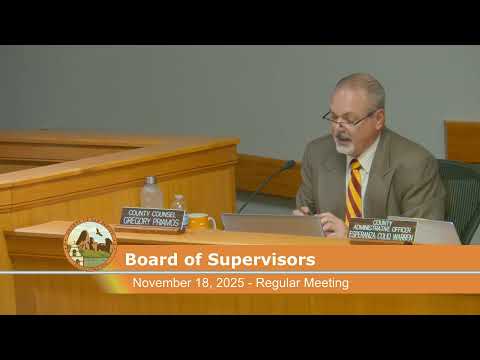
San Benito supervisors send revised campaign finance ordinance back to staff after heated debate
Loading...
Summary
The Board of Supervisors declined to adopt a proposed campaign contribution ordinance as presented and directed staff to return with a revised draft raising the proposed per‑contributor limit to $2,500 and removing a self‑funding exemption; the discussion centered on disclosure thresholds, enforcement and independent expenditures.
San Benito County supervisors debated, but did not adopt, a draft local campaign finance ordinance on a split vote and instead directed staff to return with changes increasing the proposed individual contribution limit and removing a self‑funding trigger. The board voted down a motion to approve the ordinance as drafted and later voted 3‑2 to ask county counsel to revise the measure to a $2,500 per‑contributor limit and eliminate the provision that would have lifted limits if a candidate self‑funded past the threshold.
Registrar of Voters Francisco Diaz outlined the draft ordinance at the meeting, saying it would impose a $1,000 contribution cap per contributor per election beginning with the 2026 cycle, include an automatic $100 increase every four years, require disclosure of contributions of $25 or more (lower than the state’s $100 cash disclosure level), mandate electronic filing and create an enforcement scheme with administrative penalties and misdemeanor criminal provisions for knowing and willful violations. Diaz also said the draft includes rules for loans, transfers between committees and aggregated contributions through intermediaries and that mandatory electronic reports would be searchable and publicly accessible.
Public commenters raised concerns about the draft. Stacy McGrady of District 1 said she worried the measure could make campaigning harder for less‑resourced candidates and alleged multiple loans to a supervisor’s prior campaign, which that supervisor disputed at the meeting, saying the entries were self‑loans and that the commenter had misread disclosures. Another caller, who identified herself as Elia, said state law already provides oversight and warned that lowering the reporting threshold to $25 could create substantial administrative work for grassroots campaigns.
Board members traded views over several practical and legal questions: whether the county could effectively restrict independent expenditures or “packs” under federal and state law, how to treat self‑funding candidates, whether lowering the disclosure threshold would create an undue administrative burden for small donors and candidates without easy electronic access, and how enforcement functions would be allocated. County staff said terminals and staff assistance are available for candidates who lack computers, and staff noted the draft places some administrative enforcement with the Registrar of Voters while criminal enforcement would remain the district attorney’s responsibility.
An initial motion to approve the ordinance as presented failed on a 2‑3 roll call. After further deliberation, a motion to send a revised draft back to county counsel — changing the $1,000 figure to $2,500 and removing the self‑funding trigger in the draft — passed 3‑2. The board directed staff to return with the amended ordinance for a second reading. No final ordinance was adopted during the meeting; the board will consider the revised draft at a future meeting.
The debate underscored two recurring tradeoffs in local reform efforts: lowering individual contribution limits and disclosure thresholds can increase transparency and reduce perceived special‑interest influence, but it can also impose additional reporting burdens and may not affect independent expenditures, which are generally protected under federal First Amendment precedent.